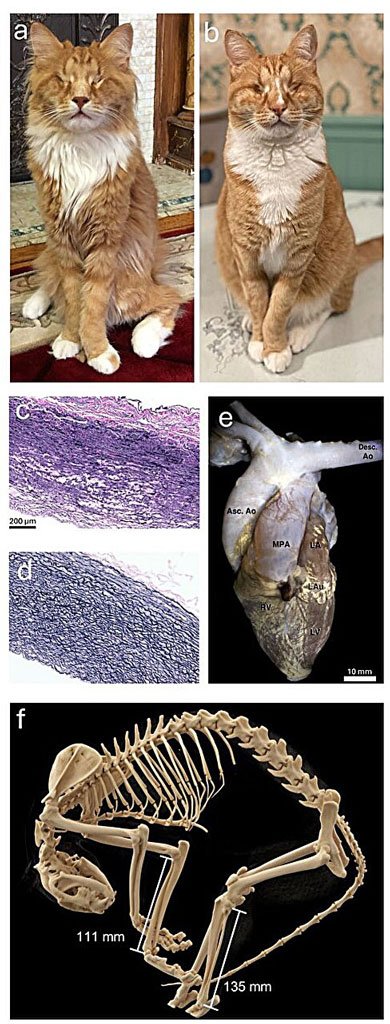
Researchers in the United States have published the first molecular characterization of Marfan syndrome in domestic cats, as reported in a study in Scientific Reports.
Read More
The study teams included members from the College of Veterinary Medicine and the Baker Institute of Animal Health. Dr. Jacquelyn Evans, the senior author, noted that the findings provide a basis for enhanced veterinary diagnostics, which can help practitioners identify similar future cases and potentially lead to developing genetic tests.
Two feline siblings, Gary and Shaggy, displayed notably longer limbs as kittens, and subsequent examinations indicated eye structure issues as well as enlargement of the aorta. These symptoms pointed veterinarians toward Marfan syndrome, a rare inherited disorder primarily seen in humans that weakens connective tissues, affecting roughly one in 4,000 individuals. This marks the first recorded case of the syndrome in cats.
A multidisciplinary collaboration brought together veterinary specialists, genetic experts from the Baker Institute, and partners from institutions such as Ghent University, the University of Pennsylvania, and the Schwarzman Animal Medical Center in New York City. They combined detailed clinical evaluations with genetic sequencing to identify the gene linked to the kittens’ condition: FBN1, which encodes for fibrillin-1, a crucial component of connective tissues found in blood vessels, bones, ligaments, skin, and eyes.
Both cats were found to carry two altered copies of the FBN1 gene, inheriting one altered copy from each parent. In humans, just a single altered copy can cause Marfan syndrome, making the inheritance of two altered copies a rare occurrence that can hinder normal fibrillin-1 production. However, further investigation revealed that the variant in Gary and Shaggy did not completely deactivate the gene; instead, it partially disrupted its function, allowing some normal processes to continue. This may explain how they reached adulthood despite having variants that could have led to more severe health issues.
Dr. Evans emphasized the importance of this discovery as an example of how pet owners can collaborate with veterinary and genetic professionals to contribute to knowledge that may benefit other animals in the future.