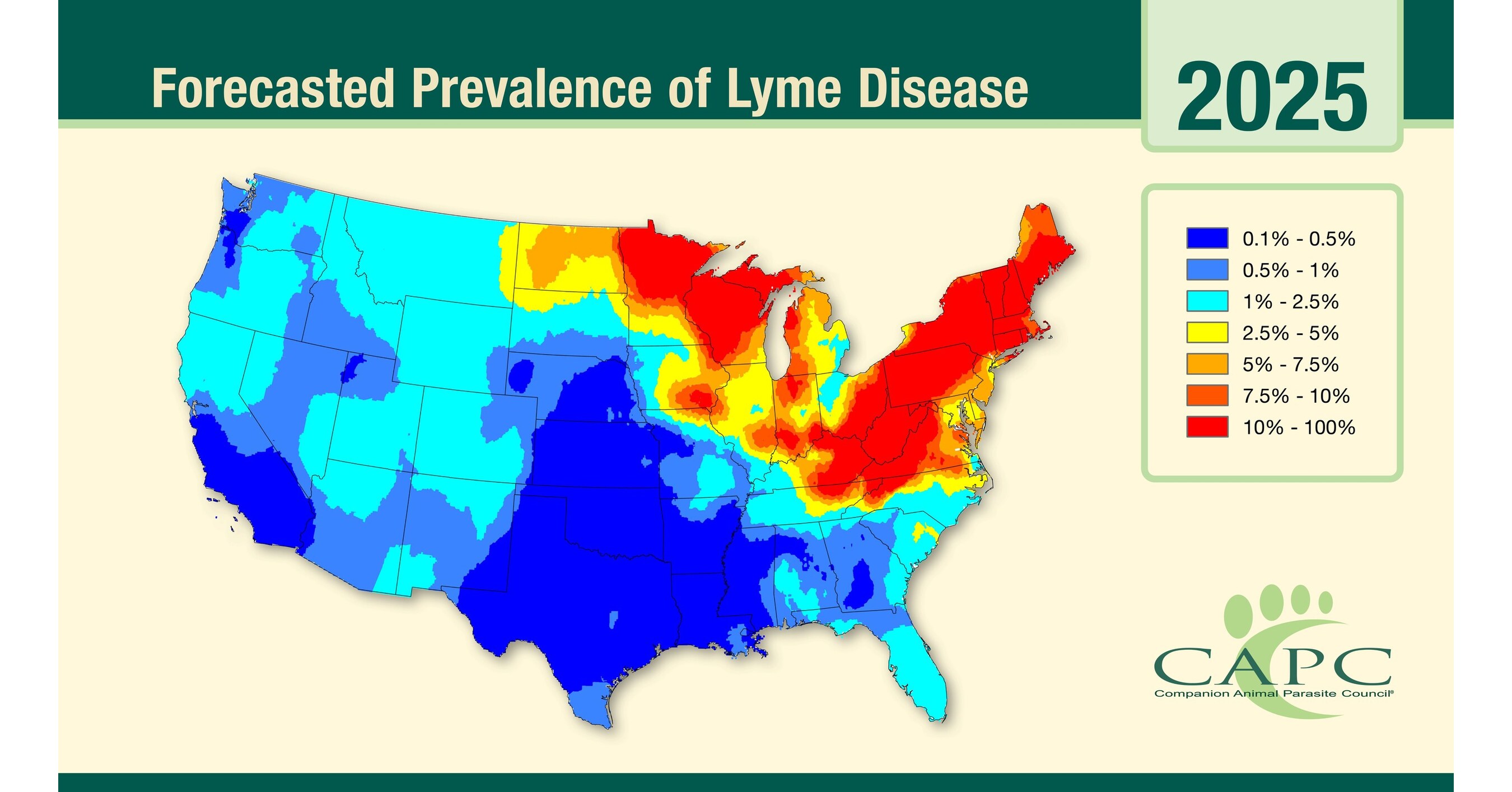
The Companion Animal Parasite Council (CAPC) has issued its 2025 Pet Parasite Forecast, indicating a rising prevalence of Lyme disease, heartworm, anaplasmosis, and ehrlichiosis across the United States. Utilizing data from over 10 million diagnostic tests reported annually, the forecast emphasizes the growing threat these diseases pose to both pets and humans.
Read More
Heartworm disease, which is spread by mosquitoes, is particularly expanding in the southeastern United States, with the highest risk areas located along the Atlantic coast and progressing northward along the Mississippi River.
Ehrlichiosis, another tick-borne disease, remains prevalent in the southeastern region and continues its northward expansion into the upper Midwest and New England. Meanwhile, the risk for anaplasmosis, also transmitted by ticks, is increasing south and west, especially in the upper Midwest and northeast.
Having accurately predicted the prevalence of these diseases with 94% accuracy since 2012, CAPC maps are regarded as essential resources for veterinarians and pet owners. Dr. Brian Herrin, CAPC Board President, stressed the importance of these forecasts for public health, as pets and their owners share environments. He highlighted that low risk does not equate to no risk, underscoring the need for year-round preventative measures against these potentially fatal diseases.
The forecast details the continued geographic movement of vector-borne diseases largely due to shifting populations of ticks and mosquitoes. CAPC warns that heartworm infection risks could impact a broad swath of the central U.S., from Kansas to Maryland, as well as parts of New Mexico, Colorado, Wyoming, Montana, North Dakota, and Northern California.
Veterinarians are encouraged to focus on tick and mosquito prevention, assess pet risks based on lifestyle, and utilize vaccinations and testing as part of their strategy to combat the spread of these diseases.
Dr. Rick Marrinson, a CAPC board member, highlighted the importance of vigilance in testing and prevention, especially in historically affected areas. He also called for new protocols in regions experiencing emerging threats.
The forecasts not only assist veterinary practices but also have significant implications for public health. A CAPC study confirms that canine health can predict human health risks, particularly concerning Lyme disease. Dr. Christopher Carpenter, CAPC CEO, reiterated the necessity for ongoing education and preventive care to combat the increasing disease spread.
In addition to the annual forecast, CAPC provides free, localized 30-Day Pet Parasite Forecasts on its website. These forecasts allow pet owners and veterinarians to monitor emerging threats specific to their counties, reinforcing the need for continuous vigilance and preventive care to safeguard both pets and their families.
Research for the CAPC forecasts is conducted by parasitologists and statisticians from prominent U.S. academic institutions, focusing on understanding the transmission patterns of vector-borne diseases based on environmental variables. Over 12 peer-reviewed articles validate the forecasts' accuracy and relevance.
The Companion Animal Parasite Council, established in 2002, is dedicated to providing comprehensive information on the management of internal and external parasites affecting the health of pets and humans.