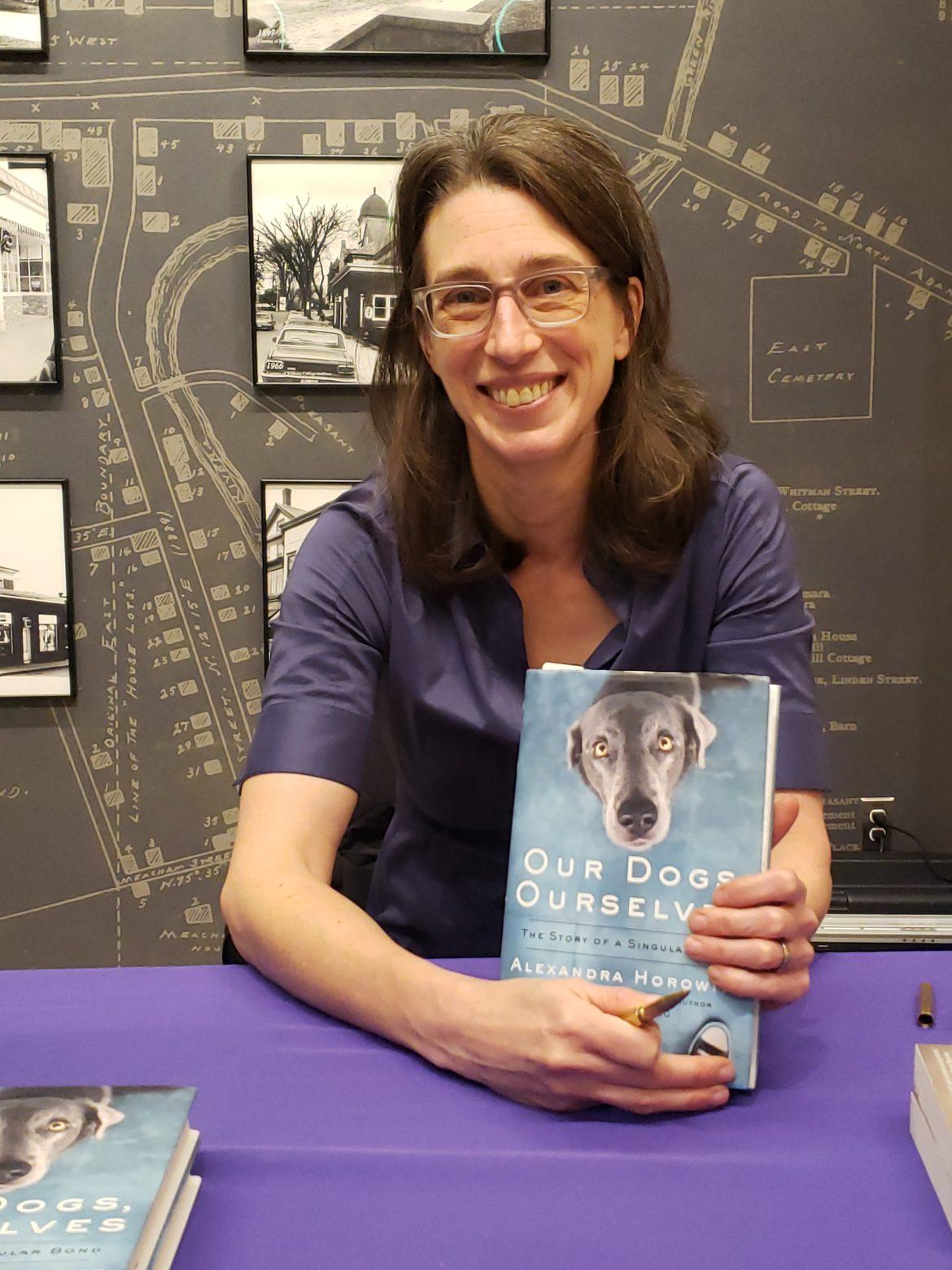
Alexandra Horowitz, the head of Barnard College’s Dog Cognition Lab and a New York Times bestselling author, spoke last Thursday at The Williams Bookstore about her latest book, *Our Dogs, Ourselves*. This book follows her previous works, *Inside of a Dog: What Dogs See, Smell, and Know* and *Being a Dog: Following the Dog into a World of Smell*.
Read More
Horowitz shared her journey in writing *Our Dogs, Ourselves*, noting her curiosity about the bond between dogs and their owners, cultivated through her studies of dog behavior. The book explores how dogs have integrated into human life and the implications of this relationship for both species.
During her talk, Horowitz highlighted the legal status of dogs as personal property while also acknowledging their familial status in the eyes of many owners. She noted the ways in which owners treat dogs like human members of the family, such as throwing birthday parties and dressing them in clothing.
She expressed a desire to address contemporary and future dynamics between humans and dogs, stating, "how do we live with dogs now, and how will we live with them tomorrow?" A charming observation from her research was that many dog owners give their pets human names, suggesting a perception of dogs as people. She also pointed out that owners often communicate with their dogs in child-like tones and with simple language.
Horowitz read excerpts from her book, including observations of owner-dog interactions. In one chapter titled "Owning Dogs," she pondered whether dogs are companions or possessions, noting that while the law classifies them as things, this belies the deep emotional connections they foster with their owners.
Following her reading, Horowitz fielded questions from the audience. One attendee inquired about the evolutionary origins of the human-dog relationship. Horowitz responded that the domestication of wolves may have involved self-selection by the animals wanting to affiliate with humans. She referenced research showing that domesticated foxes exhibited dog-like behaviors, such as seeking attention.
Addressing audience questions, Horowitz discussed her research methods and noted differences in socialization between suburban and urban dogs. Urban dogs tend to be more social due to increased interaction with other dogs, while suburban dogs often spend more time alone, making socialization more challenging.
In conclusion, Horowitz spoke about her two mixed-breed dogs, Finnegan and Upton, sharing their distinct personalities. She expressed a personal struggle with visiting shelters because of her tendency to adopt dogs. Horowitz ended her talk by mentioning her upcoming project focusing on how dogs perceive their own size.