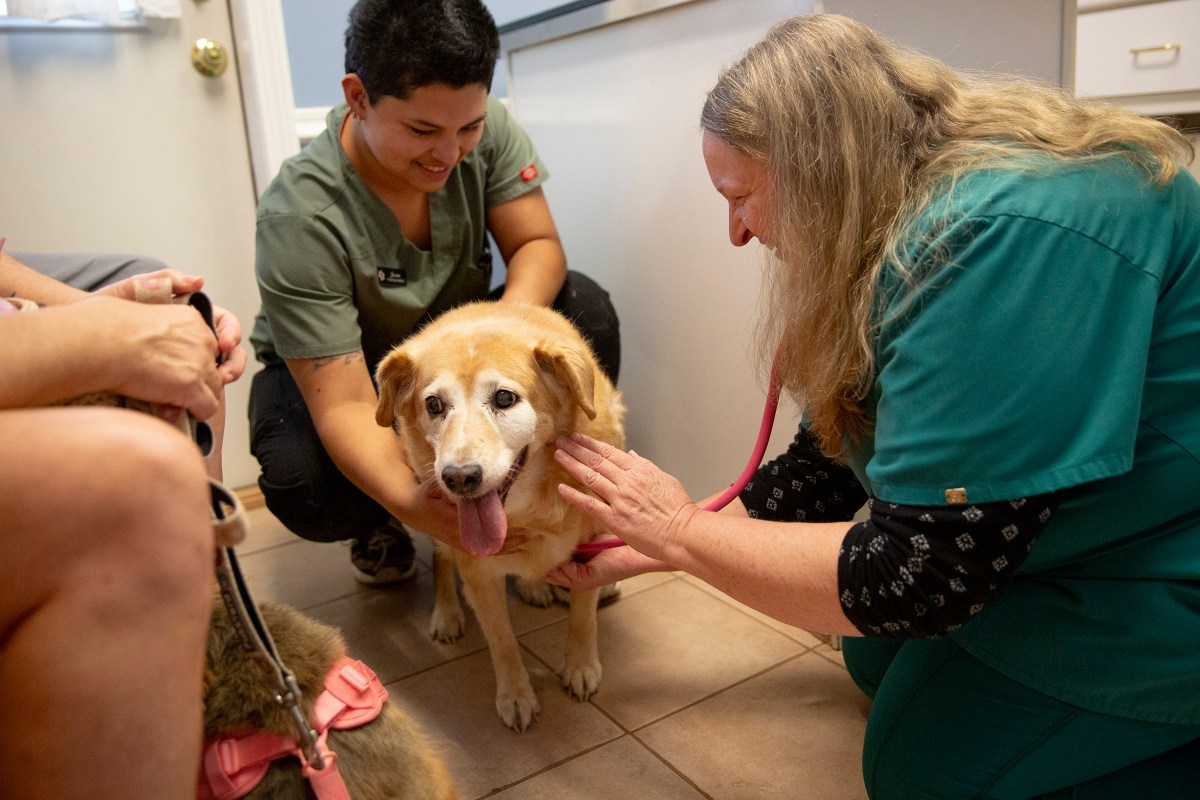
Veterinary technician Jaxon Hanson assists as veterinarian Kim O'Connor evaluates Tulip, a 15-year-old dog, at Claremont Animal Hospital in Claremont, N.H., on September 23, 2026. Manager Chrissy LeBlond emphasized the importance of affordable services for clients.
Read More
LeBlond expressed concern over a significant decline in clients adhering to vaccination schedules and checkups since the pandemic, attributing this trend to rising costs. "It’s a real struggle... We want to ensure we can still give good medicine, even through the rising costs," she stated.
Pet owners in the Upper Valley face increasing challenges in affording both basic and emergency veterinary care as service prices rise. According to the American Veterinary Medical Association, the cost of veterinary services has surged approximately 54% since 2019, surpassing the general inflation rate of about 31% for all goods and services as reported by the U.S. Bureau of Labor Statistics.
RayLynn Bradigan, executive director of the Upper Valley Humane Society in Enfield, highlighted that even basic exams and vaccinations are becoming unaffordable for many pet owners. As a result, clinics are struggling to provide care while addressing clients’ financial limitations.
In response to these challenges, Claremont Animal Hospital recently introduced a wellness program, allowing clients to pay for annual preventative care in monthly installments. This initiative aims to alleviate the financial burden of lump-sum payments at annual checkups.
However, several factors are contributing to rising veterinary costs, including inflation and heightened corporate ownership within the industry. Keely Doyle, manager at Stoney Brook Veterinary Hospital in Lebanon, noted that vendors are raising prices significantly, causing clinics to pass these costs onto consumers.
Dr. Deborah Pasho, a veterinarian at Stonecliff Animal Clinic in Lebanon, remarked on the trend of corporate ownership resulting in increased costs for basic veterinary care. Additionally, advances in veterinary medicine and rising pet lifespans have led to higher expenses as owners seek more comprehensive care.
Local shelters are also witnessing an uptick in pet surrenders from owners unable to afford medical care. Cheryl Koenig, executive director of the Sullivan County Humane Society in Claremont, confirmed an increase in calls from individuals seeking help for pets due to financial constraints. The organization’s monthly vet care costs have surged from approximately $10,000 last year to between $15,000 and $20,000 this year.
The Lucy Mackenzie Humane Society is also seeing an increase in older pets with complex health issues, as owners struggle to afford necessary treatments. Executive Director Jackie Stanley noted that limited emergency service funds make it challenging for the organization to meet the rising demand.
The Upper Valley Haven in White River Junction has adapted its shelter policy to allow pets, recognizing that many individuals experiencing homelessness are reluctant to seek shelter without their animals.
Demand for low-cost veterinary services remains high, with local humane societies reporting full waitlists for their spay, neuter, and vaccination clinics. Tractor Supply stores in the area have encountered challenges in providing these services due to a lack of available veterinarians.
As clinics aim to offer support, providers encourage open communication about financial concerns. Poverty often intersects with the emotional attachment owners have to their pets, prompting veterinarians to advocate for candid discussions regarding treatment options and costs. LeBlond at Claremont Animal Hospital emphasized the staff's willingness to discuss various options and pricing with clients.
Dr. Pasho noted the need for understanding as owners navigate the balance between pet care and financial realities, urging compassionate conversations about care choices.