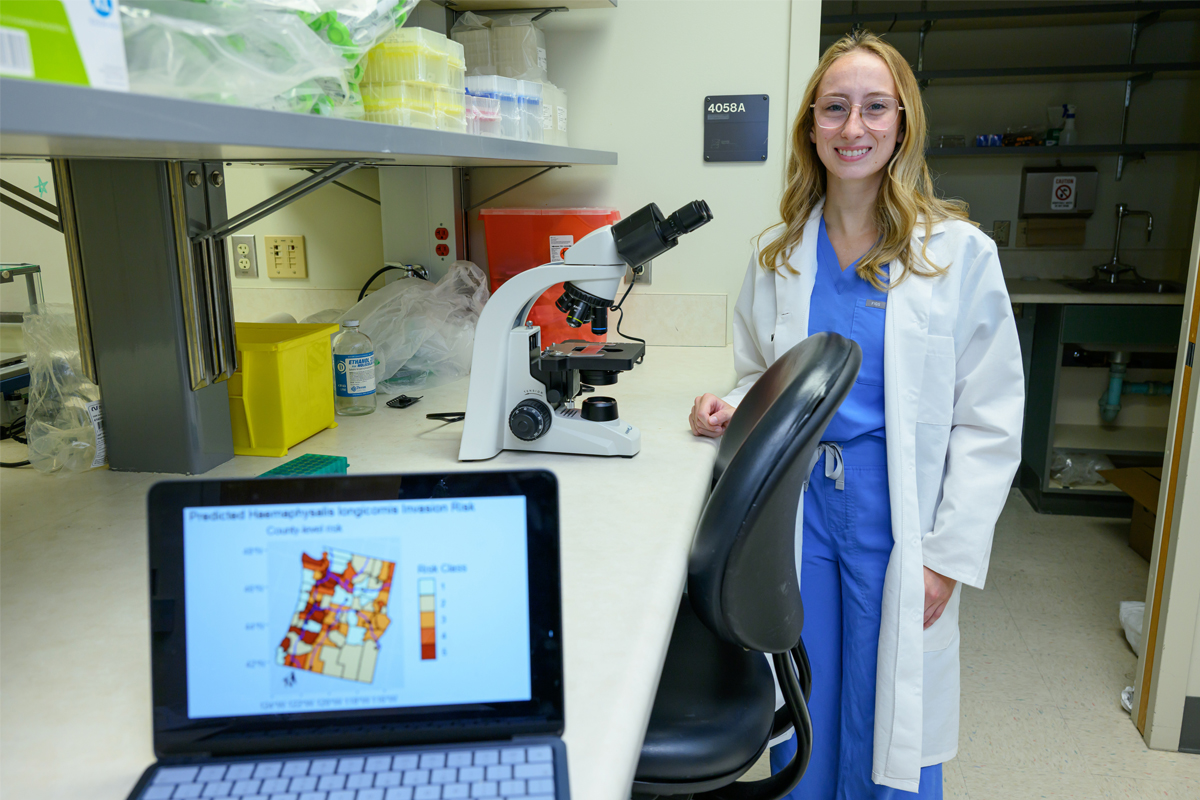
Caroline Cave, a member of the Class of 2028 from Gig Harbor, WA, is utilizing her summer veterinary research fellowship to investigate the potential threat of the Asian longhorned tick (ALT) in Washington. This invasive species has rapidly spread throughout the eastern United States, raising concerns for animal and public health due to its asexual reproduction, ability to infest various hosts, and transmission of diseases.
Read More
Under the guidance of Dr. Andreas Eleftheriou, Cave's project aims to identify which counties in Washington may be at higher risk if the tick reaches the West Coast. To develop a comprehensive county-level risk map, she will integrate ecological and social data, such as livestock density, wildlife presence, land use, transportation routes, and community vulnerability.
Cave plans to use weighted spatial modeling to analyze these parameters and determine their influence on the likelihood of invasion, thereby helping to prioritize surveillance and prevention efforts.
The results of her study are expected to aid in early detection and enhance biosecurity strategies, particularly for rural and agricultural communities that may face significant risks. Cave expressed enthusiasm for gaining hands-on research experience, which she believes will lay a foundation for her future career in advancing science, public health, and animal medicine.