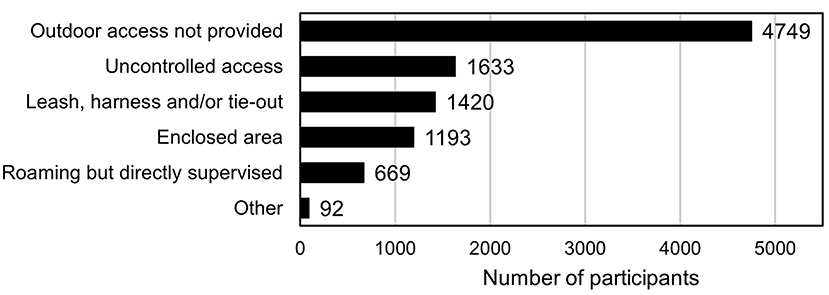
Uncontrolled outdoor access for domestic cats enhances physical and mental stimulation but also poses risks such as injury, illness, and wildlife predation. Despite recommendations to keep cats indoors, many owners still allow varying degrees of outdoor access. A cross-sectional survey conducted with 7,838 cat owners in Canada and the United States sought to explore attitudes and practices regarding this issue.
Read More
The survey revealed that 57% of cat owners kept their cats exclusively indoors, while 43% allowed some outdoor access. Among these, 21% provided their cats with uncontrolled access. Factors influencing this provision included cat characteristics (e.g., sex, breed), health or behavioral issues, home environment features (e.g., presence of other pets), owner perspectives on the benefits and risks associated with outdoor access, and demographic details such as gender and education level.
Only a small proportion of the cats with uncontrolled access were reported to have collars or microchips, indicating a need for better education on protective measures for outdoor cats.
In Canada, approximately 37% of households own at least one cat, representing about 9.3 million cats, while in the U.S., cat ownership stands at about 95.6 million. Reports suggest that 56% of Canadian cats are kept indoors, with others split between those having controlled outdoor access and those allowed some uncontrolled access.
Outdoor access is argued to benefit cats by promoting natural behaviors such as hunting and climbing, but it also increases health risks associated with disease transmission, injuries, and environmental hazards. Stray cats pose additional threats to wildlife, with estimates indicating billions of bird and mammal deaths annually due to cat predation in the U.S. A 2016 report indicated that 56% of cats admitted to Canadian shelters were strays, highlighting the issue of lost pets potentially contributing to feral cat populations.
Limited research on owner attitudes towards outdoor access in North America showed that those restricting access frequently cited concerns about traffic, wildlife, and potential health risks to their cats, while others felt that outdoor access improved mental and physical well-being. The study emphasizes the complexity of factors influencing cat owners' choices regarding outdoor access and calls for more education and research to ensure the welfare of both cats and wildlife.