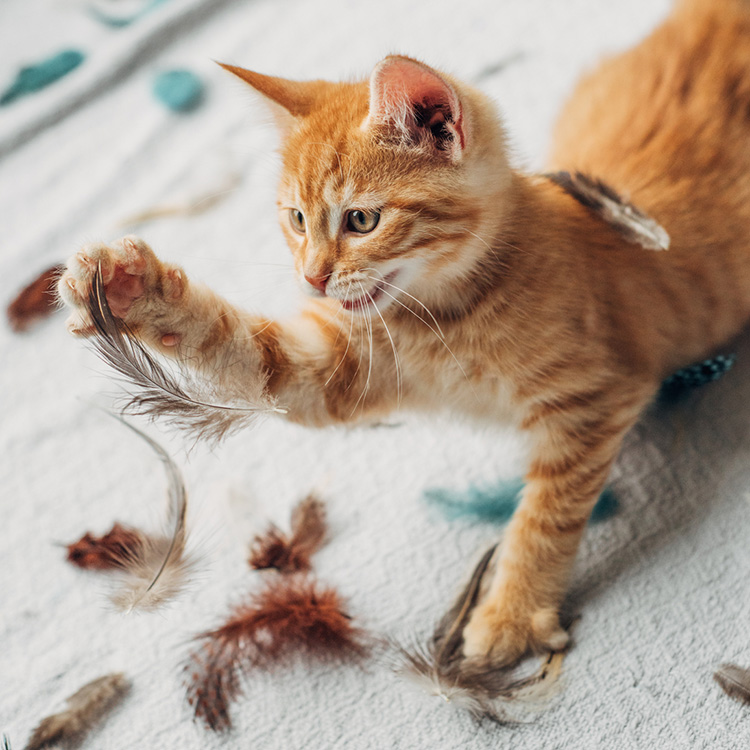
The popularity of orange cats on social media has sparked interest in what is termed "orange cat behavior." This phenomenon suggests that cats with fiery-colored fur are particularly endearing or quirky. However, experts in feline behavior urge caution in attributing personality traits solely based on coat color.
Read More
While many cat owners believe orange felines exhibit distinct personalities, anecdotal evidence does not support a consistent pattern. As observed by veterinary behaviorist Dr. Mikel Delgado, no scientific studies have established a direct link between coat color and behavior. Although some surveys imply perceived behavioral differences, they often rely on subjective interpretations rather than empirical data.
This perception may stem from cultural portrayals of orange cats in media, such as Garfield's laid-back demeanor or the antics of cats in various movies. Nevertheless, many cats, regardless of color, can demonstrate similar behaviors, and the “orange cat behavior” trend lacks a scientific basis.
The majority of orange cats, approximately 80%, are male, which could influence perceptions of their behavior being more rambunctious or playful. However, this observation might also reflect societal biases in how we perceive male and female animals. According to cat behaviorists like Kristiina Wilson, these patterns highlight the tendency for individuals to notice behaviors that confirm their beliefs while disregarding those that don't.
Moreover, genetics, environmental factors, and learned experiences play significant roles in shaping a cat's behavior. Personality is influenced by a multitude of aspects rather than being dictated by their fur color alone.
Unlike breeds that may show certain traits, orange cats do not form a distinct group in terms of behavior. They can belong to numerous breeds, including Persians and American Bobtails.
While orange female cats are feasible, they are significantly rarer, comprising roughly 20% of the population due to the genetic mechanism associated with orange coloration.
Ultimately, every cat has its own unique personality, independent of color, underscoring the idea that our perceptions often reveal more about societal attitudes than they do about the animals themselves. Understanding these factors can lead to a more nuanced view of cat behavior, emphasizing acceptance of individual differences across all cats.