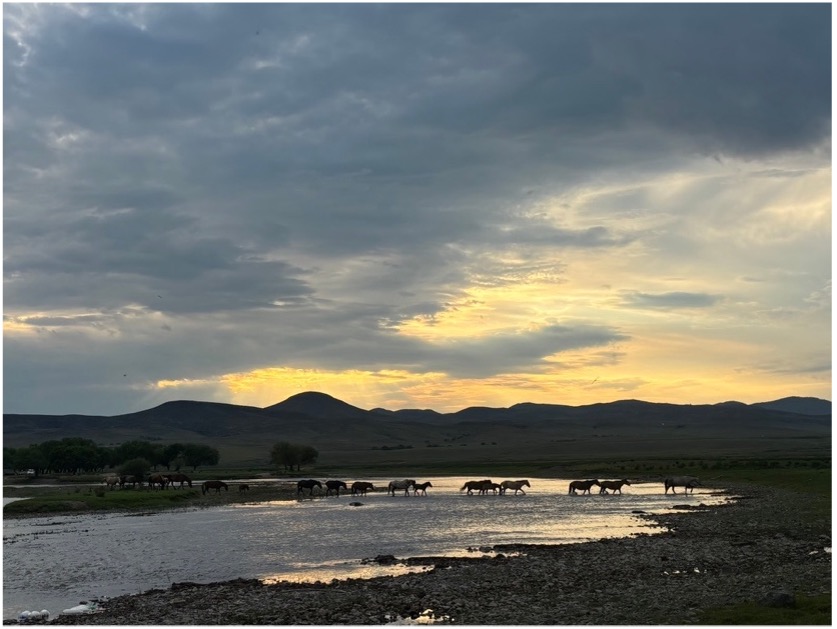
For the past two months, I have participated in daily operations at a veterinary non-governmental organization (NGO) in Ulaanbaatar, Mongolia. This organization focuses on community engagement and provides training in areas where access to veterinary care is limited. Through hands-on training, local farmers and veterinarians gain essential skills and expertise, working alongside foreign professionals.
Read More
The project I joined, partly funded by Cornell’s Expanding Horizons program, centered on milk quality testing for dairies around Ulaanbaatar and in the Central Tuv province. Milk quality testing identifies mastitis in cows, a condition that can adversely affect dairy production, animal welfare, and health. Until this project, large-scale documentation of milk culturing results in the area was lacking. Drs. John and Laurie Day, experienced dairy veterinarians from Idaho, served as my supervisors.
Under their guidance, a small team of Mongolian veterinarians and I traveled by Buhanka van, designed for rugged landscapes, to visit dairy farms. We aimed to collect samples before morning milking, requiring early departures around 4 a.m. Following strict protocols to avoid contamination during sample collection was challenging due to the presence of cows and environmental factors. We collected approximately 300 samples from six dairies, then analyzed them using an old refrigerator to incubate cultures on bovine blood agar plates.
Additionally, I witnessed the significant impact of continuing education on fostering relationships and improving veterinary practices in Mongolia. Veterinarians frequently travel using old Russian vans to train young animal handlers and vets in rural areas. Interns from the countryside also participate in a six-month postgraduate program in Ulaanbaatar. During our countryside visits, we shared meals of Mongolian mutton khorkhog and fermented mare’s milk, bonding over cultural exchanges, including songs about horses and the steppe.
An unexpected challenge during my stay was the emergence of resistant strains of foot-and-mouth disease (FMD). This highly contagious viral disease affects livestock and prompted strict biosecurity measures in affected regions, including quarantine and culling to prevent the spread. These concerns restricted our sampling area and required stringent disinfection protocols after each farm visit. In one exercise at a polytechnic school, students demonstrated their knowledge of the clinical signs of FMD based on their experience as herders.
During my time in Mongolia, I was fortunate to experience the Naadam festival, a nationwide celebration featuring horse racing, archery, and wrestling. This festival drew many people to the countryside, where I was welcomed by a local veterinarian's family for two days. The experience included milking mares, preparing local dishes, and herding cattle, offering a glimpse into the slower-paced yet hardworking Mongolian lifestyle.
Ultimately, my goals included collecting milk samples and enhancing my veterinary skills, but I learned that the value of experiences often transcends measurable outcomes. The Mongolian people’s flexibility and warmth reminded me to embrace spontaneity and cherish moments spent with others. I found myself appreciating scenic drives and shared meals over lab test results.
I extend my gratitude to the Expanding Horizons International Education Program, the Einaudi Center for International Travel Research, and the American Association of Bovine Practitioners for supporting my efforts in Mongolia. I also thank Catherine and Curtis Cummings for their generous funding in memory of their son Garth Cummings, as well as the U.S. veterinarians who assisted my travel preparations and the exceptional veterinarians I worked with in Mongolia.
Nicholas Wang is a second-year veterinary student in the DVM class of 2029, with interests in veterinary public health and population medicine across various contexts.