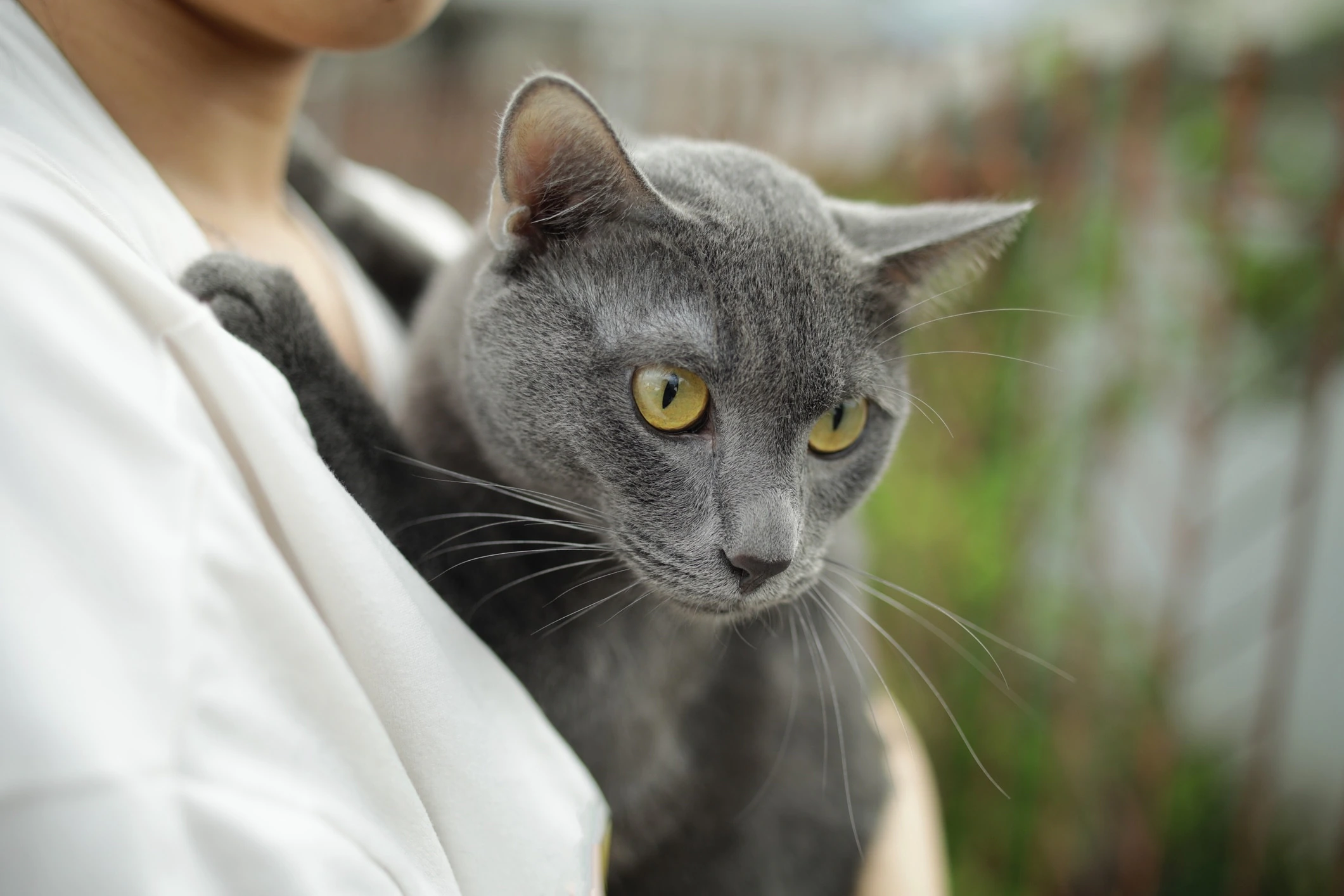
The Korat breed is a treasured part of Thai culture, symbolizing prosperity, health, and good fortune. Originating from the northeastern plateau of Thailand, these cats possess grayish-blue coats that allow them to blend in with their natural surroundings. Traditionally, Korats were given as wedding gifts to forecast fortune and fertility for newlyweds.
Read More
In 1959, Korats made their debut in the United States when cat enthusiast Jean Johnson received a pair from a friend in Bangkok. Despite their arrival nearly sixty years ago, Korats remain a rare breed, largely due to their small gene pool and limited availability.
According to the Korat and Thai Cat Association (KTCA), today's Korats closely resemble their ancestors and are among the least altered breeds by modern breeding practices. They are recognized for their striking blue coats tipped with silver and are known to be intelligent and sociable.
On average, a Korat can weigh up to 10 pounds and measures between 15 to 18 inches in length.
Caring for a Korat involves understanding their social needs. These cats thrive on interaction and affection, enjoying cuddles and playtime. They are lively and playful, often displaying vocal tendencies similar to Siamese cats. As stated by Bobbie Weihrauch, treasurer for Twin City Cat Fanciers, Korats are intelligent and loving pets that bond closely with their human companions.
Despite their beauty, potential pet owners should not select Korats solely based on appearance. They require attention and companionship to truly thrive.
Korat Health Issues
Korat cats are generally healthy, with Weihrauch noting minimal veterinary bills among her experiences with the breed. Their lifespan ranges between 10 and 15 years, but they are susceptible to certain health issues.
One significant condition is GM1 gangliosidosis, a genetic lysosomal storage disorder. This neurological disease is caused by a deficiency in the enzyme beta-galactosidase, leading to the buildup of certain carbohydrates in cells. Symptoms often appear at 2 to 3 months of age and can include vision loss, difficulty walking, and lethargy. The condition is progressive and typically fatal by one year. Ethical breeders should screen for this disease to mitigate risks.
Additionally, like all cats, Korats are prone to dental disease, which can result in pain, tooth loss, and broader health issues. Regular dental care, including daily brushing with pet-specific tools, is essential for prevention.
Feeding a Korat requires attention to their nutritional needs. Owners should provide a diet that meets standards set by the Association of American Feed Control Officials (AAFCO) and consult with veterinarians about specific food recommendations. Adult Korats should be fed twice daily, while kittens require more frequent meals to support growth. Free-feeding is discouraged to prevent obesity.
Korat Behavior and Training
Korats are known for their strong personalities and desire for companionship. While they are generally friendly, they may be cautious around strangers, taking their time to assess new visitors. They enjoy climbing and can often be found perched at high vantage points.
Interactive play is vital for Korats, with recommendations for at least two or three short play sessions daily. Their intelligence allows them to be trained effectively. Positive reinforcement methods can help in training sessions.
Grooming and Health Maintenance
Generally low-maintenance, Korats have a single coat that requires minimal grooming. A weekly brushing suffices, as they shed lightly and do not develop mats. Eye care is typically uncomplicated, but owners should monitor for any changes that may indicate health issues.
Ear health is also vital; owners should look out for redness or odors that could signal infections or mites. For dental health, regular tooth brushing and professional cleanings are recommended, along with dental treats that carry Veterinary Oral Health Council (VOHC) approval.
Korat Considerations for Pet Owners
Korat cats are affectionate companions that thrive with human interaction. They have high energy levels and remain playful well into adulthood. Potential owners should consider their lifestyle, as long periods away from home may not suit the needs of this breed.
Korat cats, with their vibrant personalities and distinctive looks, are indeed special, although they often go unnoticed due to their simplicity. On average, a purebred Korat kitten can cost up to $2,000.