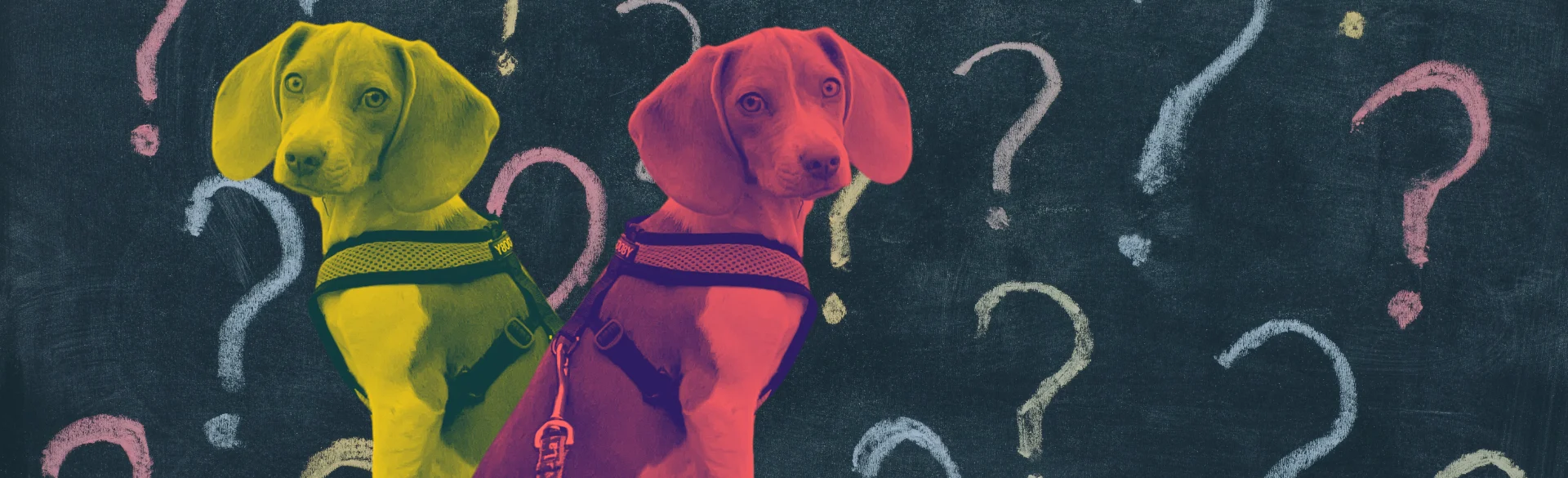
Lila, a registered purebred beagle, has received conflicting DNA results from various testing companies, indicating she could be part rottweiler, part American foxhound, or perhaps not a beagle at all. This discrepancy is highlighted in a recent study from the Department of Biomedical Informatics at the University of Colorado School of Medicine, which found that some direct-to-consumer (DTC) dog DNA testing companies might prioritize photographs of dogs over genetics in their assessments.
Read More
In one case, one of the six companies analyzed in the study identified Lila as 50% poodle and 50% bichon frisé, with no recognition of her beagle lineage. Casey Greene, PhD, founding chair of the DBMI, noted that the inquiry began after discussions about the dependability of consumer genetic tests revealed that some services solicit dog photos for their assessments.
Initiated in late 2021, the study examined 12 dogs representing different purebred breeds, all either registered or eligible for registration with breed organizations. Each dog underwent cheek swab testing sent to six distinct DTC companies claiming to test for canine lineage.
Halie Rando, PhD, the study's lead researcher, explained that by using purebreds, the researchers expected test results to align with known breeds. For half of the samples, accurate photos of the corresponding dogs were submitted, while for the other half, pictures of different breeds were included.
Five of the six companies provided mostly accurate results for the DNA samples accompanied by the incorrect photos. However, Accu-Metrics improperly labeled a dog as part border collie and part golden retriever, seemingly based more on the photo than the DNA. The same company also misidentified Lila, entirely dismissing her beagle status.
Researchers stated that there is no scientific justification for requiring a dog photograph to analyze DNA. Their findings indicated that most tests yielded breed predictions that did not align with the registered breed. Variances in testing methods could account for some discrepancies, but it does not clarify why Lila was entirely misclassified in one test.
The implications of inaccurate results extend beyond mere curiosities; misidentifications can have serious consequences for dog owners. For over four decades, breed-specific legislation has been enacted in some municipalities, prohibiting ownership of certain breeds like “pit bulls” and rottweilers. This has affected insurance and rental opportunities based on perceived breed types. In the CU study, a company misidentified a bulldog as a wolf hybrid and incorrectly classified Lila as a rottweiler. Accu-Metrics also provided erroneous ancestry predictions for other breeds, potentially leading to significant financial repercussions for dog owners.
While the study focused on breed identification, the researchers indicated concerns over health and trait analyses that some DNA companies offer, stressing the importance of accurate genetic information. Misinterpretations of such data can lead to severe consequences for pet health and owner liabilities.
Greene advised dog owners to exercise caution with DTC DNA tests. "Not all tests are created equal," he said. The researchers emphasized the need for independent evaluations of these services to understand their respective merits and shortcomings.