The Duke Canine Cognition Center, part of the Department of Evolutionary Anthropology, was co-directed by Brian Hare, an associate professor who has dedicated his career to studying dog psychology. His interest began in the mid-90s while studying at Emory University under Michael Tomasello, who discovered that chimpanzees did not comprehend pointing gestures. Hare wondered if dogs could understand similar cues, leading him to focus his research on canine cognition.
Read More
Since its establishment in 2009, the center has explored the mental capabilities and limitations of dogs by inviting local dog owners in the Triangle area to participate in problem-solving games with their pets. With nearly 2,000 dogs registered in its database, the center has attracted interest from pet owners as far away as California and London, demonstrating a broad desire for insight into canine behavior.
“Dogs are part of our family,” Hare said, emphasizing the connection between humans and dogs. The center conducts new research each semester, utilizing a variety of trials to learn more about dogs' patience and social preferences.
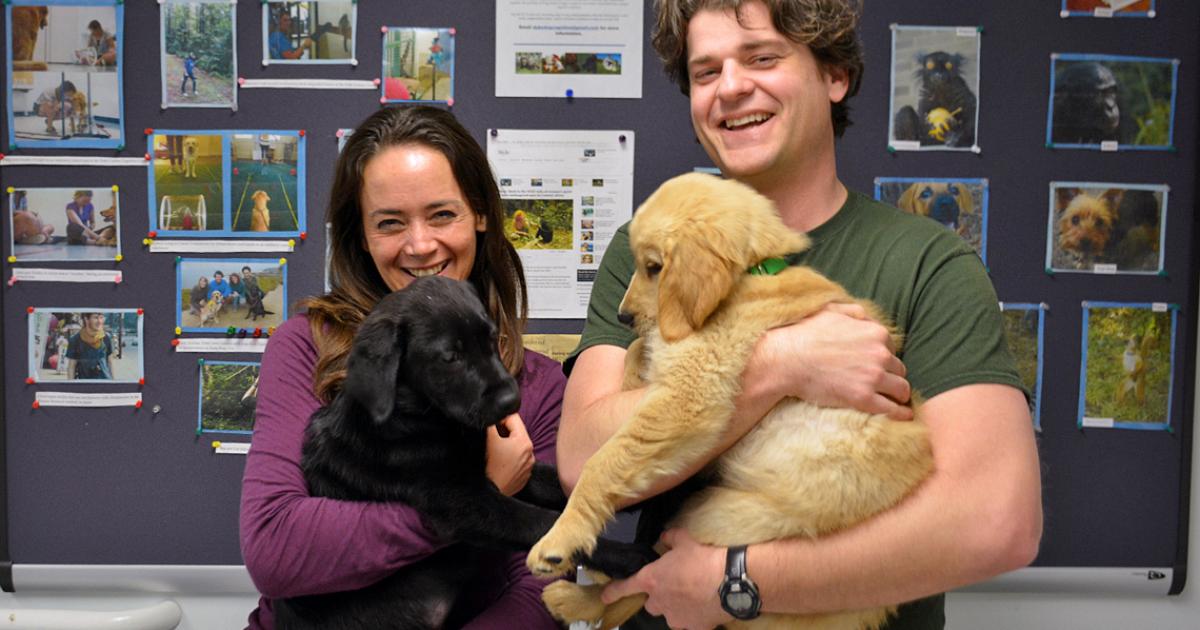
In March, two puppies were introduced for a pilot program called “The Duke Puppy Kindergarten,” in collaboration with Canine Companions for Independence. This initiative seeks to identify traits that make dogs suitable for assistance roles, where they undergo extensive training for individuals with physical or mental disabilities. The organization reports a pass rate of 50 percent for the service training, and dogs that do not qualify are placed for adoption. If successful, the pilot could see up to 10 puppies hosted by the center this fall.
Hare likened the experience of these puppies to that of undergraduate students exploring different fields of study, suggesting that finding the right fit can lead to success.
Residents can volunteer their dogs for testing at the center, provided they are up to date on vaccinations. When called upon, dogs may be selected based on specific traits, and testing sessions generally last between 45 to 90 minutes. One test involves a researcher using different tones to call a dog while presenting a treat behind a barrier, examining how the dog navigates the challenge.
Vanessa Woods, a research scientist at the center, noted the shared curiosity about understanding what dogs think. Another test compares a dog’s reaction to treats from two strangers, evaluating preference.
Hare highlights the achievements of former students from the center, like Emily Bray, whose research demonstrated that more energetic dogs tend to underperform when stressed, while calmer dogs excel. Evan MacLean, another alum, founded the Arizona Canine Cognition Center after earning his PhD at Duke.
Hare expressed pride in the willingness of community members to bring their dogs to the center, remarking that 95 percent of requests for participation are met with enthusiasm. He noted, however, that excitement sometimes leads to early arrivals for sessions.