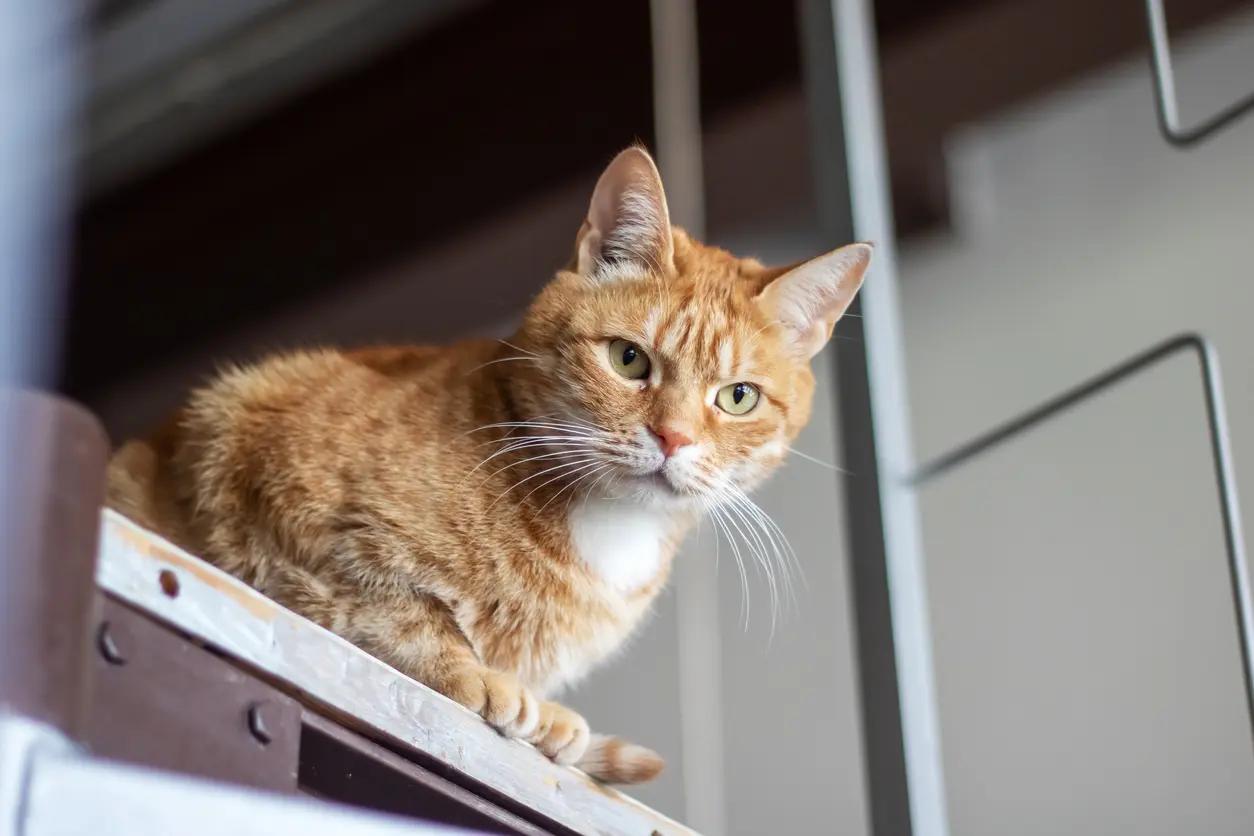
A recent study led by researchers at Kyoto University sheds light on the cognitive abilities of domestic cats, revealing their capacity to track their owners’ movements even when out of sight. The research, conducted by Saho Takagi and her team, was published in PLOS One and provides insight into the socio-spatial cognition of these animals.
Read More
The study involved a series of experiments where various sounds were played to participating cats, including their owners' voices, strangers' voices, nonverbal sounds, and meows from other cats. The researchers noted the cats' reactions, and findings showed that the animals displayed clear surprise when they heard their owner’s voice coming from a different room than where they had last seen them. This reaction was unique to the owner’s voice, indicating that cats have a mental representation of their owner's location and can create a cognitive map of their movements within the home.
The research highlighted that cats utilize sophisticated environmental cues to monitor their owners, a process that involves complex cognitive functions related to spatial and temporal memory. The results challenge the stereotype of cats as independent and detached, revealing that they are consistently attentive to their human companions.
Key abilities observed in the study include:
- The ability to create mental maps of their living environment,
- Tracking human movements through auditory signals,
- Anticipating their owner's location,
- Reacting with surprise to unexpected spatial changes.
This level of cognitive tracking shows a significant social bond between cats and their owners, contradicting the notion that their interest is solely driven by the prospect of food. The researchers noted a phenomenon they termed “perceived teleportation,” where cats reacted in surprise when their owner appeared in an unexpected location.
These findings suggest that cats have developed adaptive mechanisms through evolution, enhancing their social cohesion and ability to anticipate the needs of their family group. This groundbreaking research enhances our understanding of feline intelligence and underscores the importance of the human-cat relationship.