Indoor cats often experience a routine filled with attention, rest, and scheduled meals, yet they can become restless without the exploration and stimulation that outdoor cats enjoy. To help bridge this gap, pet owners can implement enrichment strategies within their cats’ mealtime routines.
Read More
Dr. Erin Ray, a clinical assistant professor at the Texas A&M College of Veterinary Medicine and Biomedical Sciences, emphasizes the importance of mental and physical stimulation for indoor cats. Unlike their outdoor counterparts, indoor cats typically require more intentional enrichment as they lack opportunities to roam and hunt. Ray noted, “While an indoor lifestyle can be safer for cats, indoor cats are not hunting for their food and may have limited playtime, leading to less physical activity.”
This lack of stimulation can lead to destructive behaviors, such as chewing on household items, inappropriate elimination, and scratching. Furthermore, a study by the Association for Pet Obesity Prevention in 2022 revealed that 61% of cats in the U.S. are classified as overweight or obese, which can result in decreased mobility and various health issues.
To engage their cats’ instincts, owners can modify feeding routines. For instance, adjusting the type, size, and location of food and water bowls can cater to individual cats' needs. Ray suggests using tilted or raised bowls for cats with discomfort in their mouths or necks, stating that they can even help reduce chin acne. Cats may also benefit from open bowls to prevent whisker fatigue, as many dislike touching their whiskers to the sides of their bowls.
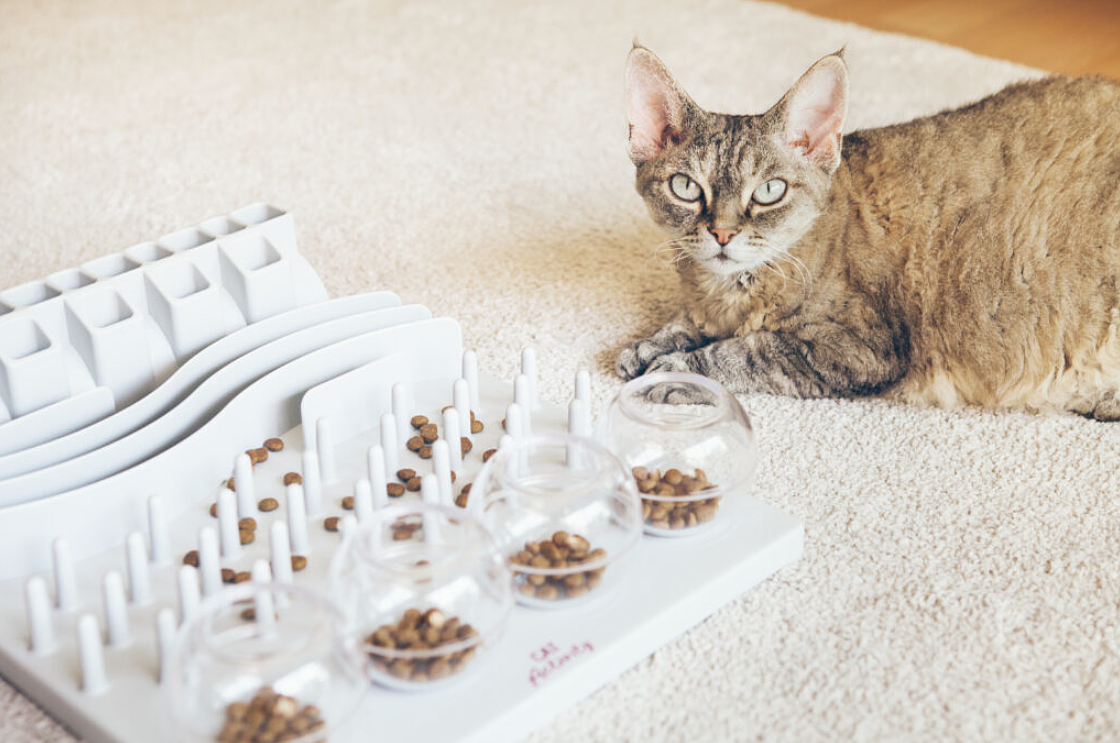
Puzzle feeders present another option, allowing cats to work for their food rather than using traditional bowls. These feeders and silicone lick mats encourage slower eating and can provide stress relief, making them useful during grooming or bathing sessions. Additionally, owners can create interactive experiences by hiding treats or food around the home for their cats to find. Simple activities, like hiding treats in a towel, can stimulate their hunting instincts and strengthen the bond between pets and owners by promoting physical activity and reducing anxiety.
As with any new feeding tool or game, safety is paramount. Dr. Ray advises owners to monitor their cats closely to prevent ingestion of small puzzle pieces or materials. Avoid products with small parts that could pose choking hazards or those with toxic coatings. Additionally, introducing puzzles gradually can help alleviate any frustration pets might feel from having to work for their meals. Keeping feeding items clean after each use is also essential to prevent the buildup of harmful bacteria.
Incorporating enrichment into mealtime helps support the overall health and happiness of indoor cats, significantly improving their quality of life.