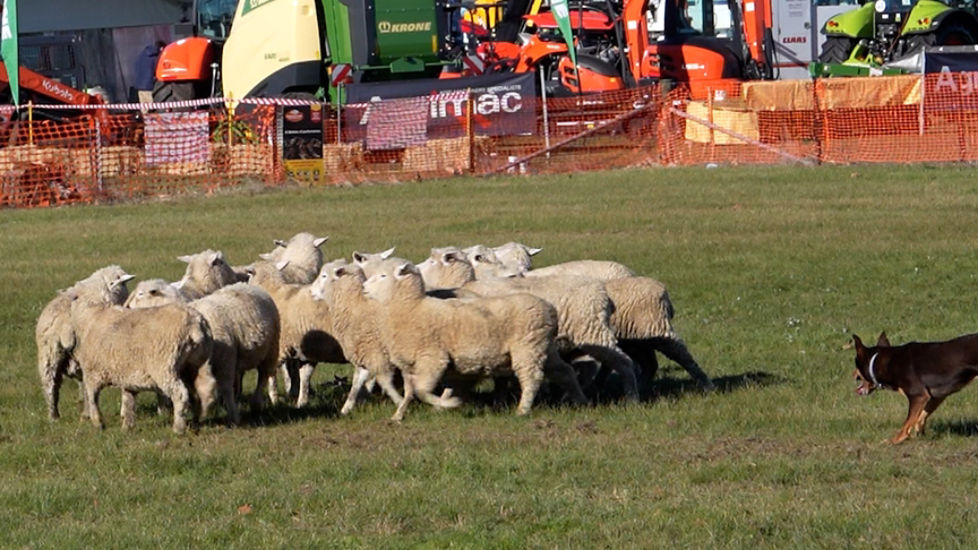
Working dogs play an essential role on sheep and cattle farms across Australia, significantly reducing labor and improving stock management. During the recent farm dog championship at Sheepvention in Hamilton, Victoria, the skills of these dogs were put to the test in one of the state’s most challenging trials.
Read More
The competition compresses a full day’s work into a single run, requiring dogs to pen sheep, combine two groups, guide them up a race, draft a specified number, load them onto a truck, and navigate them back through a fence gap. Each performance begins with a perfect score of 100, with judges deducting points for errors.
Joe Spicer, a prominent working dog breeder, argues that trial dogs are essentially highly trained farm dogs. He emphasizes that all dogs participating are actively working on farms daily.
Spicer notes that many newcomers to the sport underestimate the capabilities of these dogs. He states, "People just don’t realize how amazing these dogs are and what they can do, and how much time they save you." He explains that the best dogs work by guiding stock rather than coercing them, helping to create a calmer working environment.
A well-trained dog can effectively manage sheep, minimizing the stress on animals during routine procedures such as vaccinating or drenching them. Josh Latty, a kelpie breeder and organizer of the Victorian Farm Dog Championship, adds that this approach promotes better animal welfare and reduces risks of injury for both sheep and handlers.
The championship also influences the future of working dog breeding. The dogs that excel at this event become valuable breeding stock, shaping the next generation of working dogs. Spicer runs an online auction for dogs ranging from fully trained to six-month-old pups, alongside training clinics.
Latty considers the trials a critical assessment of his dogs’ abilities, helping determine their suitability for breeding based not just on obedience, but also on character and drive.
Despite the competitive nature of the event, participants cite camaraderie and community as key reasons for their involvement. Latty remarks on the inclusive atmosphere of the sport, while Spicer encourages competitors to focus on enjoyment rather than the stakes involved.