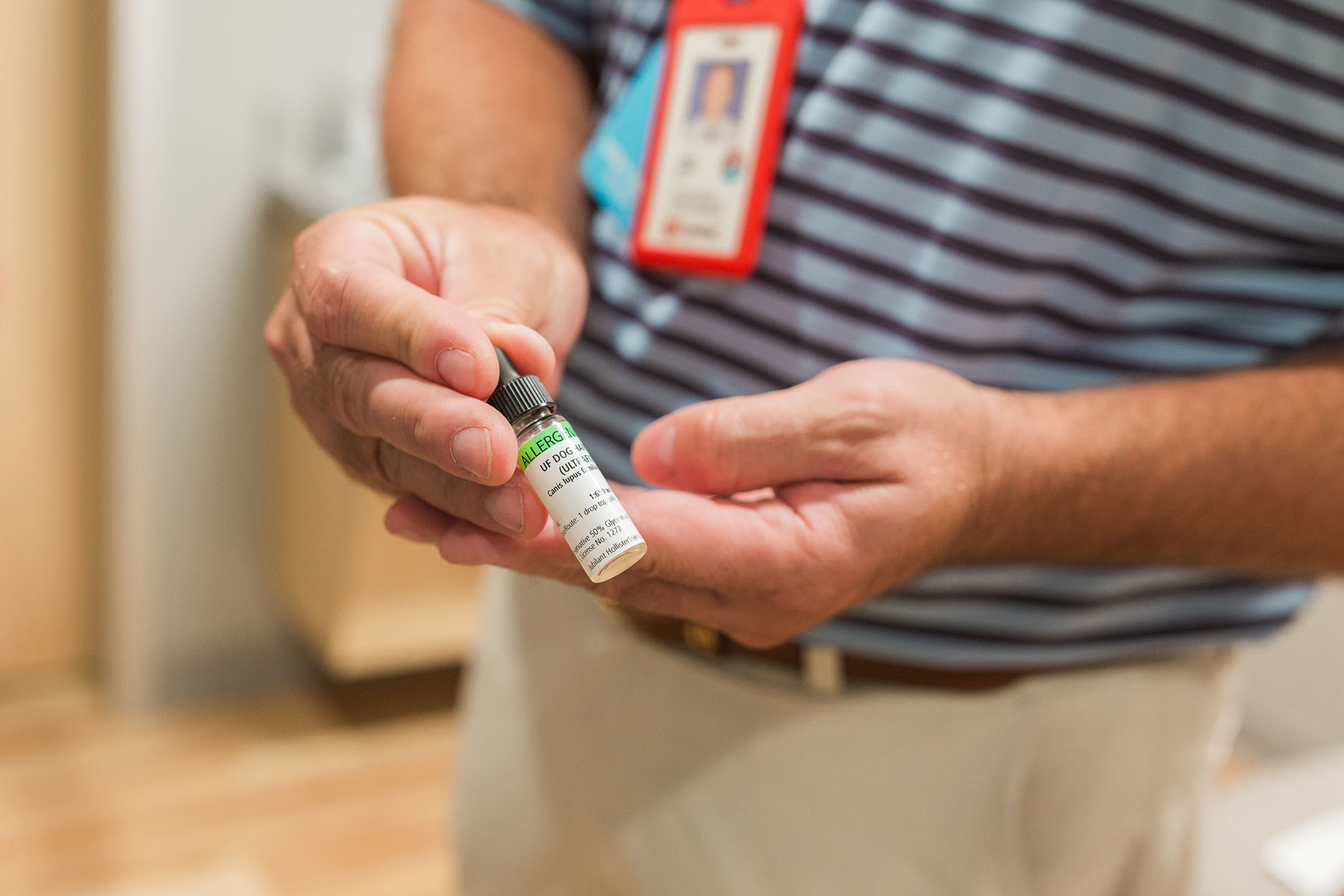
Researchers at the University of Nebraska Medical Center (UNMC) have developed a more effective method for testing dog allergies, offering clarity to patients who previously tested negative but continued to experience symptoms.
Read More
Dr. Andrew Rorie, an associate professor in the UNMC Division of Allergy and Immunology, and allergy fellow Dr. Alex Penrice conducted skin tests on 300 patients in the study. They compared the efficacy of three products: dog epithelium, acetone precipitated dog, and a newly approved product known as ultrafiltered dog, to determine which was most effective in identifying dog sensitization.
Dr. Rorie noted that there have been instances where patients received negative results from skin and serum allergy tests but maintained they were allergic to dogs. Previously, two primary products, dog epithelium and acetone precipitated dog, were used for testing.
In January 2023, ultrafiltered dog received FDA approval for dog immunotherapy. Dr. Rorie mentioned that while the new extract was approved, no one had conducted skin testing studies with it until now. The UNMC team has found that ultrafiltered dog outperforms both previous testing methods.
Clinics had primarily used acetone precipitated dog for testing, but following the study’s findings, they have transitioned to ultrafiltered dog, which detects about 5% more cases of dog allergy than the acetone product and 14% more than dog epithelium.
Dr. Rorie emphasized that this advancement not only changes testing procedures at UNMC but may also influence national and international practices. The new method can lead to better treatment options for patients, significantly improving their quality of life and allowing them to enjoy time with their pets.
The findings of the study were published in The Journal of Allergy and Clinical Immunology: In Practice on July 10.