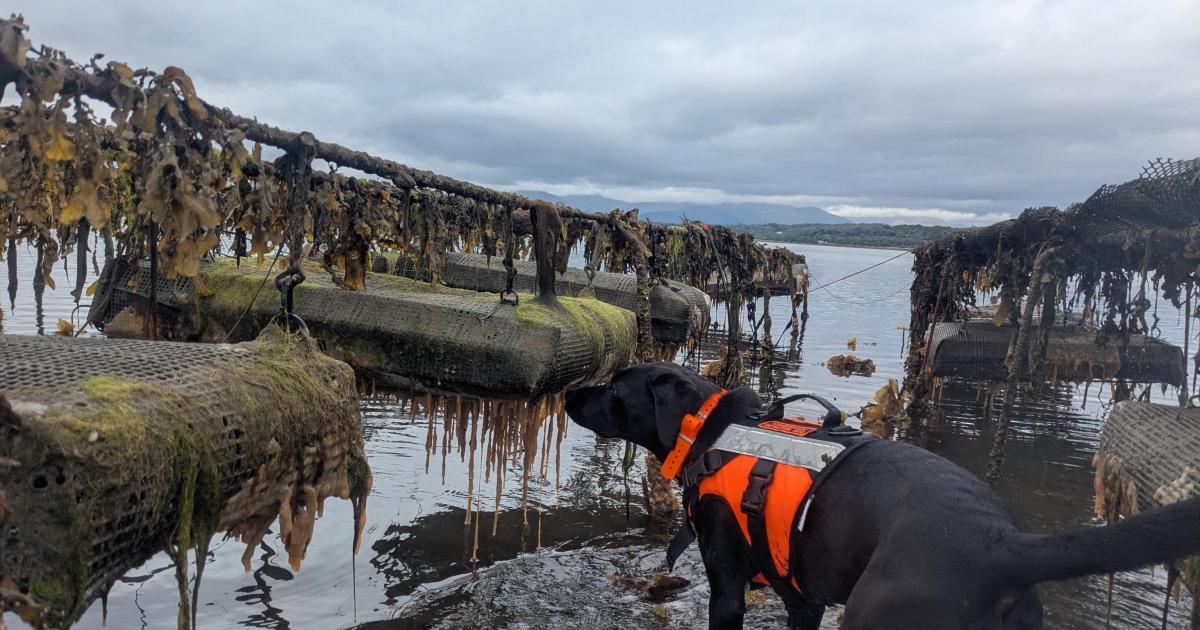
Sgiath, a detection dog trained to identify the invasive marine species Didemnum vexillum, known as ‘sea vomit,’ is being honored with the Animal of the Year award from the International Fund for Animal Welfare (IFAW). This recognition highlights her significant contribution to protecting UK coastlines.
Read More
The award ceremony will take place on Thursday, October 15, at BAFTA London, where Sgiath and her handler, marine ecologist Dr. Texa Sim from Glasgow, will be celebrated for their pioneering efforts.
Sgiath is believed to be the first dog trained globally to detect this harmful organism, which poses a threat to native wildlife and aquaculture, including oyster farms. By sniffing out small fragments attached to boat hulls and fishing gear, Sgiath can help prevent the organism from establishing itself in new areas.
The invasive species can quickly smother native marine life and spread across various marine infrastructures, leading to costly management efforts once established. Sgiath’s early detection capabilities are becoming increasingly vital, especially as climate change creates conducive environments for such invasions.
Dr. Sim recognized the potential for employing detection dogs in marine conservation while working on oyster restoration projects along Scotland's west coast. Despite initial uncertainties about the feasibility of using dogs in this context, the project has exceeded her expectations.
Not only has Sgiath excelled in detecting the species among other marine organisms, but she has also been joined by her protégé, Uisge, a three-year-old Labrador. Together, they have demonstrated remarkable skill in identifying the invasive species and its scent in water samples.
Dr. Sim expressed her surprise at the dogs' capabilities, noting their ability to detect extremely low concentrations of scent. Sharon Livermore, IFAW's Director of Marine Conservation, praised Sgiath’s trailblazing work, highlighting the potential for dogs to contribute to conservation in innovative ways. Livermore emphasized the urgency of early detections as warmer seas this summer have intensified the threat of invasive species.