Domestic cats (Felis catus) are prominent sources of indoor allergens, particularly associated with respiratory allergies. The prevalence of sensitization to cat allergens, primarily Fel d1, has been rising. Nearly a quarter of households in the USA and Europe own cats, which increases the likelihood of allergic reactions among residents in those homes.
Read More
Fel d1, recognized as the most significant allergen, is a glycoprotein produced mainly by cats’ salivary and sebaceous glands. It is transferred to cats’ fur during grooming and can easily become airborne, leading to prolonged exposure in sensitive individuals. Exposure to the active form of Fel d1 (aFel d1) triggers an allergic response by binding to IgE antibodies and causing mast cell degranulation.
Current treatment options for cat allergies include antihistamines, allergen avoidance, and allergen immunotherapy, the latter of which has limited support for efficacy against cat allergens and can pose challenges for patients with asthma.
A novel approach presented by researchers involves using anti-Fel d1 antibodies derived from the avian IgY system. These antibodies, found in egg yolks, can potentially neutralize aFel d1 when included in the cat's diet. The hypothesis is that while the production of Fel d1 may not change, the presence of IgY antibodies could reduce the amount of aFel d1 transferred to the fur during grooming, minimizing exposure to humans.
At the European Academy of Allergy and Clinical Immunology (EAACI) Congress held from June 1 to 5, 2019, researchers provided insights into their studies on Fel d1 variability in feline saliva and the effects of IgY antibodies. One part of the study assessed 64 healthy, neutered cats to explore factors like age and breed affecting salivary Fel d1 levels. The findings revealed substantial variability within and among cats, with older cats (11-15 years) showing lower Fel d1 levels compared to younger ones (1-5 years).
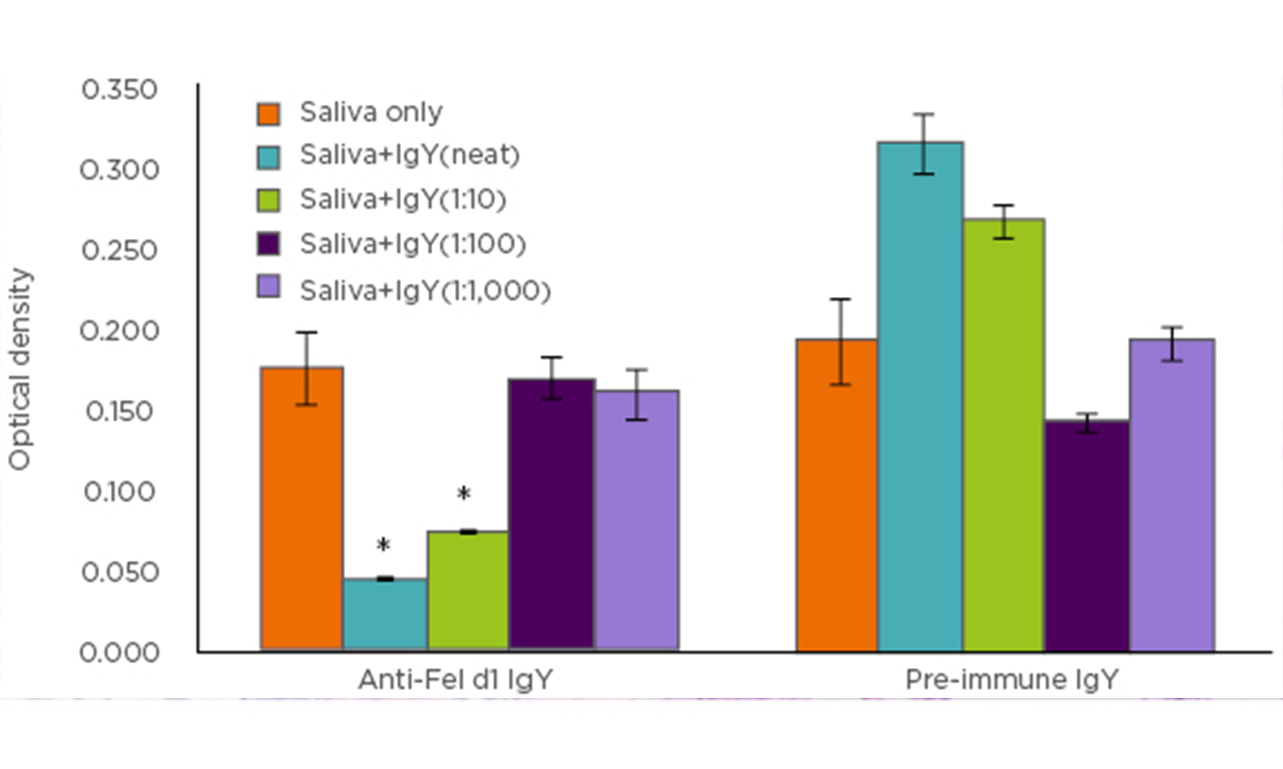
Another aspect of the research evaluated the effectiveness of IgY antibodies in blocking Fel d1 from binding to IgE, utilizing assays that demonstrated a specific reduction in the allergic response. In a pilot feeding trial involving 20 cats, those receiving a diet supplemented with the egg product containing anti-Fel d1 IgY showed a 24% reduction in salivary aFel d1 levels after three weeks.
Further investigation into the impact on aFel d1 levels on cat hair involved 105 domestic shorthair cats over a 10-week period. Results indicated that 97% of the test group cats experienced a reduction in aFel d1 in their hair, with an average decrease of 47% noted by the end of the study.
To assess the implications for humans, a pilot study exposed human volunteers to bedding from cats on either a control diet or a diet enriched with anti-Fel d1 IgY. The study showed that overall nasal symptom scores improved significantly when exposed to blankets from the test diet. Although some ocular symptoms showed improvement, further research is needed to confirm these findings in a larger population.
This innovative approach aims to neutralize Fel d1 in a cat's saliva before it can provoke allergic reactions in humans, offering a promising new strategy to manage cat allergies. Ongoing studies will be essential to validate the efficacy of this method in real-world settings.