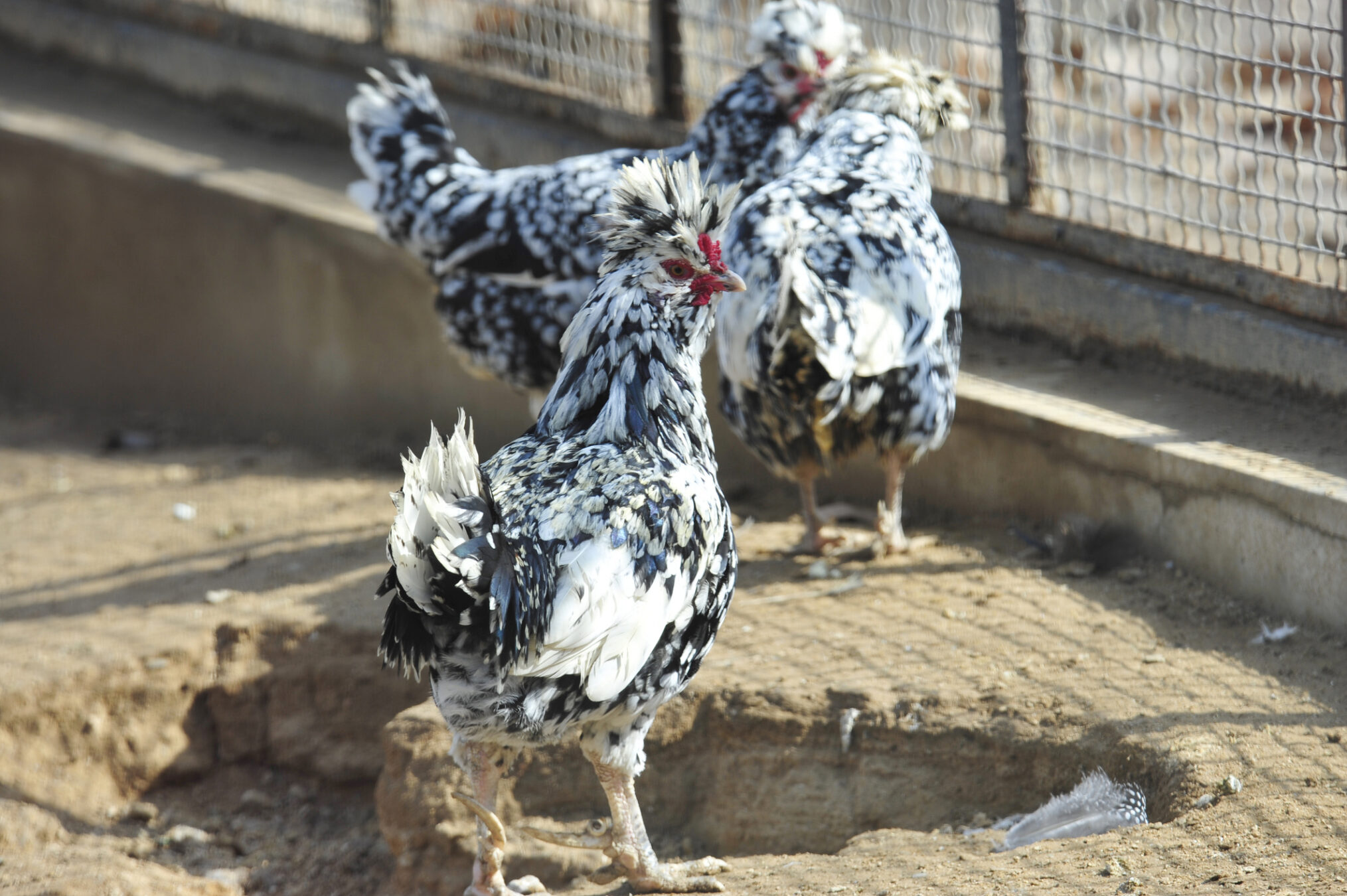
Researchers at Texas A&M University have discovered that the white-tipped feathers characteristic of mottled chicken breeds result from different independent mutations within the same gene. Their findings, published in *Animal Genetics*, reveal that at least three distinct mutations in the EDNRB2 gene can lead to the mottled pigmentation pattern, which features white tips on otherwise dark feathers.
Read More
Dr. Leif Andersson, a professor in the College of Veterinary Medicine and Biomedical Sciences, highlighted that although mottled feathers may seem to share a common appearance, they have different genetic origins. Unlike other traits that can often be traced back to a single mutation, mottling has evolved through separate genetic changes that were then preserved through selective breeding due to human preference.
Mottling occurs globally in various chicken breeds, typically manifesting as a spotted appearance where black feathers have white tips. This pattern results when pigment cells fail to reach the tips of newly growing feathers. Unlike the dominant white coloration found in certain chicken populations, which stems from a specific mutation, mottling emerged independently in different chicken groups.
The research team encountered an unexpected issue when investigating mottling across breeds. They found that the mutation previously linked to mottling in Japanese breeds was absent in the Mottled Houdan, a breed originating from France. This discrepancy prompted further investigations, where they employed breeding techniques and genetic mapping.
Through whole-genome sequencing, the researchers identified a different mutation in the EDNRB2 gene in Mottled Houdans and other non-Japanese breeds. The study confirmed that at least three alleles of the EDNRB2 gene could produce similar mottled feather patterns, each stemming from unique mutations. The precise mutations responsible for mottling in several other breeds remain unidentified.
The EDNRB2 gene is crucial for the growth and movement of pigment-producing cells, with reduced function leading to lower pigmentation. Although mottling may appear simple, the genetic mechanisms behind it are complex, illustrating the intricate history of traits within domestic chickens. Andersson noted that while their research on mottling is complete, there are ongoing studies into other genetic variants affecting pigmentation in chickens.