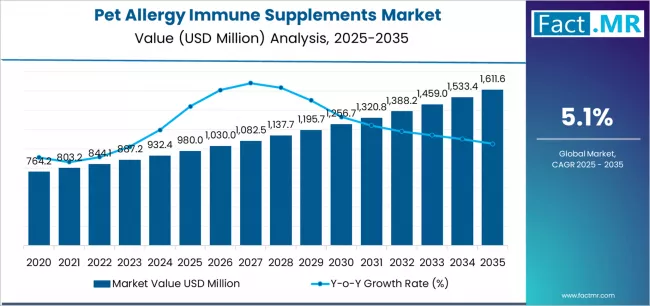
The global pet allergy immune supplements market is anticipated to grow from USD 980 million in 2025 to USD 1.62 billion by 2035, representing a compound annual growth rate (CAGR) of 5.1% over the forecast period. This growth will primarily be driven by rising pet ownership rates in urban areas and a heightened focus on pet health management.
Read More
Increasing consumer awareness regarding preventative care and the need for specialized immune support products are contributing factors to this market expansion. Additionally, investment in veterinary care is expected to rise, further fuelling demand for these supplements. However, market growth may be hindered by fluctuating raw material costs and the complexities involved in product formulations.
By 2030, the market is projected to expand to USD 1.26 billion, marking a value increase of approximately USD 281.3 million, which constitutes 44% of the projected growth for that decade. Innovations in product formulations and the integration of modern veterinary practices are expected to drive the early part of this growth.
From 2030 to 2035, the market is expected to grow by an additional USD 358.7 million, fueled by enhanced focus on species-specific immune solutions and strategic collaborations between supplement manufacturers and veterinary clinics.
By product form, the chewables segment is projected to dominate with a 45% market share in 2025, followed by tablets at 35%, and powders and liquids at 20%. Chewables are favored for their palatability and convenient administration.
In terms of pet types, approximately 70% of the market share in 2025 will come from dog-related supplements, while cat supplements are expected to capture 25%. The online sales channel is forecasted to lead with 55% of the total market, reflecting the growing role of e-commerce in the industry.
Key players in the pet allergy immune supplements market include Zesty Paws, PetHonesty, Nutramax, and Nestlé Purina, among others. These companies are expected to continue their dominance through innovative formulations and extensive distribution networks.
Regional growth is anticipated to be robust in North America, Asia Pacific, and Europe, with particular emphasis on markets in India and China, which exhibit high growth rates due to increasing pet ownership and a focus on animal welfare initiatives. Government support for advanced veterinary practices and technological advancements in supplements will further bolster these markets.
Challenges remain in regulatory complexities and the necessity for sustained educational initiatives for veterinary professionals, particularly in developing regions where advanced healthcare systems are less established.
Overall, the pet allergy immune supplements market is projected to become a pivotal aspect of veterinary care and pet health management solutions.