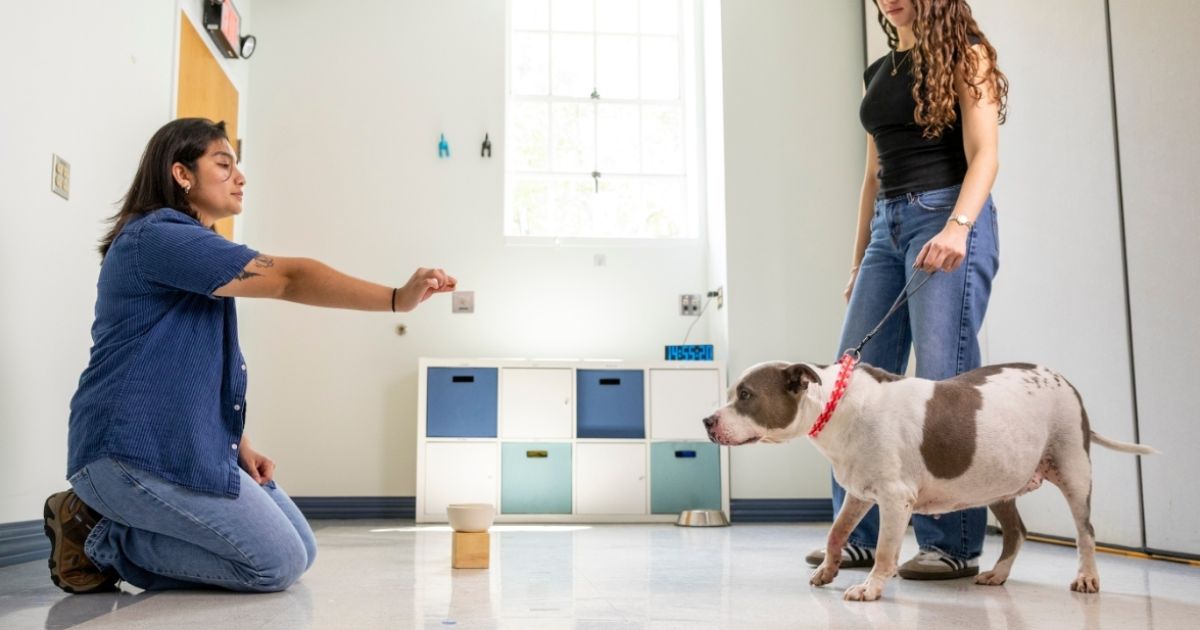
A group of dogs, including Ricky Bobby, Elwood, and Lexi Lemon, are central to a five-year research project aimed at enhancing our understanding of chronic pain in dogs. This initiative seeks to address pain in dogs that share lives with humans, contributing to a broader effort to lessen opioid dependency in medical treatments.
Read More
The project is part of the Helping to End Addiction Long-term Initiative (HEAL) by the National Institutes of Health (NIH), which has prompted scientists to explore non-rodent models for studying chronic pain. Duke University’s Canine Cognition Center has partnered with North Carolina State University (NC State) on this research. NC State handles medical evaluations and emotional assessments, while the Canine Cognition Center investigates cognitive functions like memory and problem-solving.
The objective is to create new models to assess pain and develop treatment strategies for both dogs and humans without relying on opioids.
Research scientist Vanessa Woods, leading the Duke component of the HEAL project, noted the profound effect of pain on human memory, self-control, and social relationships. The study is particularly focused on cognitive tests affected by pain, notably in dogs suffering from osteoarthritis.
Dr. Margaret Gruen, a veterinary behaviorist at NC State, saw the potential for collaboration between the two universities, resulting in a $5.5 million NIH grant obtained nearly two years ago. So far, 163 dogs have been screened for the study, with 45 enrolled. Of these, 22 have osteoarthritis while the others are healthy controls. Rigorous screening ensures that only dogs showing owner-reported pain, clinical signs, and radiographic evidence are included.
Participating dogs undergo tests that evaluate problem-solving and spatial reasoning to gauge their cognitive, emotional, and life enjoyment levels. Gruen emphasized that dogs provide insights into osteoarthritis that rodents cannot, notably because they experience the condition earlier in life.
Testing is voluntary, ensuring that dogs must be willing to participate, which helps maintain the integrity of cognitive testing separate from medical evaluations. This differentiation is crucial for understanding genuine cognitive performance without the influence of stress associated with medical settings.
Lab coordinator Alyssa Pulido commented on the noticeable differences in behavior between osteoarthritis-affected dogs and their healthy counterparts. She observed that pain affects the willingness of dogs to engage in activities, such as when they are required to walk longer distances for a reward.
The study aims to explore how chronic pain impacts cognitive functions, which has been infrequently studied in dogs despite the parallels with humans. If successful, this research could pave the way for veterinarians to adopt simplified cognitive tests to assess the impact of pain on dogs' emotional and cognitive well-being.
Dr. Francis Keefe, a key member of the team and former director of the Duke Pain Prevention and Treatment Research Program, highlighted the potential of dogs to inform our understanding of the social aspects of pain. He noted the influence of owner behavior on a dog's pain experience, drawing parallels between canine and human responses.
As data collection continues, initial findings suggest the stability of test results over time, which is critical as the project prepares to expand. Future phases aim to include 250 dogs, some receiving pain treatments while others receive placebos, to examine the relationship between cognitive-emotional markers and pain relief.
Woods concluded by expressing her commitment to research that benefits dogs, acknowledging their role as cherished family members.