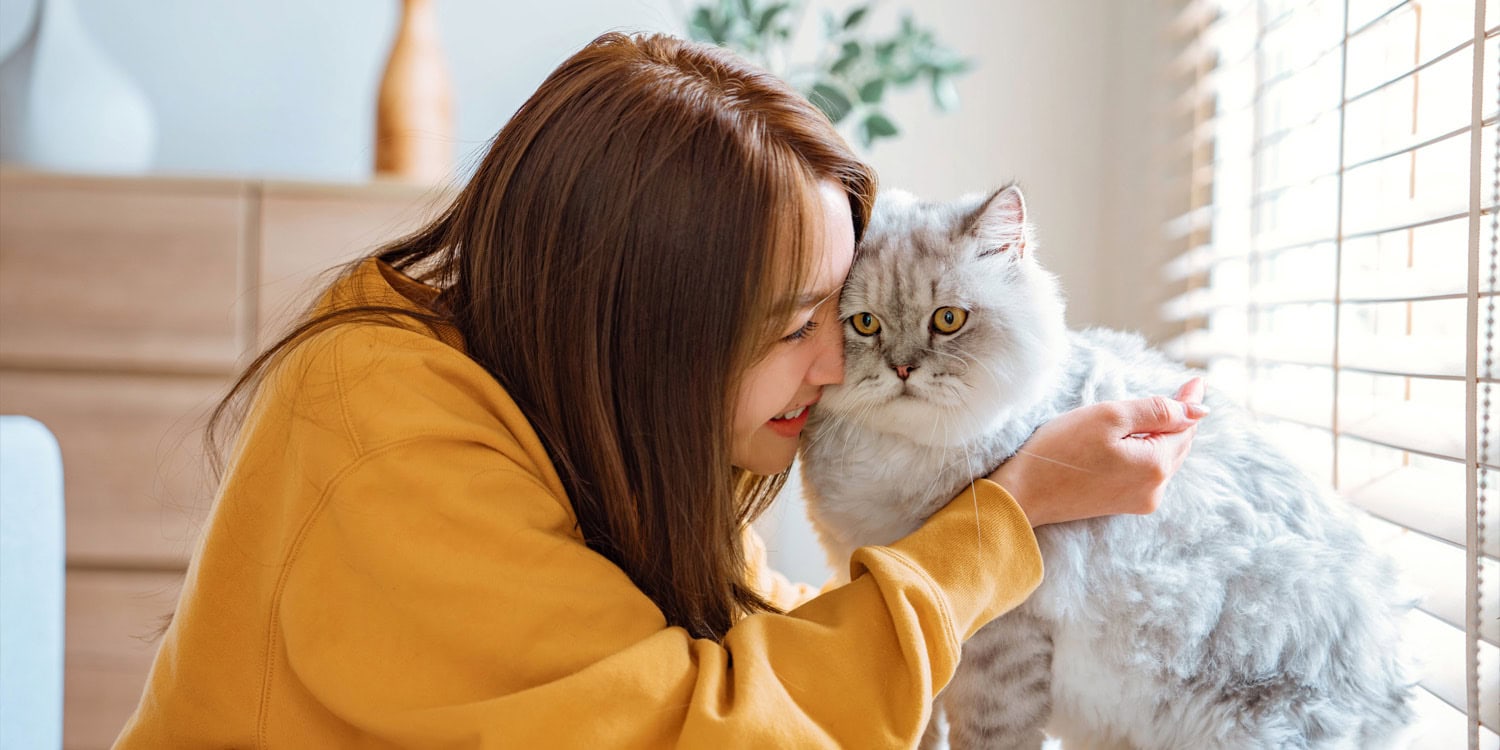
Research published in *Applied Animal Behaviour Science* has revealed that cats develop emotional attachments to their owners similar to those seen in dogs and human infants. The study identified three main attachment styles in cats—secure, anxious, and avoidant—and found that these styles influenceboth their behaviors around humans and their oxytocin hormone levels, which are associated with social bonding.
Read More
As the popularity of cats as pets continues to rise, the nature of the human-cat relationship becomes increasingly significant for the well-being of both parties. Behavioral issues, including aggression, have led to many cats being surrendered to shelters, prompting researchers to seek ways to foster positive behaviors and healthier interactions between cats and their owners.
Recent findings indicate that cats possess a level of social intelligence previously underestimated, being capable of understanding human emotions and recognizing their owners’ voices. This suggests that the way owners engage with their cats could significantly impact the pets' behavioral outcomes. Prior studies have already noted correlations between owner behavior and problem behaviors in both cats and dogs. For instance, negative interactions can heighten aggression in cats, leading the researchers to investigate the connections between cat-owner interactions, attachment styles, and oxytocin's role.
Oxytocin is believed to facilitate emotional bonding, and while its effects have been documented in dogs, less is known about its role in human-cat relationships. "The human-cat relationship impacts cat behavior and the development of problematic behaviors," noted Lingna Zhang from South China Agricultural University, one of the study's authors. "We wanted to explore how attachment styles, interactions, and oxytocin were related in cats."
The study involved 30 pet cats from Guangzhou, China, recruited through social media, with participants ranging from one to three years old. To qualify, cats needed to have lived with their owners for a minimum of four months to ensure a proper attachment had developed.
Researchers employed a secure base test to classify the cats' attachment styles, observing their behaviors as they interacted with their owners in an unfamiliar room. They categorized the cats based on whether they sought comfort from their owners upon reunion and how they explored the environment. Following this test, sessions in the owners' homes assessed more natural interactions, focusing on the quality of engagement between the cats and their owners.
During the home interactions, behaviors were recorded, such as whether the cats approached their owners voluntarily and if owners attempted to force interactions. Saliva samples were collected to evaluate oxytocin levels before and after the interactions.
Results indicated that approximately one-third of the cats were securely attached, another third exhibited anxious attachment, and the remaining cats were classified as avoidant. Securely attached cats engaged their owners more frequently and attempted to escape less often compared to those with anxious or avoidant styles. Notably, securely attached cats showed a significant increase in oxytocin levels after interacting with their owners, while anxious cats recorded higher baseline rates but a decrease following engagement. Avoidant cats demonstrated no significant change.
Moreover, securely attached cats displayed fewer behavioral issues and maintained better social interactions. An increase in oxytocin was linked to closer interactions with owners, suggesting more positive engagement enhances both hormone levels and overall well-being. Conversely, interactions characterized by forced contact were associated with less desirable social behaviors and heightened fear responses.
The researchers acknowledged limitations, including a small sample size and the need for further validation of the secure base test's applicability to cats. Additionally, most participants were young cat owners without children, which may restrict the findings' generalizability.
Future investigations may focus on broader and more diverse populations of cats and their owners, exploring how specific owner traits affect cat attachment styles and interactions. The research team aims to better understand how these dynamics influence oxytocin release and the bonds between humans and cats.
Zhang expressed interest in continuing to research the effects of human-cat interaction patterns on attachment styles and hormonal responses, with hopes of promoting better behavioral health in pet cats through appropriate interactions and potential oxytocin supplementation. The study was authored by Hao Chang, Jie Zhang, Haitao Huang, Edgar O. Aviles-Rosa, Huiwen Huang, Yan Guo, Zaili Xiao, Qingshen Liu, Baichuan Deng, and Lingna Zhang.