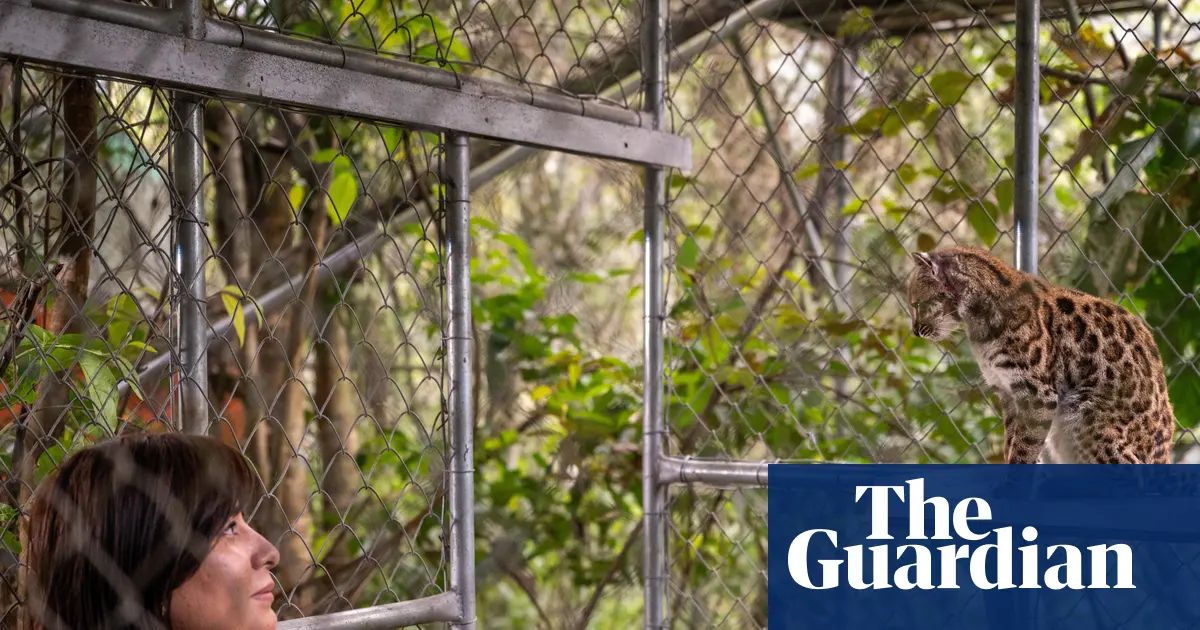
Researchers have identified a new species of wild cat inhabiting Bolivia’s cloud forests, marking the first such discovery in over a century. The cat, known locally as tilcayo, belongs to the tiger cat group and was found in the Yungas region, characterized by its humid, mountainous environment. This new species, called Leopardus tilcayo, measures approximately 18 inches (46 cm) in length and weighs about 3 pounds (1.4 kg).
Read More
Genetic analysis confirmed its status as a new species, as detailed in a study published in Current Biology. Paola Nogales-Ascarrunz, a National Geographic explorer and co-author of the study, described the cat's fur as light brown with irregular rosettes.
Little is known about the tilcayo’s behavior and ecology. Scat samples containing small rodent remains suggest they may be part of its diet, and camera traps indicate it could exhibit nocturnal activity. Jonas Lescroart, an evolutionary biologist and co-lead author of the study, noted that tiger cats have historically been viewed as a single species; however, this research uncovered five genetically distinct species.
Currently, only two live tilcayo individuals have been examined, including a 10-year-old male residing at the Senda Verde wildlife sanctuary after being kept by a local family. The team's investigation into the cat was sparked by its physical characteristics, which didn’t align with descriptions of Brazilian tiger cats.
The researchers analyzed DNA from 38 cats across several South American countries, including eight museum specimens. They had not anticipated the tilcayo to be a distinct species. Genetic evidence suggests that the tilcayo line diverged from other tiger cats around 1.4 million years ago, indicating a potential species-level separation.
The study also recognized a new subspecies of tiger cat in Peru’s Yungas, named Leopardus tigrinus antisuyo. The status of tiger cats is currently classified as vulnerable by the International Union for Conservation of Nature (IUCN), whose upcoming review may reassess these lineages individually, allowing for a clearer understanding of their conservation status.
The Yungas region faces serious threats such as deforestation, agriculture, human-induced fires, and mining. Researchers argue for urgent conservation efforts to restore damaged habitats and protect remaining forest areas. Eduardo Eizirik, a senior author of the study, emphasized the importance of this discovery in underscoring the existence of undiscovered species, many of which are at risk of extinction.