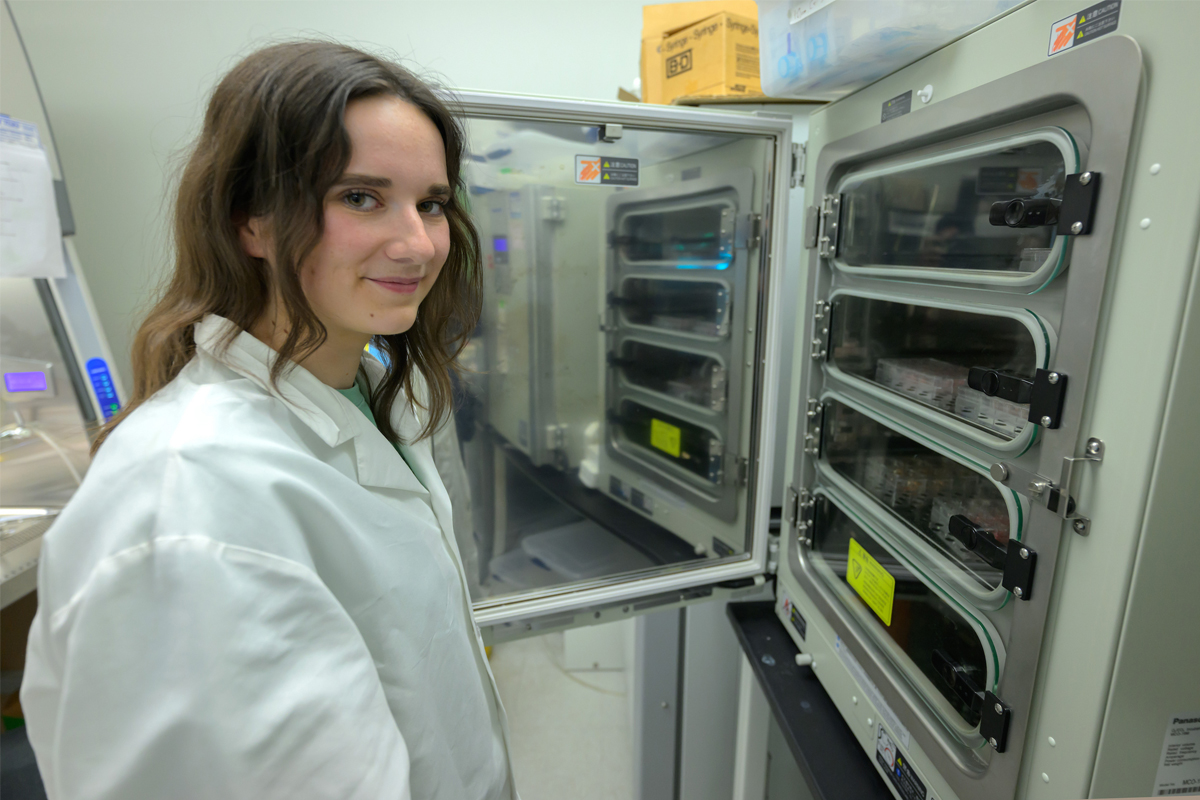
Hanna Meyer, a member of the Class of 2028 from Seattle, WA, is utilizing her summer research fellowship to investigate gene editing as a means to improve cattle health and mitigate bovine respiratory disease (BRD). This disease is a significant financial burden on the U.S. cattle industry, costing billions annually due to animal illness, treatment expenses, and decreased productivity.
Read More
Under the guidance of Dr. Jon Oatley, Meyer’s research centers on CRISPR-Cas9 technology, aiming to create a genetic modification that could render cattle resistant to infections caused by Mannheimia haemolytica, the main bacterial cause of BRD. Her project builds on prior findings that indicate a single amino acid alteration in the CD18 gene could potentially inhibit the effects of M. haemolytica infection, paving the way for cattle with greater natural immunity to the disease.
To assess the effectiveness of this genetic modification, Meyer is developing a cell-based model that will help determine whether the change enhances resistance to bacterial toxins. Additionally, she is refining the embryo electroporation process, which is crucial for introducing CRISPR-Cas9 editing tools into embryos, aiming to increase the efficiency of this gene-editing technique.
If her efforts prove successful, this research could set the groundwork for creating healthier and more resilient cattle, marking a significant advancement in the application of biotechnology within veterinary medicine and agriculture. Meyer notes that the fellowship is enhancing her research skills while allowing her to engage in a project with significant implications for animal health.