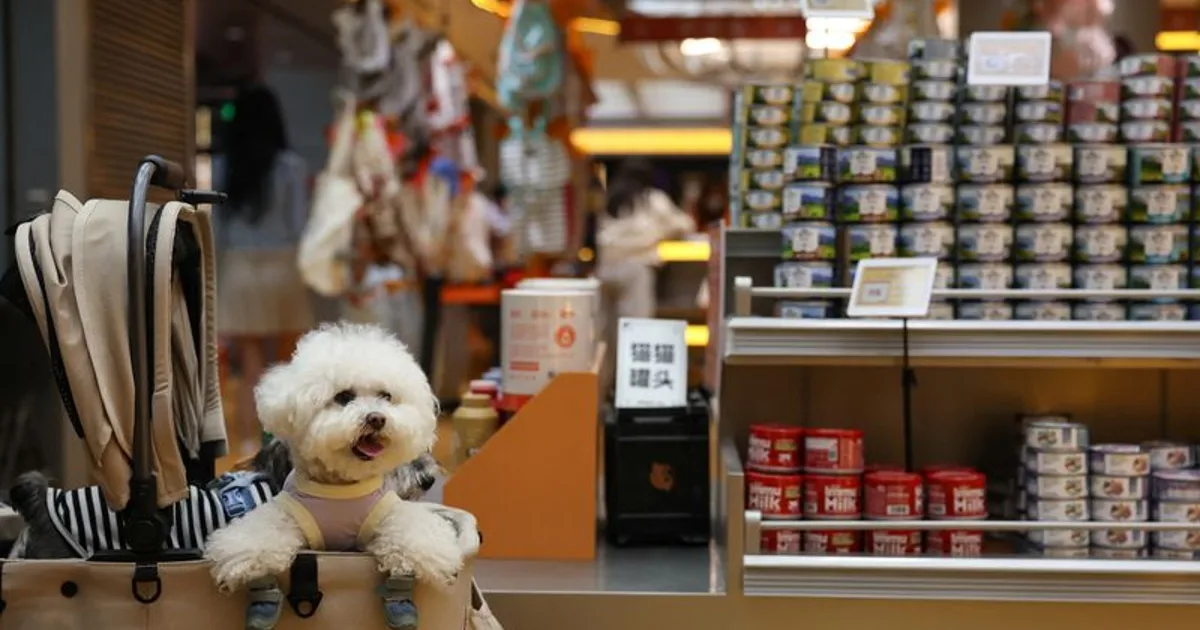
China's pet food market, valued at over $24 billion, is experiencing significant growth as domestic brands increasingly rival international players. This expansion is driven primarily by changing consumer preferences, with local brands appealing to pet owners seeking cost-effective, fresh, and varied options.
Read More
In Beijing, Liu Xin, a 25-year-old pet owner, exemplifies this trend as she spends around $250 a month on Chinese-branded pet food for her terrier, Eighteen. She prefers domestic products, citing their freshness and wider variety compared to pricier Western options.
Annual sales in the pet food sector have seen a sixfold increase from 2014 to 2024, making it one of the standout areas in China's consumer market, which has been challenged by a property crisis and sluggish wage growth. As pet owners continue to devote resources to their pets, domestic companies are seizing this opportunity to enter the pet food industry.
Notable domestic giants are now diversifying into pet food. Kweichow Moutai, known for producing liquor, plans to craft pet food from fermentation byproducts. Other companies, like Wens Foodstuff and WH Group, have expanded their portfolios to include pet food, with investments in firms such as Qingdao Shuang’an Biotechnology Co and Zhongyu Pet Food, respectively.
The rise of local brands has pressured international companies like Canada’s Orijen and Nestlé’s Purina, evidenced by General Mills' recent decision to shut down operations of its Blue Buffalo brand in China. Sales of Germany's Animonda Carny products also suffered a 30% decline last year, underscoring the shifting preferences toward domestic offerings.
China's pet food production reached 1.9 million metric tons in 2025, reflecting a 17.9% increase from the previous year, as reported by the China Feed Industry Association. Local producers are enhancing quality, with some offering more animal protein in their recipes. For instance, Steo International Trade Co reported a 40% sales increase and boasts high animal protein content in its products.
Despite the thriving market, safety remains a critical issue. The industry currently lacks comprehensive national standards and is regulated under livestock feed guidelines, which do not adequately reflect the needs of pet owners. Analysts, including Fu Zhenzhen from Beijing Orient Agribusiness Consultants, point out that the regulatory framework does not align with the unique requirements of pet food compared to animal feed.
While many Western brands struggle, some, like Mars’ Royal Canin, continue to succeed through localization strategies. Royal Canin has focused on reducing costs via local production and enhancing distribution channels, thus maintaining its status as China’s leading pet food brand.
Overall, the pet food market in China is rapidly evolving, with domestic brands gaining favor among consumers, leading to a challenging environment for international competitors.
(Reporting by Daphne Zhang and Sophie Yu in Beijing, and Casey Hall in Shanghai; Editing by Kate Mayberry)