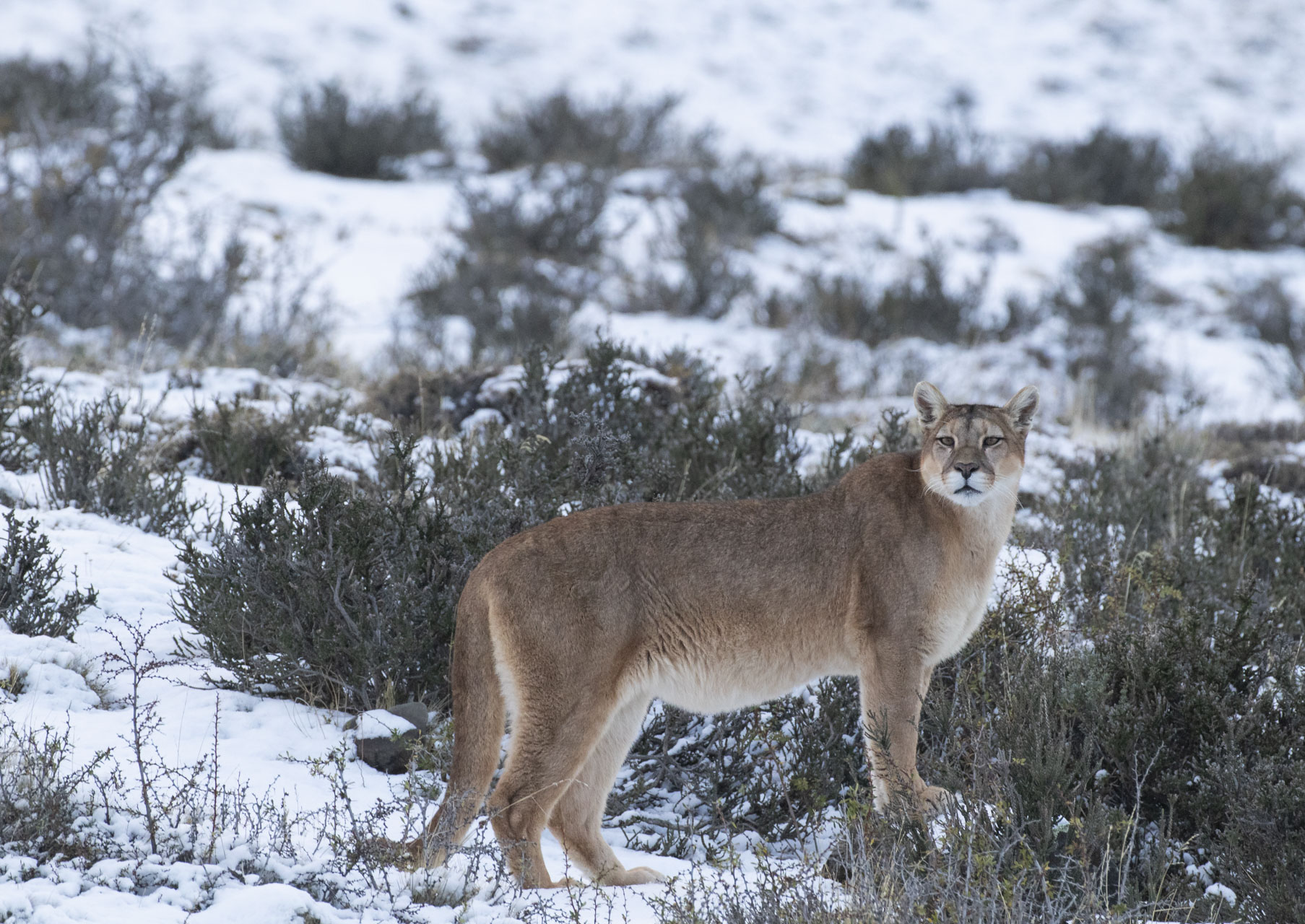
Monte León National Park in Santa Cruz has emerged as the focus of a significant ecological study published in Proceedings of the Royal Society B. The research highlights how pumas, the region's dominant predators, have begun preying on Magellanic penguins, leading to shifts in their social behavior and interactions with other species, including sheep and guanacos.
Read More
Historically, pumas were hunted due to sheep farming, which diminished their numbers along the Patagonian coast. However, after the park's establishment in 2004 and the cessation of hunting, pumas returned to find an ecosystem altered by expanding penguin populations.
Ecologist Mitchell Serota, partnered with the Rewilding Argentina Foundation, conducted the study between 2019 and 2023. The team deployed 32 camera traps and fitted 14 adult pumas with GPS collars. The findings indicated that these pumas were consuming penguins more frequently than anticipated. The penguin colony, which boasts over 40,000 breeding pairs within a two-kilometer stretch of coast, provides a substantial food source for pumas, particularly during the breeding season from September to April.
The most crucial discovery pertains to changes in puma behavior rather than diet alone. Pumas that incorporate penguins into their diet show the following behaviors:
- Increased territory sharing among individuals.
- A reduction in confrontational interactions, which is atypical for a species known for its solitary and territorial nature.
- Seasonal abundance diminishes the necessity for resource defense, leading to greater social tolerance.
Unlike their African counterparts, Patagonian pumas do not depend on grouping for hunting large prey nor do they coexist with bears or wolves, as seen in North America. They are the primary predator in Patagonia, yet the influx of penguins has altered their social dynamics.
The puma population density remains stable at approximately 13 individuals per 100 km², suggesting that while hunting dynamics have changed, the overall population size has not increased significantly.
Some unanswered questions persist:
- What is the average number of penguins captured by each puma?
- What is the actual impact on the penguin colony, which appears stable or growing?
- How will this dietary shift affect guanacos, the puma's primary herbivorous prey?
Researchers emphasize the importance of understanding these changes within the broader ecological framework. The study concludes that ecological restoration can lead to new interactions rather than simply restoring a previous state. The case of pumas preying on penguins in Santa Cruz illustrates that when human pressures like hunting are removed, the outcomes in nature can take unexpected turns.
This research sheds light on how ecosystems adapt to both human and natural influences, positioning Patagonia as a dynamic laboratory to study wildlife resilience and adaptability.