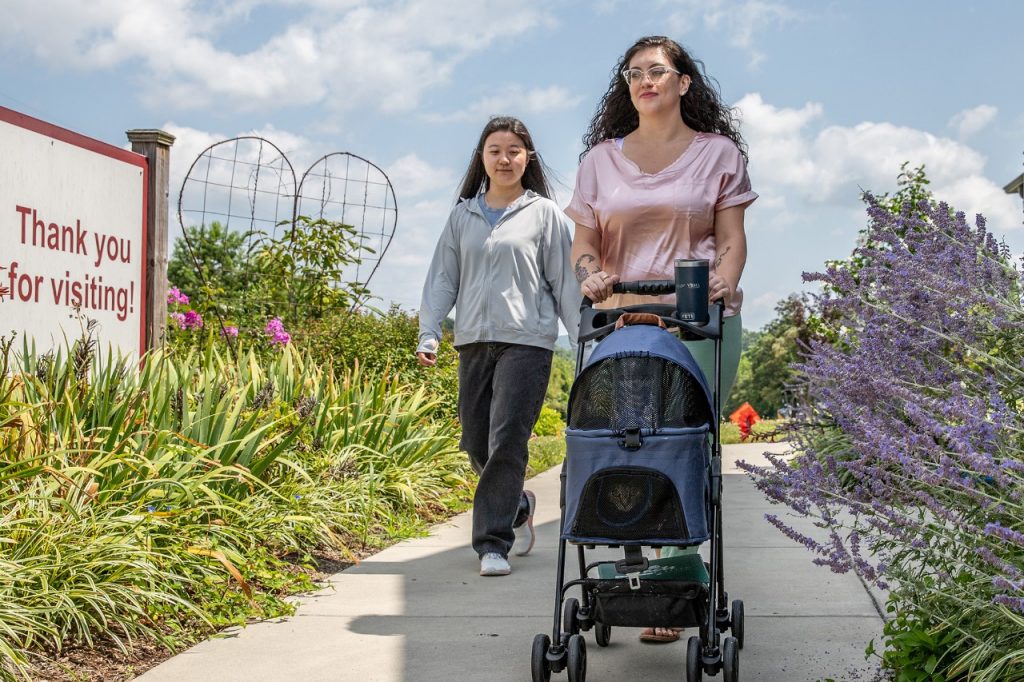
Each year, over 3 million cats enter shelters in the United States, as reported by the American Society for the Prevention of Cruelty to Animals. Julianna Scardina, a member of Virginia-Maryland College of Veterinary Medicine's Class of 2024, is aware that the stress of long-term shelter living can negatively impact cat behavior, which in turn affects their adoption rates. Partnering with Erica Feuerbacher, an associate professor in the School of Animal Sciences and the Montgomery County Animal Care and Adoption Center, Scardina is involved in a research project aimed at addressing this challenge.
Read More
Typically, dogs in shelters are taken out for walks and playgroups, while cats often remain confined to their kennels. "Cat patios or ‘cattios’ are unrealistic for some shelters with limited space and funding," Scardina noted. The research team is investigating whether training shelter cats to use strollers could provide a cost-effective enrichment activity to improve their quality of life and enhance their adoptability.
Feuerbacher emphasized the novelty of the study, stating, "Despite the increasing popularity of strollers and backpacks for cats, no study has actually assessed the impact of taking a cat in a stroller or backpack on cat behavior." This research aims to determine if prior training for cats to enter strollers reduces stress-related behaviors during outings.
Strollers are seen as a safe option for outdoor experiences. "Some owners may hesitate to take their cats outside due to concerns about stray animals or health risks, and not all cats tolerate leash walking," Scardina explained. Using a stroller can help alleviate these worries while allowing both the pet and owner to enjoy the outdoors.
The study involves observing the cats' behaviors over several days, including before and after 15-minute walks in the strollers. Some cats underwent desensitization training beforehand. "We have a coding system to document behaviors that indicate the cat’s comfort level," Scardina said. If stress signals like yowling or crouching appear, the research team takes steps to comfort the animals.
Jennifer Henry, a staff member at Montgomery County Animal Care and Adoption Center, noted the benefits of human interaction: "The handling from people helps the cats gain more confidence and receive and give more attention."
The environment of the shelter presents unique challenges for the research, as each day can be unpredictable for the cats, affecting their behavior. Some cats were adopted during the study, making it difficult to gather consistent data.
While it's premature to conclude whether strollers are a definitive solution, preliminary data is promising. Andrukonis reported that "cats can be trained to ride in strollers," and non-stressful experiences in strollers may enhance friendly behaviors toward humans.
In addition to aiding the cats, the project provided valuable research experience for participating students. Yhakira Gray expressed that the experience helped her overcome her initial fear of cats. Yasmeen Gomez gained insights on blending research with animal behavior in her veterinary aspirations, while Yanran Sheng simply enjoyed interacting with the cats.
The research team plans to implement a volunteer walk program at the shelter to gauge the impact of stroller walks on adoption rates and further explore how such outings might strengthen the bond between humans and cats. Feuerbacher views this study as a preliminary step toward more extensive research on enhancing the adoptability of shelter cats. Buechner-Maxwell added that the outcomes could reveal how cat owners might experience benefits similar to those gained from walking dogs, such as increased exercise and social interactions.
For now, the team encourages the community to visit the Montgomery County Animal Care and Adoption Center and consider taking a cat for a stroll.