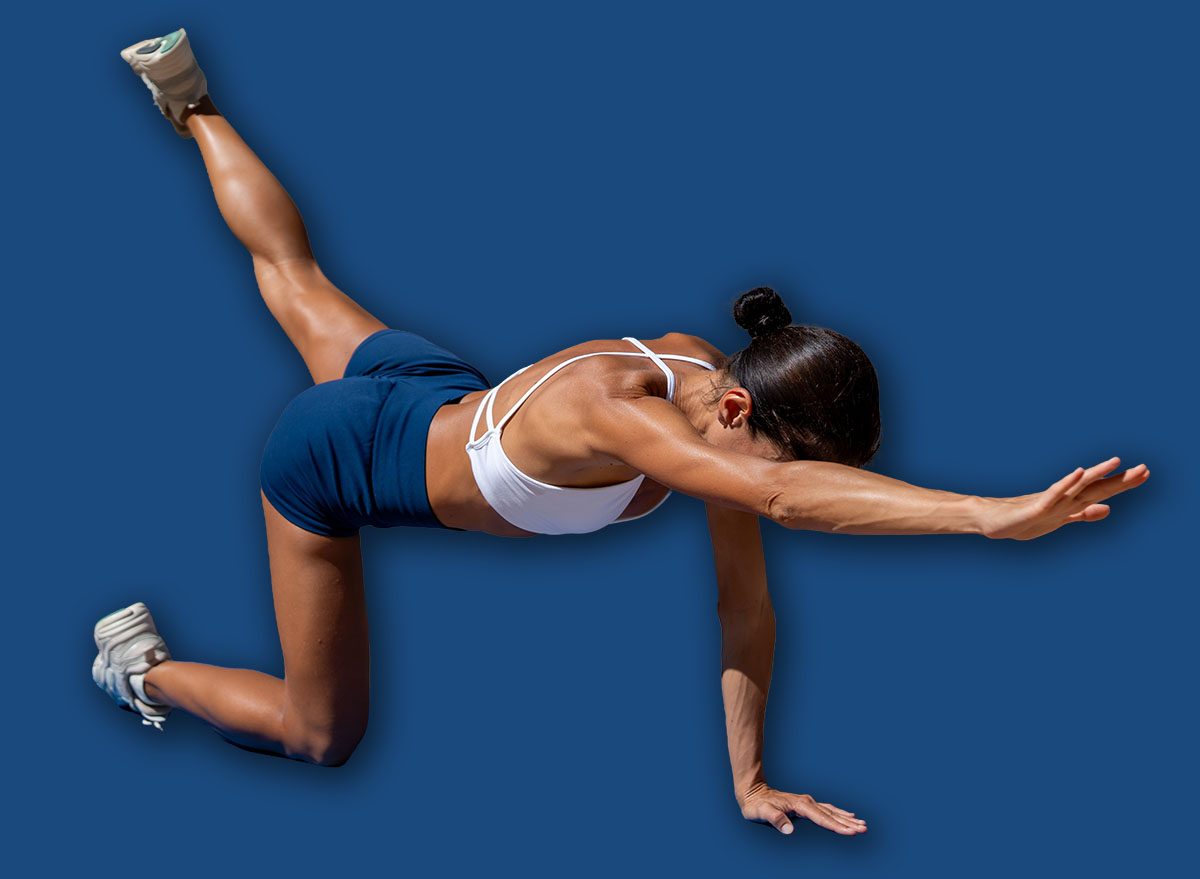
Karen Ann Canham, CEO of Karen Ann Wellness and a board-certified wellness expert, presents five daily exercises aimed at reducing belly overhang for individuals over 60. She notes that excess belly fat is often a result of multiple factors, including age-related muscle loss, hormonal changes, and decreased skin elasticity.
Read More
According to Canham, sarcopenia weakens core and lower body muscles, while hormonal shifts, particularly a decrease in estrogen and testosterone, can lead to increased abdominal fat. Additionally, changes in posture, such as anterior pelvic tilt, alongside sedentary behavior, may exacerbate a protruding belly.
Canham emphasizes that effective strategies go beyond just increasing physical activity. She argues that although crunches primarily target the rectus abdominis, they fail to engage deeper core muscles crucial for abdominal support and do not promote localized fat loss. Instead, she recommends the following exercises that focus on deep core strength, full-body engagement, and pelvic alignment:
1. **Supine Deep Core Breathing**: Lie on your back with knees bent and feet flat. Place one hand on your chest and the other on your belly. Inhale deeply through your nose, letting your belly expand, then exhale through your mouth. Repeat for 2 sets of 8 to 10 breaths.
2. **Glute Bridges**: Lie on your back with bent knees. Press your heels into the ground to lift your hips, forming a straight line from head to heels. Squeeze your glutes at the top, then lower back to the starting position. Perform 2 to 3 sets of 10 to 12 repetitions.
3. **Dead Bugs**: Lie face-up with arms raised and knees bent at 90 degrees. Lower your left arm and extend your right leg while pressing your lower back into the mat. Return to center and switch sides. Perform 2 to 3 sets of 8 to 10 reps on each side.
4. **Bird-Dog**: Start on all fours. Extend your left arm and right leg while bracing your core. Hold for 2 to 3 seconds before returning to starting position. Alternate sides, completing 2 sets of 8 repetitions per side.
5. **Standing March**: Stand tall and lift your left knee to hip height, maintaining core engagement. Lower and repeat with the right knee. Perform 2 to 3 sets of 20 alternating steps, focusing on posture and breath control.