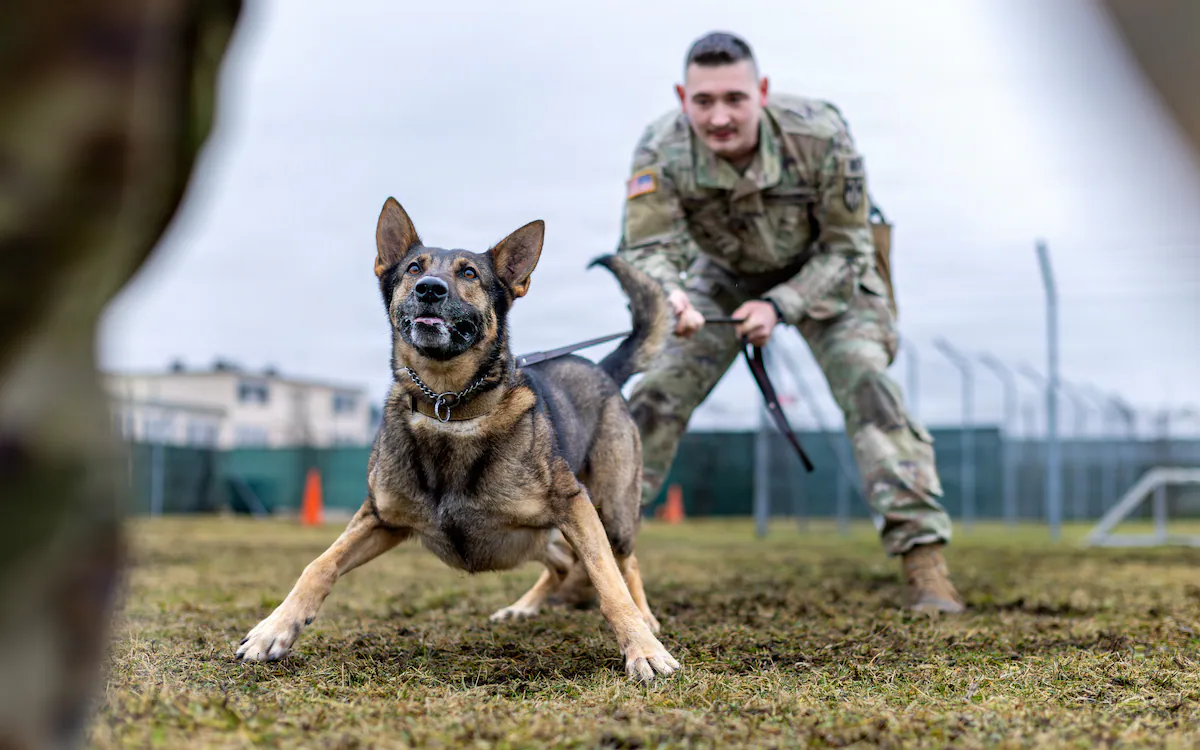
A report by the U.S. Department of Defense Inspector General revealed that military working dogs at bases nationwide are suffering from neglect due to aging facilities and insufficient caretakers. The report, released on February 17, details findings from 12 site visits, highlighting that dogs were not adequately protected from extreme weather and mold, and quarantine areas were poorly managed. Many dogs are kept in inadequate kennel facilities, some over 40 years old, which has contributed to the deaths of four dogs from fiscal year 2021 through fiscal 2023.
Read More
According to the report, officials from the Department of Defense (DoD) indicated that the poor conditions of the kennels arose because renovation and construction of these facilities were not prioritized over other mission needs. The report stresses the need for improvement in kennel conditions to prevent health issues, injuries, and behavioral problems among the dogs.
The Inspector General’s office specifically examined non-training dogs, those waiting for deployment, medical disposition, or not selected for training. Training dogs typically receive enough physical and mental stimulation. The report noted that there are approximately 1,600 military working dogs across various branches, all originating from the 341st Training Squadron at Joint Base San Antonio, Texas.
During an August 2024 site visit, 230 dogs were reported as non-training status; the squadron is responsible for their acquisition, training, and sustainment. An Air Force guidance memorandum addresses the welfare of military working dogs, emphasizing the necessity of daily enrichment to meet their physical, social, and cognitive needs.
The report found that the required five hours of enrichment per day were not being provided to non-training dogs. Instead, they received about 10 minutes of walking, four times a week, or less. Of the 230 dogs in non-training status, 104 received only four walks, with others getting fewer. The lack of proper enrichment led to observable stress behaviors among the dogs. Additionally, the training squadron lacks sufficient caretakers to manage the dogs effectively, impacting their well-being.
Despite the inadequacies in physical activity, dogs are given five hours of alternative enrichment through activities like inflatables and audio stimulation. The caretakers have reported needing more manpower, prompting the Air Force to request funding for additional caretaker positions in FY 2025 to meet exercise and enrichment requirements.
Upgrading the kennel facilities is costly and time-consuming, but improvements are believed to significantly enhance the health and morale of the dogs. The report has made two recommendations: to decrease the number of non-training dogs at the 341st Training Squadron until adequate caretakers are available and to develop a plan for upgrading the kennels to meet current standards. Management has agreed to implement the recommendations, which will be considered closed upon verification of the corrective actions.