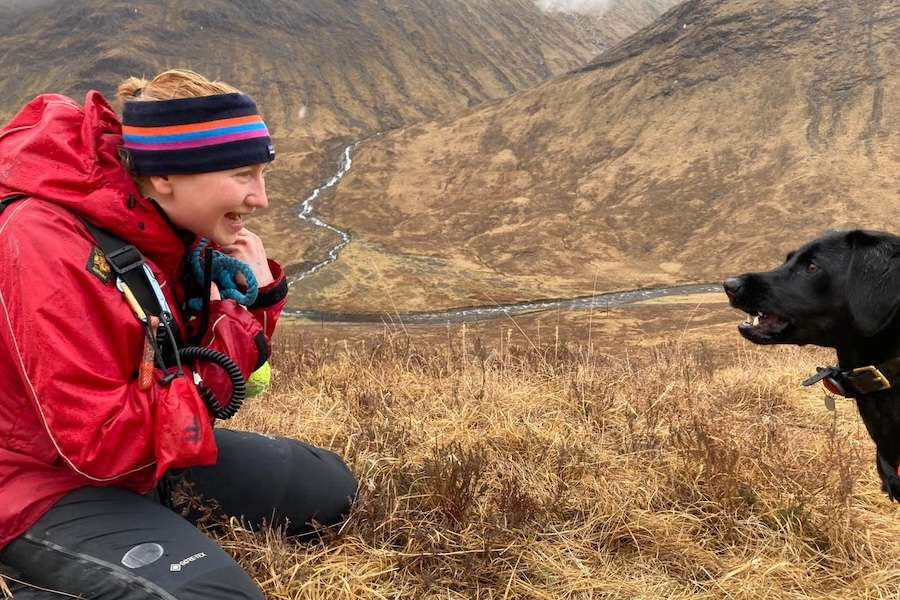
A detection dog named Sgiath, who works on Scotland’s west coast, has been awarded Animal of the Year by the International Fund for Animal Welfare (IFAW) for her role in identifying the invasive carpet sea squirt (Didemnum vexillum). This non-native species poses a threat to local biodiversity and coastal industries. Sgiath, a six-year-old black Labrador, assists marine ecologist Dr. Texa Sim in locating this invasive organism, which can spread across marine habitats and artificial structures.
Read More
The carpet sea squirt, often referred to as ‘sea vomit’, is difficult to distinguish from seaweed and other coastal materials. Its rapid growth can cover both natural and man-made structures, displacing native species and affecting marine infrastructure. Sgiath has been specifically trained to detect the scent of this organism, enabling Sim to identify its presence in areas where visual confirmation is challenging.
Dr. Sim, based near Glencoe, initially trained Sgiath for mountain rescue, later exploring her potential in marine conservation. Reflecting on this transition, Sim noted, "When I first started this project, I genuinely didn’t know whether it would work. No one had really explored whether dogs could help tackle this problem in the marine environment."
Sgiath is believed to be the first dog in the UK specifically trained to detect sea squirts. The carpet sea squirt, thought to originate from Japan, was first recorded in the UK in 2008, and it has since spread to various locations across the country. This species can appear in multiple colors, such as orange and cream, and reproduces rapidly during the summer months, raising concerns about its potential spread due to rising sea temperatures.
The carpet sea squirt competes for resources with native species and can create problems for aquaculture equipment and other marine assets, leading to significant removal and control costs across Europe. Dr. Martyn Kurr, a marine biologist at Bangor University, praised Sgiath’s recognition, emphasizing the potential of detection dogs in identifying marine invasions.
Sgiath continues her work in both mountain rescue and marine conservation. In mountain rescue, she uses barking to signal the presence of missing persons, whereas in marine detection, she indicates by remaining still and staring at the target. Dr. Sim described Sgiath's intelligence and adaptability as key assets in their work together.
The IFAW's Animal Action Awards aim to promote animal welfare and conservation efforts. Sgiath’s recognition highlights the valuable contributions that trained detection dogs can make in managing invasive species, especially in complex marine environments, thereby supporting conservation efforts.