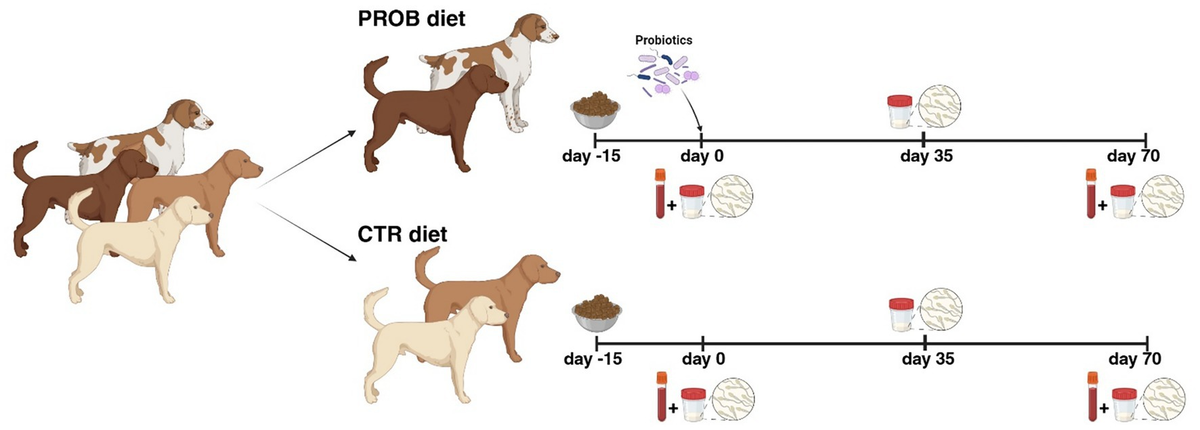
This study assessed the impact of a multi-strain probiotic mixture (Slab51®, Sivomixx®) on systemic and seminal redox status, as well as semen quality in healthy breeding dogs. Fourteen dogs were divided into two groups: one received a control diet, while the other was supplemented with 400 billion CFU of lyophilized bacteria for 70 days, coinciding with a complete spermatogenic cycle. Biochemical parameters and antioxidant defense levels were measured at the beginning and end of the study. Semen samples were collected before supplementation and then again at 35 and 70 days after treatment.
Read More
Results indicated that probiotic supplementation led to significant increases in sperm concentration (p < 0.001) and improved various kinematic parameters, such as average path velocity (VAP, p < 0.05) and straight-line velocity (VSL, p < 0.05). While beat-cross frequency (BCF) and straightness (STR) remained unchanged, improvements were seen in other aspects of sperm motility, highlighting a beneficial effect of probiotics on semen quality. Moreover, the probiotic-treated dogs exhibited decreased seminal reactive oxygen species (ROS) and increased biological antioxidant potential (BAP) and total antioxidant capacity (TAC), indicating enhanced antioxidant defense within the semen.
On a systemic level, the probiotic group showed reduced blood urea nitrogen, triglycerides, and total cholesterol, alongside increased superoxide dismutase and catalase activity. The study concludes that multi-strain probiotic supplementation enhances both systemic and seminal antioxidant defenses and improves semen quality in healthy male dogs, which may have practical implications for breeders and veterinarians.
Ongoing research aims to explore the relationship between gut microbiota modulation induced by probiotics and semen characteristics, further investigating the gut–testis axis's role in canine reproductive health.
The study was approved by the Ethics Committee of the DiMeV at the University of Bari Aldo Moro, Italy, and adhered to veterinary welfare guidelines. All participating dogs were clinically assessed for reproductive health prior to the study.