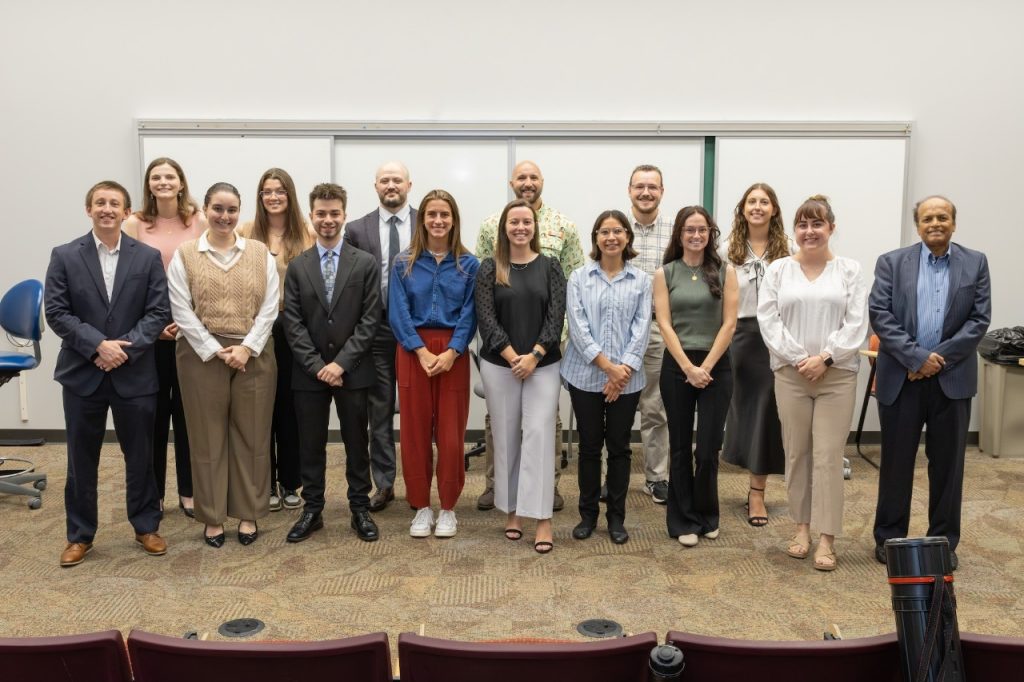
Fifteen veterinary students recently showcased their research at the annual Summer Veterinary Student Research Program (SVSRP) presentations held at the Virginia-Maryland College of Veterinary Medicine. Their projects, which ranged from advancements in ultrasound technology to wildlife disease management, underscored the diversity of veterinary research at Virginia Tech.
Read More
After nine weeks of intensive training guided by mentors, students from the DVM classes of 2026, 2027, and 2028 shared discoveries that could have significant impacts on animal healthcare.
This year's cohort tackled pressing issues in veterinary medicine. Michael Tetreault, a student in the Class of 2028, developed machine learning methods to detect chronic pain in dogs non-invasively. Tetreault explained his research focused on neuropathic pain in dogs, seeking alternatives to current diagnostic models, which often rely on invasive techniques and biased questionnaires. His work with Cavalier King Charles Spaniels, a breed susceptible to neurological conditions, aims to revolutionize pain diagnosis.
In addition to pain management, wildlife conservation also received attention. Rylee Clark, from the Class of 2028, analyzed management strategies for chronic wasting disease affecting deer nationwide. She noted the seriousness of the issue, stating that the neurodegenerative disease could lead to significant declines in deer populations. Clark's findings indicated inconsistencies in management strategies across the U.S., potentially hindering efforts to control the disease.
Highlighting game-changing technology, histotripsy — a focused ultrasound method — featured prominently in several projects. This technology could change veterinary practice by providing precise treatments without traditional surgical interventions. Virginia Tech has been recognized as a Focused Ultrasound Center of Excellence, reinforcing its leadership in this area.
Several students from the Class of 2026 explored various applications of histotripsy. Briana Gleizer focused on spinal neurosurgery, demonstrating how the technology can be performed non-invasively with high precision, thereby protecting surrounding tissues. Skylar Merkle investigated its use in treating canine osteosarcoma, offering a potential limb-sparing technique to manage tumors while preserving healthy tissue.
Broader healthcare challenges were also addressed. Jessica Gaine researched beneficial skin bacteria that may combat antibiotic resistance, while Ryan Jordan explored neuroprotective compounds to aid animals in recovering from viral infections with reduced neurological impacts.
The success of these projects was attributed to collaboration and mentorship. Clark emphasized that teamwork is crucial when tackling unfamiliar subjects, while Tetreault noted that prioritizing collaboration and animal welfare is essential for research success.
The SVSRP, funded by the National Institutes of Health and the Boehringer Ingelheim Veterinary Scholars Program, provides vital research training through weekly seminars and networking opportunities. Ansar Ahmed, Director of the SVSRP, highlighted the program's role in offering students hands-on experience and exposure to various career paths, shaping their future in veterinary medicine.
As the presentations demonstrated, today's veterinary students are addressing tomorrow's animal health challenges by developing innovative diagnostic tools, managing wildlife conservation efforts, and advancing treatment technologies. Many participants plan to continue their research, with some already pursuing publication opportunities. The emphasis on collaboration has equipped them with the skills and networks needed to enhance veterinary science throughout their careers, ultimately benefiting animal welfare and human health through the One Health approach.