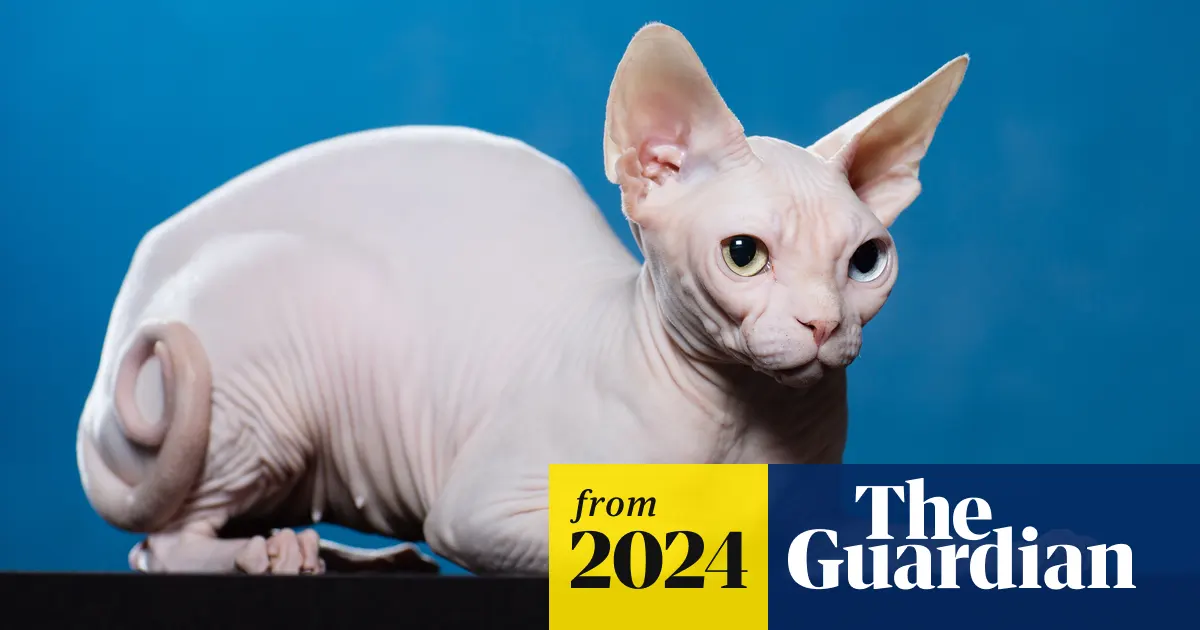
A recent study indicates that Sphynx cats have the shortest life expectancy among domestic cat breeds. Researchers analyzed data from 7,936 veterinary-registered cats in the UK that died between January 1, 2019, and March 31, 2021, to estimate average remaining lifespans based on age.
Read More
The findings suggest that Burmese and Birman cats enjoy the highest life expectancy, with kittens expected to live an average of 14.4 years beyond their first year. In contrast, the average remaining life expectancy for all cats in their first year of life is approximately 11.7 years. Female cats tend to live longer than males, with a remaining average of 12.5 years for females compared to 11.2 years for males.
Crossbreed cats, which made up 88% of the study sample, also offer longer lifespans than purebred cats, boasting an average of 11.9 years remaining in their first year, while purebreds average 10.4 years. Dr. Dan O’Neill, a co-author of the study from the Royal Veterinary College (RVC), emphasized that these statistics provide prospective pet owners, rehoming charities, and veterinarians with better insight into a cat's future health and lifespan.
Among specific breeds, Siamese cats are expected to live an additional 11.7 years after their first birthday, while Bengal cats are projected to live for 8.5 more years. Researchers point out that the shorter lifespan of Sphynx cats could be related to their susceptibility to various health issues.
The study also notes that unneutered cats tend to have shorter life expectancies, potentially due to factors leading to their being neutered as they age. Cats that fall within a median body weight range generally enjoy longer lifespans compared to those that are overweight or underweight.
O’Neill stated that this data serves as a valuable resource for cat owners, enabling them to make more informed decisions regarding their pets' care and lifespan expectations.