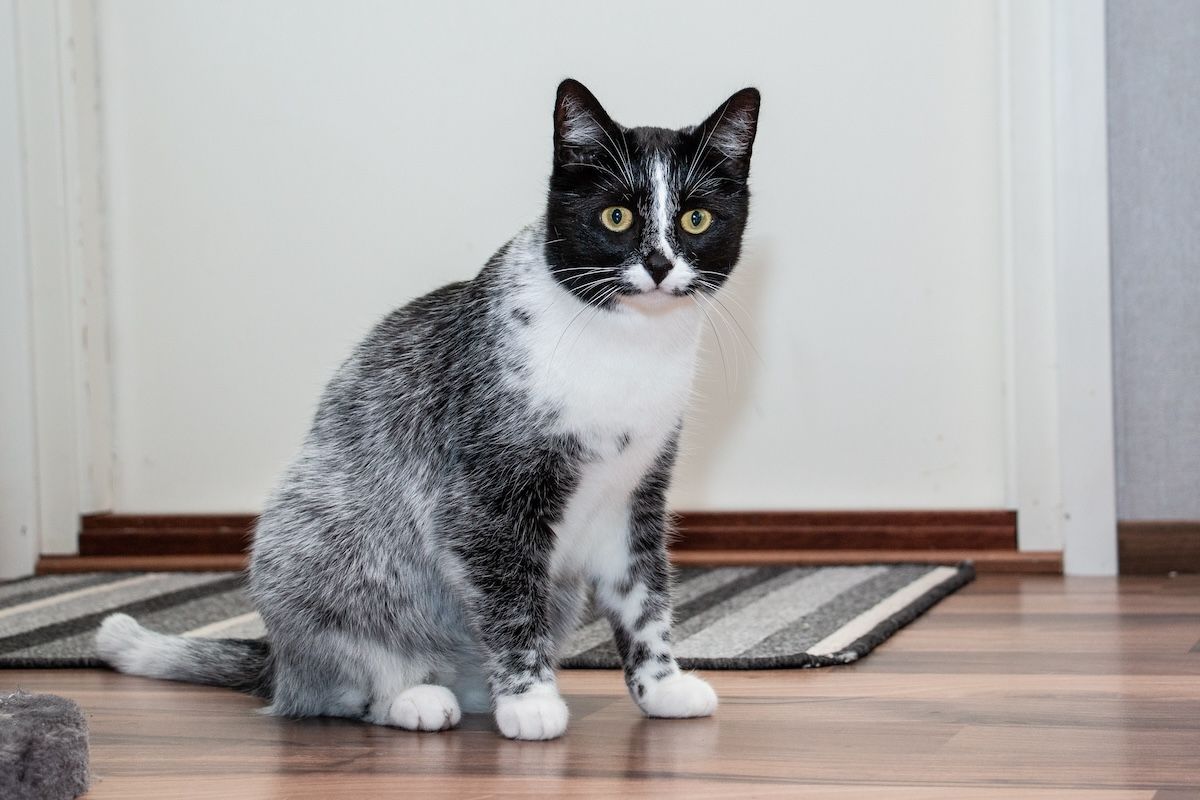
Researchers in Finland have identified a rare new cat coloration known as ‘salty liquorice.’ These cats, referred to as ‘salmiak cats,’ feature a unique coat that is black with white flecks and a distinctive ‘tuxedo’ pattern characterized by a solid white neck, chest, belly, and paws.
Read More
The unusual coloration results from a genetic mutation where individual hairs change from black at the root to white at the tip, which is significant in terms of feline genetics. Typically, cats are recognized to have predominantly two colors: black and orange. Other coat variations are generally due to gradients or combinations of these colors. In contrast, salmiak cats exhibit a missing segment of their DNA that differentiates them from standard cats.
First observed in 2007, salmiak cats are notably rare. This genetic trait is recessive, meaning both parents must possess the mutation for their offspring to inherit the salmiak coloration.
Dr. Heidi Anderson, the study’s lead author, noted that the discovery enhances the understanding of feline coat color genetics and may aid in breeding practices to help preserve this unique trait among domestic cats. The findings were published in the journal Animal Genetics.
During the study, Anderson's team investigated the role of the KIT gene, typically responsible for the fading of black and orange fur into white. Their analysis revealed the KIT gene was absent in salmiak cats. Instead, the researchers sequenced the full genome of selected cats and found that the salmiak individuals were missing a significant DNA section. They confirmed this mutation in 181 cats, noting that all three salmiak individuals shared the missing DNA segment.
Dr. Anderson expressed hope that this research could lead to better recognition and protection of rare cat breeds, ultimately helping more random-bred cats find homes.