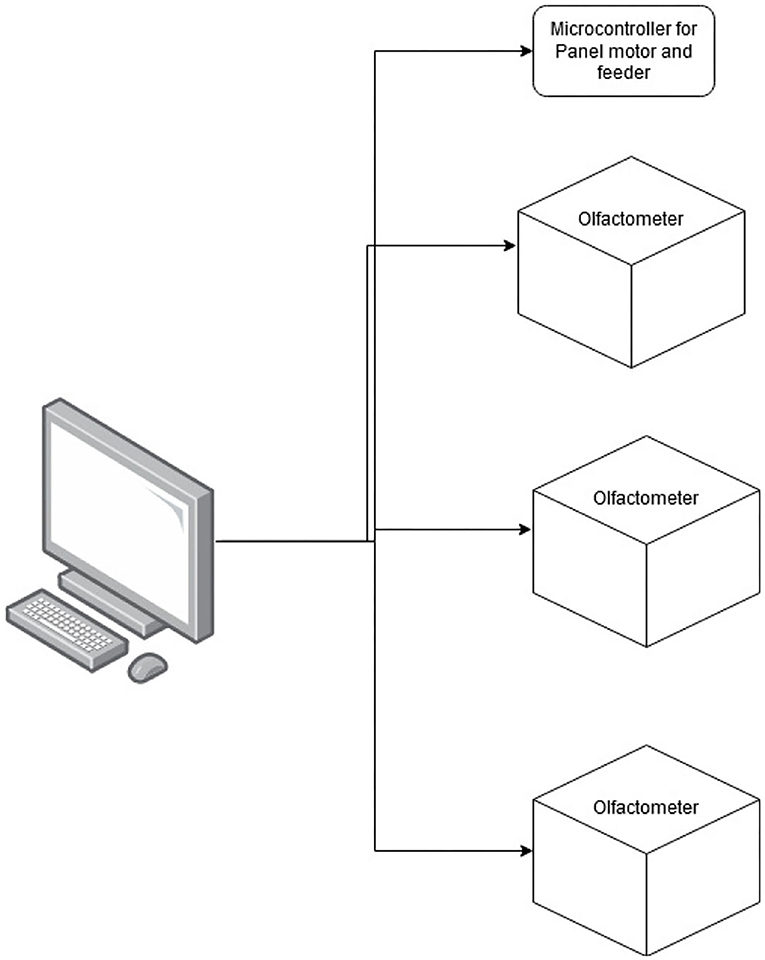
Research is needed to improve detection dog methods and technology. This study aimed to create an automated computer-driven olfactory line-up task designed for detection dogs. The apparatus included three olfactometers, each with flow meters and solenoid valves connected to odor jars. These devices generated odors delivered to an odor port for dog sampling, controlled by a microcontroller and a Python program that randomized odor presentations.
Read More
In the study, twelve dogs participated in one or two training sessions per day over a 23-day period, progressing through phases to learn to alert to double-base smokeless powder (SP). An alert was marked by a four-second nose hold, which was recorded by infrared sensors. The system tracked dogs' search latency, sniff time, port entries, and responses, generating comprehensive data recorded in csv format. The testing environment also included a photoionization detector (PID) and solid-phase microextraction linked to gas chromatography-mass spectrometry (SPME-GC/MS) to evaluate odor dynamics and verify presence.
At the conclusion of the training, all dogs had learned to operate the system effectively, achieving over 85% accuracy in scent detection. Control tests showed that the dogs relied exclusively on olfactory cues rather than auditory signals. The apparatus provided a user-friendly, efficient way to conduct research while substantially collecting data, all within a cost-effective framework of approximately $5,000.
Detection dogs play an essential role in security and military applications, necessitating advances in training and assessment technology. The automated system developed combines the benefits of olfactometer-controlled odor stimulus with a practical search scenario, enabling improved research methodologies. This technology addressed limitations of traditional line-up procedures, which can be labor-intensive and less effective for double-blind testing.
The automated line-up system represents a significant advancement in detection dog training and research, offering greater data reliability and efficiency. It ensures rigorous double-blind conditions crucial for research validity and has the potential to enhance training across different environments while expanding the number of subjects included in studies.