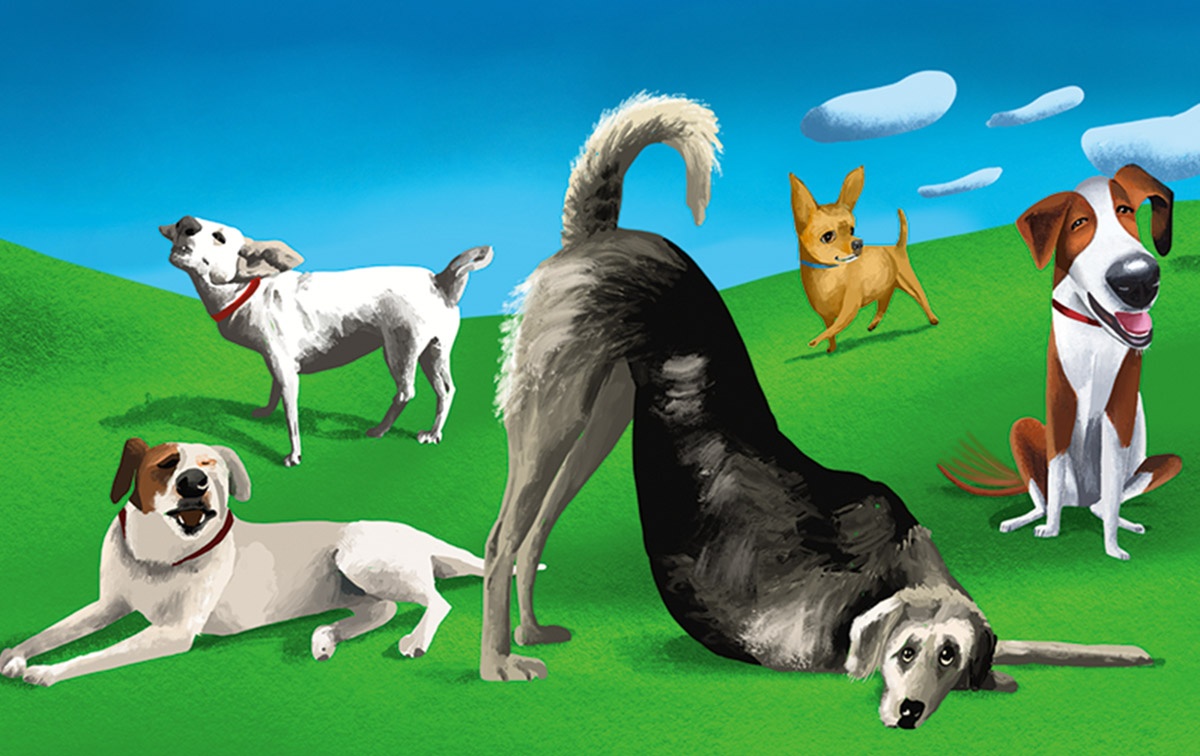
The Brown Dog Lab, located on the third floor of the Metcalf Research Building and founded by Daphna Buchsbaum, is conducting research to understand canine intelligence and behavior. The lab, part of the Computational Cognitive Development Lab, compares dog cognition to that of children.
Read More
Buchsbaum explains that dogs are increasingly popular among cognitive scientists due to their domestication and ability to communicate with humans effectively. The lab seeks volunteer canine participants, and on favorable days, dogs from surrounding areas often visit for attention and treats.
Research has shown that dogs have varying levels of trust towards different people. In a study by Madeline Pelgrim, a PhD candidate, and Buchsbaum, they explored how dogs determine trustworthiness based on past experiences. They trained dogs to recognize two informants: one that consistently guided them to treats and another that did not. Their findings indicated that dogs can adapt their trust based on prior accuracy, demonstrating a unique cognitive ability to process pointing cues, unlike young children.
To expand their research, the team introduced eye-tracking goggles specifically designed for dogs. Buchsbaum's collaboration with eye-tracking manufacturers allowed dogs to don the stylish frames during campus walks, where their eye movements and surroundings were recorded. Preliminary results show that dogs consistently track their environment, focusing heavily on construction equipment, nearby people, and the Brown bus.
Future studies will delve into social interactions between humans and dogs, looking at how they communicate visually, particularly through pointing gestures. Additionally, the lab is exploring the application of human-dog interaction techniques to improve robot communication, recognizing that effective teamwork between humans and dogs may offer insights for advancing robotic cooperation.
PhD student Miriam Ross has encountered varying perceptions of canine intelligence from dog owners, often hearing that their pets are "too dumb" to participate in research. This prompted the lab to consider how human beliefs about a dog's abilities might influence research outcomes. Ross's current project aims to examine these perceptions and their implications for selecting guide dogs and other roles.
Overall, the researchers find that studying dogs is not only engaging for the scientific community but also continuously surprising, as dogs often display unexpected behaviors during experiments.