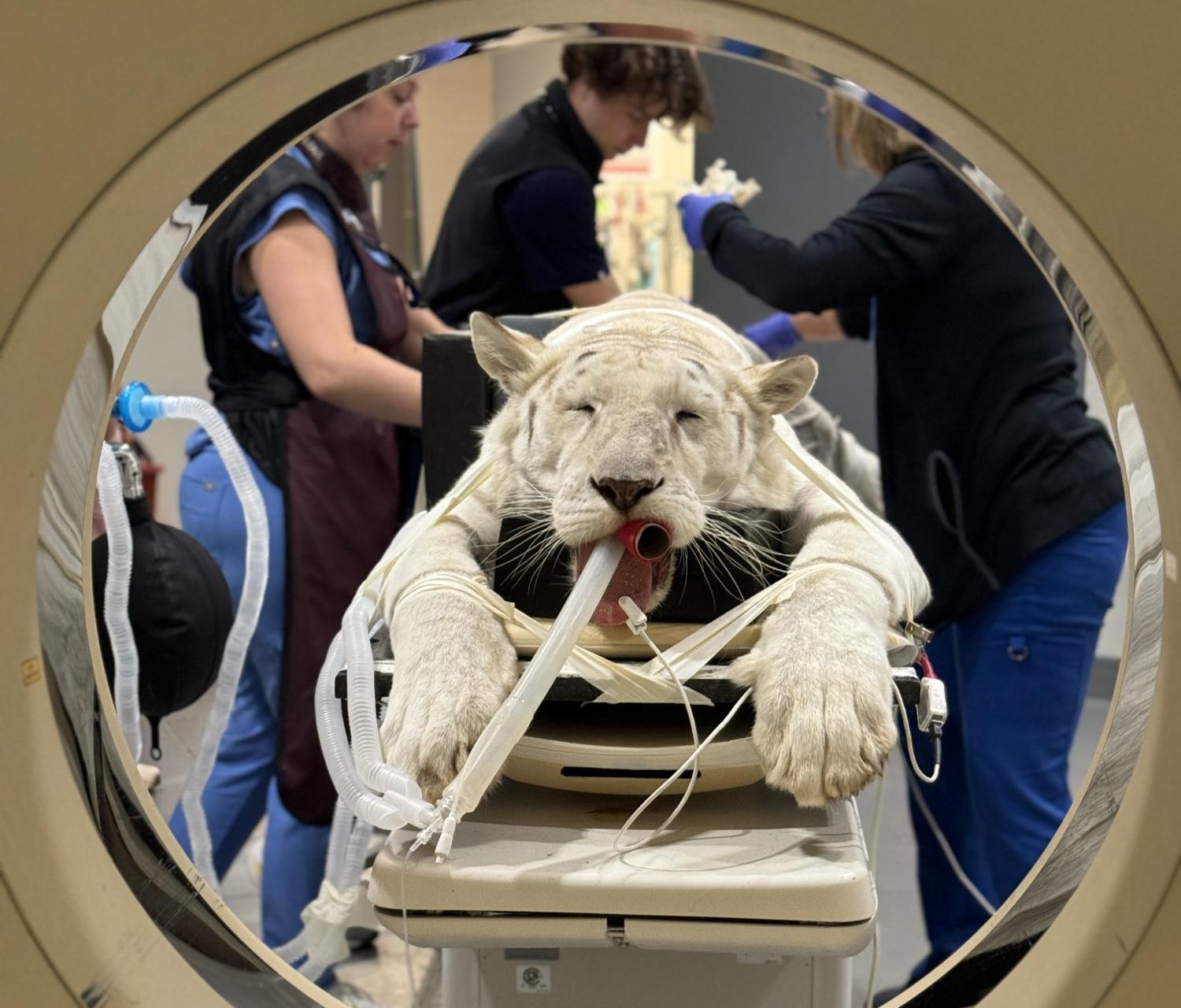
The University of Tennessee College of Veterinary Medicine offers advanced medical care for various large cat species through a collaboration with Tiger Haven, a big cat rescue in East Tennessee. Veterinary students gain practical experience while caring for lions, tigers, and other non-domestic felines in this partnership.
Read More
Tiger Haven was established in 1991 as a no-kill sanctuary for all species of big cats, including lions, tigers, lynxes, and cheetahs. The facility, located in Kingston, houses over 100 rescued big cats, most of which come from abusive situations or are retired circus and zoo animals seeking a peaceful environment. The sanctuary is not open to the public, but it aims to provide a tranquil home for these animals, many of which can live into their late teens or early twenties.
Julie Sheldon, a clinical associate professor of zoological medicine at the UT College of Veterinary Medicine, highlighted the long-standing relationship between the university and Tiger Haven, stating, “We are their primary veterinarians. I think they provide a wonderful opportunity for these cats to live out a peaceful life.”
Veterinary care extends beyond the sanctuary grounds. UT faculty and students frequently travel to Tiger Haven or bring animals to their campus for check-ups and procedures. Bella Orr, a graduate student, shared her astonishment at witnessing a live tiger transported to the college. Lindsey Rice, a veterinary graduate student, noted that seeing a tiger on campus is a common occurrence for students.
The clinicians prioritize safety when working with these large animals, ensuring they are anesthetized before entering their space. Sheldon emphasized the importance of having multiple staff members monitor the animals during procedures, saying, “We’ve been doing it for so long, so we pretty much have it down to science.”
The college maintains consistent communication with the sanctuary, underscoring a decades-long commitment to the health of big cats. Additionally, all deceased animals from Tiger Haven undergo necropsy examinations at UT, allowing researchers to gain insights for future care.
Veterinary students at UT receive hands-on experience with non-traditional animals through programs like the one at Tiger Haven, especially during their final year clinical rotations. Rice expressed the excitement of working with tigers and highlighted the university's unique position among veterinary schools to provide such experiences.
Anesthesia is commonly administered during procedures to ensure the safety of both animals and veterinary staff. Rice recounted how nerve-wracking it can be at first but emphasized the importance of minimizing anesthesia time for the large patients. Sheldon mentioned that while students may feel nervous, the experience is invaluable and memorable.
The UT College of Veterinary Medicine is highly selective, admitting just 4.2% of applicants for the 2024-2025 cycle. The institution offers diverse educational pathways, allowing students to tailor their experiences to their career goals.
Through dedicated care, the UT College of Veterinary Medicine plays a crucial role in ensuring that big cats receive the attention they need, from recovery of neglectful situations to ongoing medical care.