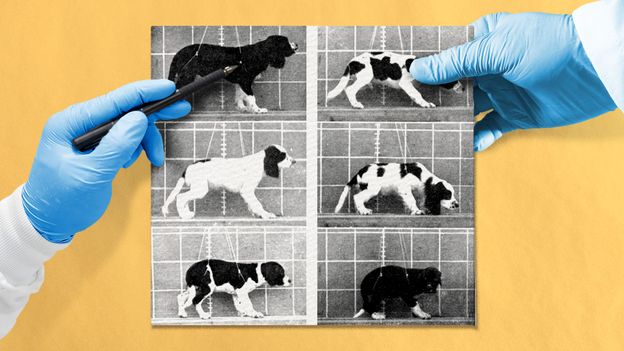
In the 1940s, a unique scientific endeavor took place in Maine aimed at breeding a so-called "super dog." Researchers studied more than 500 puppies over 13 years at a specially constructed facility known as the School for Dogs. The project aimed to investigate various aspects of canine behavior and intelligence across breeds, including cocker spaniels, beagles, Shetland sheepdogs, basenjis, and wire-haired fox terriers. Each puppy's development was meticulously documented, tracking milestones from their first responses to food to their initial play interactions.
Read More
The scientists aimed to explore numerous questions, such as the variability in intelligence among breeds, the impact of canine parenting, and the effects of disrupting normal development. They hoped to potentially breed a hyper-intelligent dog, leading to insights that could also reflect on human behaviors.
Initially receiving substantial funding of $632,000 (equivalent to nearly $9 million today), the project emerged during a period when post-World War II America was experiencing a scientific boom. Despite the discrediting of eugenics as a valid field of study due to its association with Nazi atrocities, some scholars continued to believe in the hereditary basis of intelligence and behavior.
Among the project's advocates was Alan Gregg, director of the Rockefeller Foundation's Division of Medical Science, who argued for a genetic approach to understanding behaviors that deviate from societal norms. He supported the idea that selective breeding could yield a more intellectually advanced dog.
The researchers, including physiologist John Paul Scott and animal behavior geneticist William A. Fuller, conducted various intelligence tests on the dogs. Contrary to expectations, the findings revealed that while certain breeds excelled in specific tests, no breed demonstrated consistently superior intelligence. Differences in temperament were noted, with some breeds, like fox terriers, showing tendencies toward aggressive behavior, influenced by their breeding history.
Ultimately, Scott and Fuller argued that their findings challenged eugenicist ideas about breeding superior animals, emphasizing that different traits exist throughout populations rather than in isolated individuals. Their study contributed to a deeper understanding of dog behavior and the importance of early social experiences in a puppy's development.
Toward the end of the 1950s, as it became clear the project would not yield the anticipated "super dog," the Rockefeller Foundation withdrew funding. The dogs were redistributed to various labs, marking the conclusion of a significant scientific initiative. Today, the School for Dogs is recognized for its ambitious scale and lasting impact on canine science. Researchers emphasize that while some of the original experimental methods are now considered unethical, the insights gained laid important groundwork for future studies related to canine behavior and cognition.