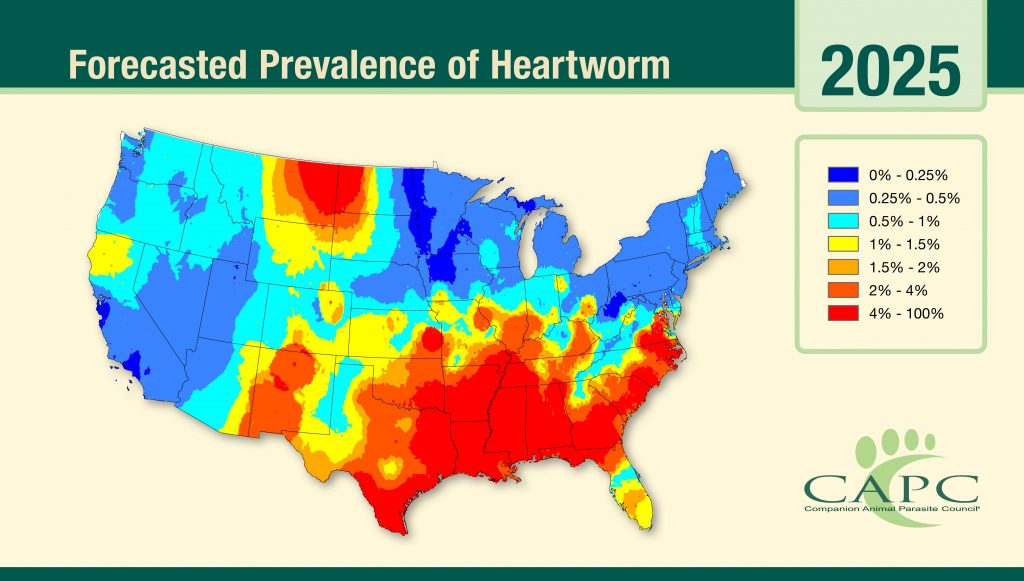
The Companion Animal Parasite Council (CAPC) released its 2025 Pet Parasite Forecast, noting an increasing threat from vector-borne diseases throughout the United States.
Read More
Analysis of data from over 10 million diagnostic tests annually reveals the prevalence of Lyme disease, heartworm, anaplasmosis, and ehrlichiosis. The forecast indicates ongoing geographic expansion of these diseases, primarily due to changing populations of ticks and mosquitoes.
Tick-borne diseases like Lyme and anaplasmosis are advancing into southern and western regions, while the upper Midwest and Northeast remain high-risk zones. Furthermore, ehrlichiosis is prevalent in the Southeast and showing signs of expansion into the upper Midwest and New England. Heartworm, transmitted by mosquitoes, retains a high risk in the Southeast and is increasingly found in areas from Kansas to Maryland, along with parts of New Mexico and Northern California.
CAPC emphasizes the necessity of year-round parasite prevention and regular veterinary care for pets. Dogs serve as critical indicators of human disease risks, especially concerning tick-borne illnesses. These findings highlight the public health implications and the urgent need for ongoing monitoring and preventive measures.
Collaboration among parasitologists and statisticians from academic institutions contributed to the development of this forecast to enhance the understanding of disease transmission and emerging patterns.