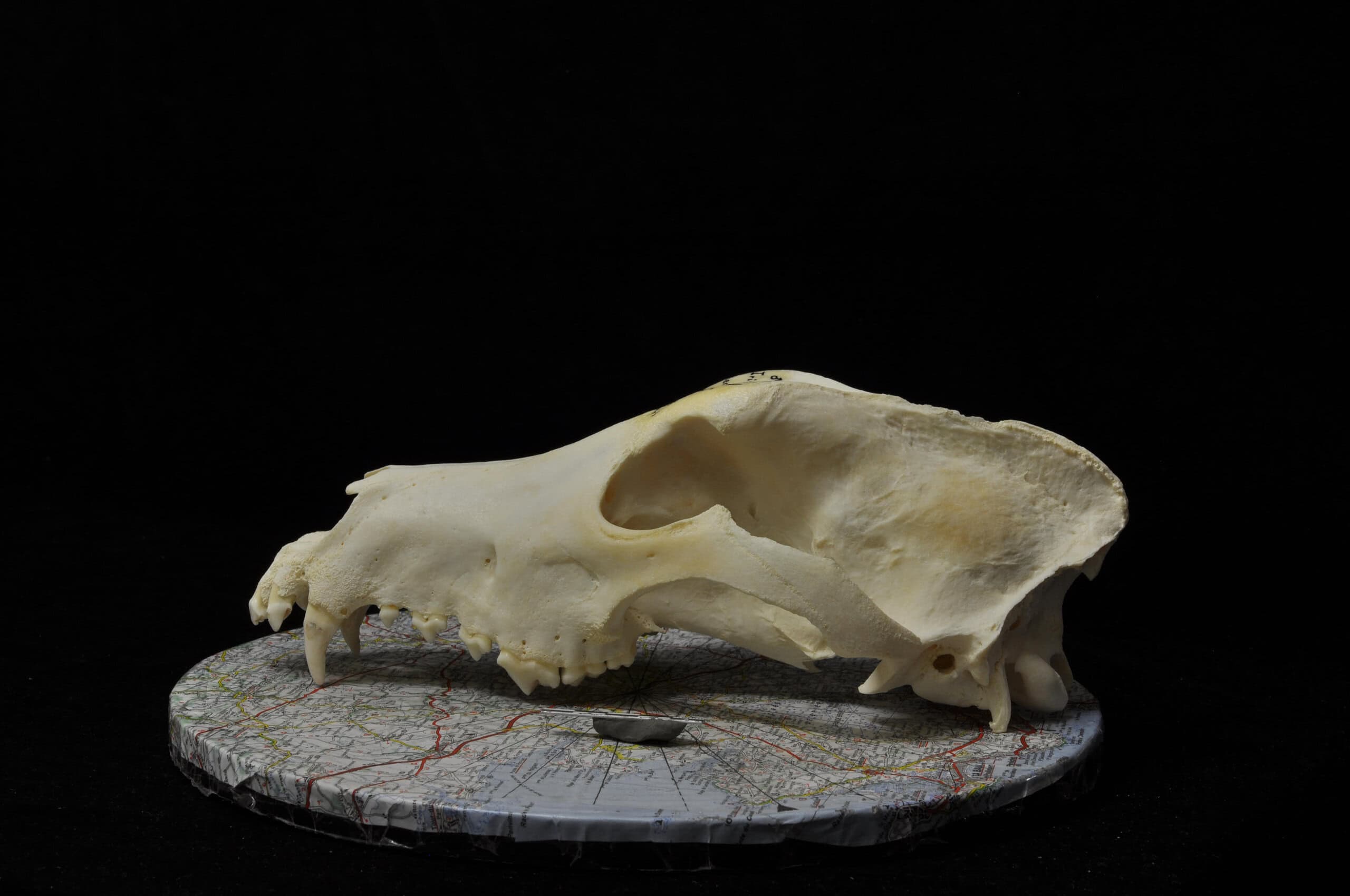
A recent archaeological study highlights that dogs were remarkably diverse in size and shape over 11,000 years ago, predating the Victorian era when formal dog breeding began. This research, published in Science, used advanced 3D shape analysis to examine over 600 ancient and modern canine skulls from a timeframe spanning 50,000 years, challenging previous assumptions about the timeline of dog diversity.
Read More
Dr. Carly Ameen from the University of Exeter, a lead author of the study, stated, "We found that dogs were already remarkably diverse in their skull shapes and sizes more than 11,000 years ago – long before modern breeds were developed." This new insight suggests that much of what defines today’s dog breeds has its origins in this earlier period.
The study analyzed skull shapes from wolves, archaeological dogs, and contemporary breeds, employing geometric morphometrics to identify variations. Ameen noted that distinguishing early dogs from wolves involved recognizing shapes specific to domestic canines. The research demonstrated that early dog skulls were proportionately shorter and wider than those of wolves—an early marker of domestication.
Notably, one of the oldest dog-like specimens, discovered at the Mesolithic site of Veretye in Russia, dates back approximately 11,000 years and shows skull proportions aligning more with modern domestic dogs than with wolves, indicating a divergence in species.
The findings suggest that early dogs, unlike their wolf ancestors who occupied narrow ecological niches, adapted to multiple roles in diverse environments alongside humans. Ameen explained that the cranial differences observed likely reflected various functional and ecological roles, supporting the notion that ancient dogs were beginning to assume specialized tasks.
Interestingly, some skull shapes studied do not correspond to any existing dogs today, suggesting that certain early adaptations or functions have subsequently vanished as human societies evolved.
Contrary to popular belief, the study indicated that early dogs did not evolve from a singular wolf-like ancestor. Ameen emphasized that while these early dogs did not possess the extreme variations seen today, they displayed substantial diversity—approximately half of the variation observed in modern breeds was already present by the Mesolithic period.
The research underscores the importance of preserving this ancient diversity for the health of dog species. It also sheds light on the timeline of dog domestication, indicating that while the earliest stages remain elusive in the archaeological record, once dogs emerged, their diversification occurred rapidly across various cultures and geographic regions.
The Victorian era played a pivotal role in the establishment of formal dog breeds, characterized by strict breeding standards that resulted in today’s recognizable forms. However, Ameen pointed out that these trends accelerated pre-existing diversity rather than originating it.
This research redefines our understanding of the evolution of canine diversity, suggesting that it began with early human communities interacting with dogs, who were already varied and integral to their lives.