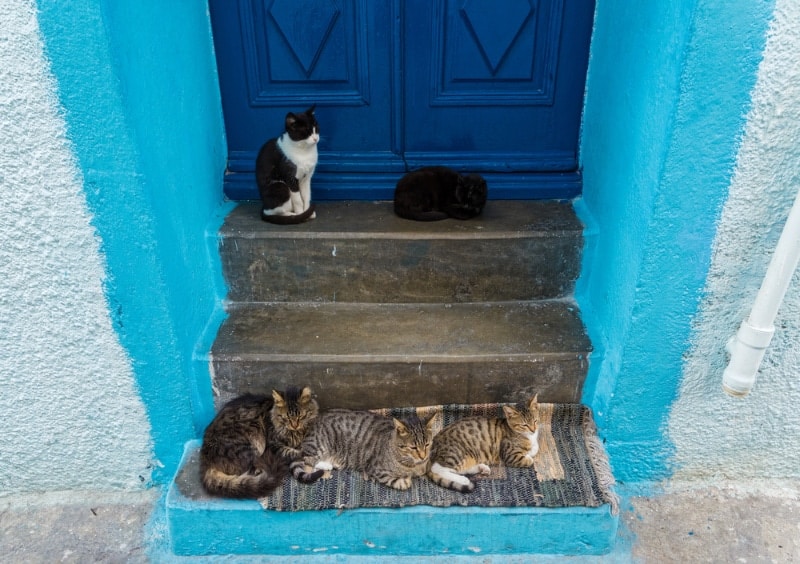
Visitors to Greece are often struck by the large number of cats found throughout the country. Most of these felines are feral and roam the streets. The high population of stray cats can be traced back to a lack of neutering practices, particularly before Greece joined the European Union in the 1980s. During that period, neutering was not widely accepted, leading to a significant increase in the number of cats. Stray cats were frequently overlooked and treated poorly, often regarded as pests.
Read More
Since the late 1980s, the treatment of stray cats in Greece has improved significantly. Following its entry into the EU, Greece faced pressure to adopt animal welfare laws, prompting a shift in public perception towards a more compassionate view of these animals. While government initiatives to control the stray population have been limited, many citizens have taken it upon themselves to care for the cats by setting up food and water stations and providing shelter. It is common to see outdoor areas where local residents leave provisions for strays.
Several organizations work to support the cat population in Greece. One such group, Nine Lives, was established in 2006 and focuses on reducing strays through a trap-neuter-return (TNR) program in Athens. This organization spays and neuters over 1,700 stray cats annually and offers assistance through feeding programs and veterinary care. The Greek Cat Welfare Society, based in the UK, has also contributed to the welfare of Greek cats since its founding in 1992, focusing on TNR initiatives and veterinary support.
Travelers encountering cats in Greece are advised to observe some guidelines. If approached by a litter of kittens, it is best to leave them undisturbed, as their mother is likely nearby. Concerns about the kittens should be directed to local animal welfare organizations, which provide resources and support. Sick or injured cats can be taken to a local veterinarian, and travelers should check with locals or their travel representatives about the appropriate protocols for feeding stray cats.
While some may consider adopting a Greek street cat, it is important to understand that all street animals are under municipal protection, requiring city permission for adoption. Prospective adopters must ensure the cat has no microchip, obtain vaccinations, and meet various legal requirements for transportation.
Adopting a street cat may also raise concerns about stress and adjustment to a new environment, as these cats are accustomed to life outdoors.
In summary, Greece's abundant stray cat population presents a unique opportunity for cat lovers to experience feline culture in a new country. With growing compassion from locals and support from animal welfare organizations, many of these strays are being cared for, making Greece a notable destination for animal enthusiasts.