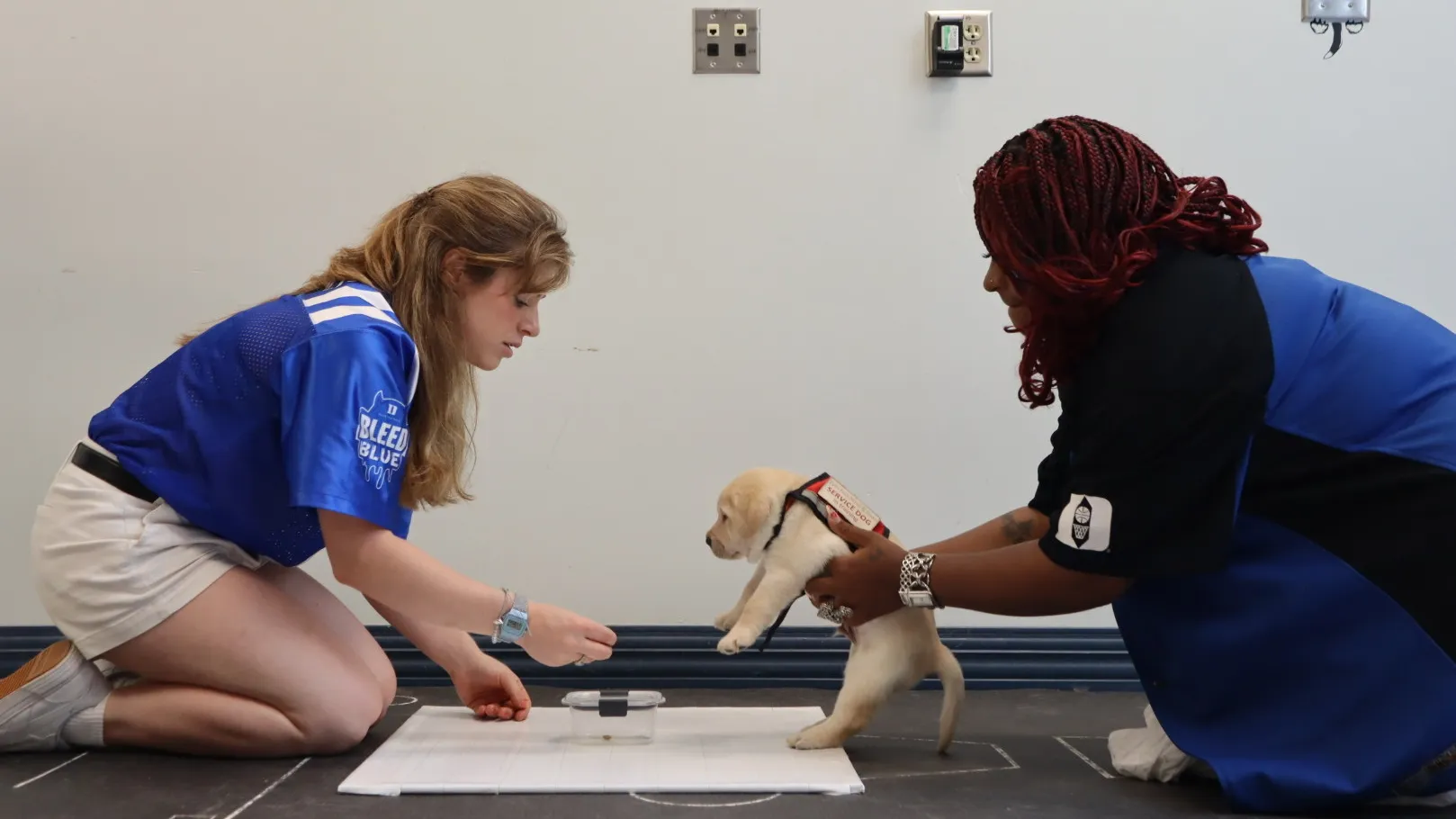
Researchers at Duke University conducted a study on dog intelligence, focusing on how dogs learn and their evolving roles as companions to humans. The study involved 101 puppies, specifically Labrador and golden retrievers, who were tested for problem-solving, impulse control, socialization, and memory.
Read More
Led by Vanessa Woods, director of Duke's Puppy Kindergarten, and Hannah Salomons, a research associate specializing in evolutionary anthropology, the study found that puppies learn most effectively between 8 to 20 weeks of age. The researchers observed varied forms of intelligence among the puppies, which, similar to humans, developed at different rates.
One notable skill, termed "mind reading," emerged around 8 weeks, where puppies began to comprehend human gestures. By 16 weeks, they reached significant cognitive milestones, mastering many learned skills. The study revealed that puppies trained in home settings performed similarly to those at the university's Puppy Kindergarten, which exposed them to diverse environments and social situations.
The choice of Labrador and golden retriever breeds was intentional, as they are bred for specific tasks and assistance roles. Researchers evaluated how these dogs learned in contrasting environments: a family home offering one-on-one instruction and a university setting filled with stimulation.
Salomons noted that certain dogs excel in particular skills, which is vital for their roles as service animals; it can take two years and approximately $50,000 to train a service dog, and nearly half of those in training do not become service dogs. Assessing their intelligence can help match them to appropriate tasks, such as search and rescue or therapy work.
The researchers propose that modern dogs may be undergoing a third wave of domestication, following two previous phases—initial companionship and specialization during the Victorian era. Woods explained that this new phase reflects a cultural shift, with dogs increasingly integrated into family life and reliant on humans for various needs.
The findings demonstrate that even breeds not typically associated with service work can learn and adapt. Woods emphasized that although common service breeds are often preferred due to societal perceptions, there is no inherent difference in ability among different breeds. This research may inform future training practices by identifying key developmental windows for assessing puppies' potential for various roles.