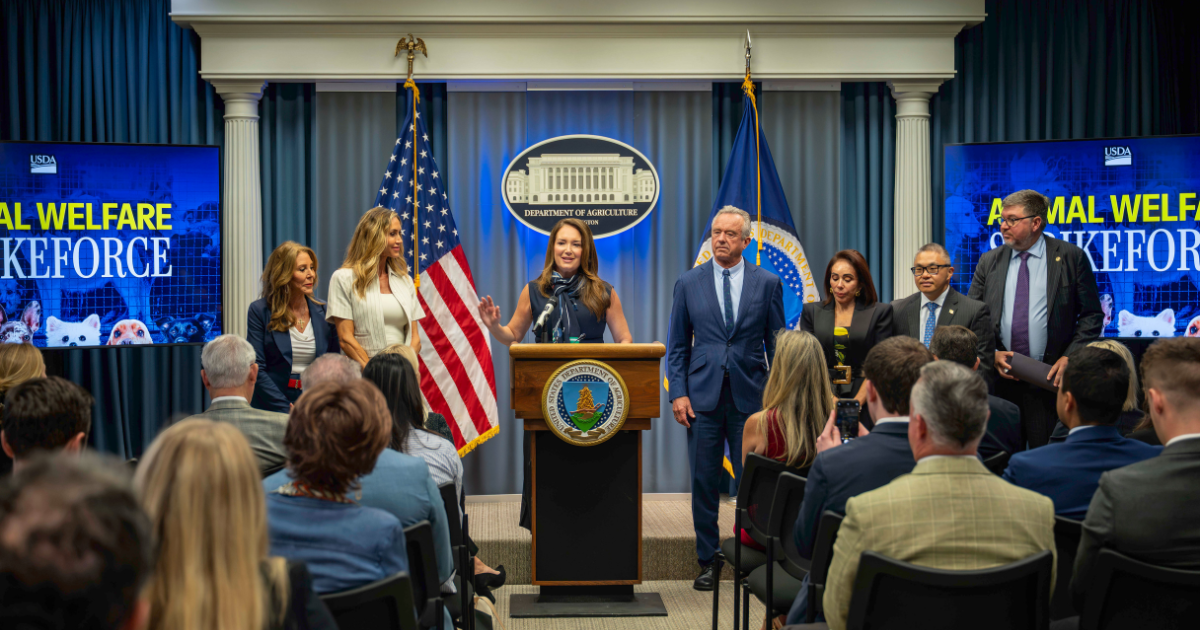
The Trump administration is introducing significant changes to animal welfare standards, focusing primarily on companion animals and those used in research. The U.S. Department of Agriculture (USDA) announced last month its intention to update the Animal Welfare Act, alongside a rule from the Food and Drug Administration (FDA) permitting non-animal methods for testing drug safety. Despite these initiatives, major populations of farmed animals, including cows, pigs, and chickens, are not covered by these new regulations. Inquiries to the FDA and USDA regarding this exclusion have not received a response.
Read More
The proposed updates aim to enhance monitoring and standards for animal welfare, reflecting a growing trend toward reducing animal testing, initially framed as part of efforts to cut unnecessary government spending. On September 21, the FDA clarified that drug manufacturers may employ non-animal methods in determining drug safety prior to human trials. Although animal testing remains permitted, the revised language in regulations indicates a shift, with terms like "animal tests" being replaced with "nonclinical tests." This change is set to take effect on February 4, 2027, unless public comments prompt reevaluation.
Additionally, Agriculture Secretary Brooke Rollins announced plans targeting the welfare of companion animals, particularly dogs, which fall under the Animal Welfare Act. Updates proposed for 2027 include improvements in aspects like medical care and socialization for dogs, which is aimed at elevating care standards under government oversight. Rollins asserted that the administration is committed to treating animals with respect and ensuring continuous monitoring of facilities under USDA jurisdiction. To enhance enforcement, the USDA's Office of Inspector General will increase its independent investigators by 20% to ensure compliance with animal welfare regulations.
However, the federal Animal Welfare Act does not extend protection to farm animals designated for food production or those used in agricultural contexts. While certain laws govern livestock treatment during specific phases, such as the Humane Methods of Slaughter Act and the Poultry Products Inspection Act, these protections are limited and often poorly enforced. Delcianna Winders, a professor at Vermont Law School, pointed out that between 2013 and 2025, only one potential violation of the Twenty-Eight Hour Law was referred to the Department of Justice, which took no action.
Concerns also arise regarding proposed regulations that could accelerate slaughter processes, potentially increasing instances of animal mishandling. States usually oversee the treatment of farm animals, but protections vary significantly. A 2022 USDA analysis revealed that only 14 states have enacted specific policies governing animal farming practices, primarily influencing the confinement of certain species, while laws have faced federal challenges.
Health and Human Services Secretary Robert F. Kennedy Jr. emphasized the importance of treating animals humanely in a joint statement, indicating a withdrawal from outdated practices. Both Kennedy and Rollins were contacted for comment regarding the exclusion of farm animals from the administration’s animal welfare agenda but did not respond.