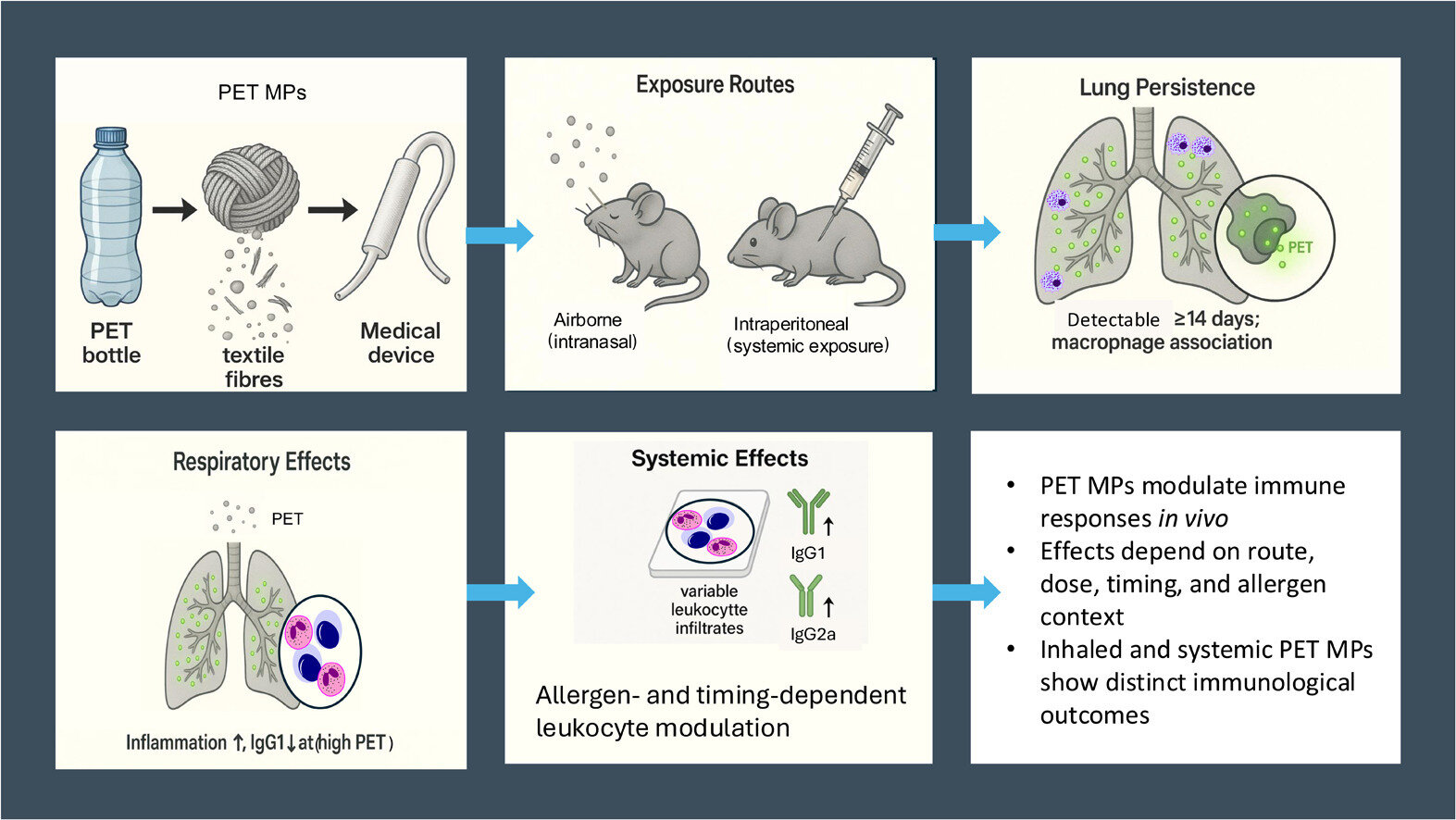
Research from the Medical University of Vienna indicates that microplastics, specifically polyethylene terephthalate (PET), can remain in mouse lungs and influence immune responses related to allergies. The study highlights the potential health dangers posed by the growing environmental presence of microplastics.
Read More
Published in the Journal of Hazardous Materials Advances, the research led by Michelle Epstein and her team involved administering varying sizes and dosages of PET microplastics to mice. PET is a commonly used plastic found in products such as packaging, beverage bottles, textiles, and medical supplies.
The study showed that after a single exposure to medium-sized PET microplastics via the respiratory tract, the particles were detectable in the lungs of mice for at least 14 days. This exposure triggered an inflammatory response, including an increased presence of lymphocytes and eosinophils, which are immune cells associated with allergic reactions. When the microplastics were administered alongside ragweed pollen, a frequent respiratory allergen, the respiratory inflammation was aggravated under certain scenarios.
Further experiments, where PET microplastics were introduced through the abdominal cavity alongside other allergens, revealed a modified systemic immune response: the microplastics intensified inflammation and affected the antibody response to the allergens.
Epstein noted that the study demonstrated that PET microplastics do more than just accumulate in the body; they actively modify immune responses associated with allergic reactions and inflammation. However, the researchers caution that while the findings provide essential insights, they are based on mouse models and cannot be directly applied to human exposure scenarios. Epstein called for additional studies to investigate the immunological impacts of microplastics more extensively.