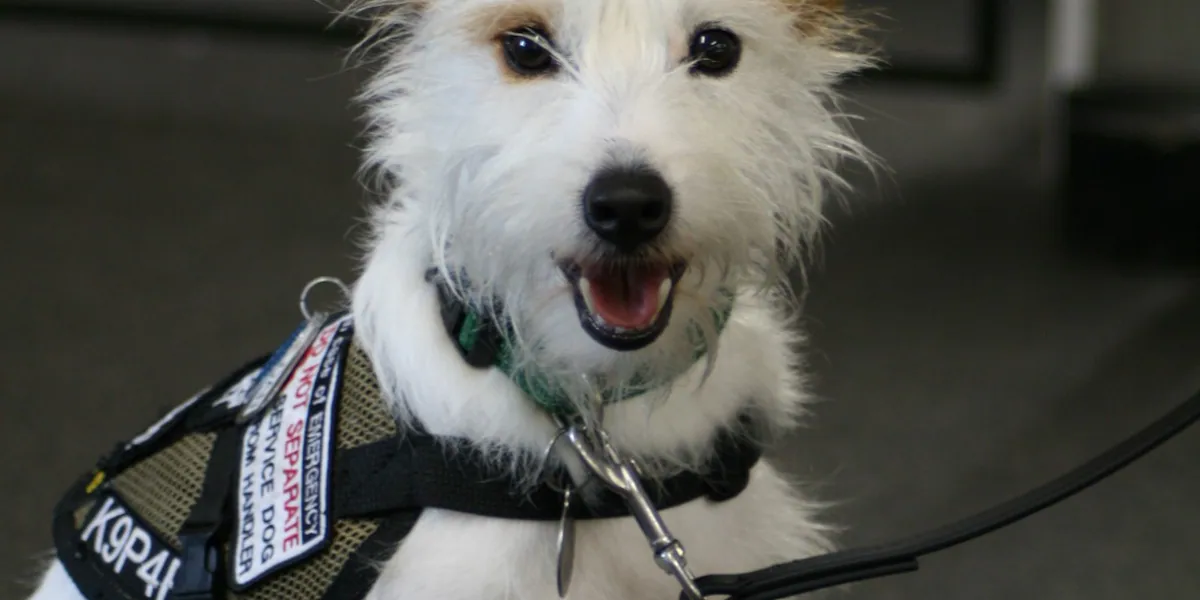
SARASOTA, Fla. (WWSB) - September is recognized as National Service Dog Awareness Month, highlighting the roles of dogs trained to assist individuals with disabilities and addressing common misconceptions about these animals.
Read More
Marsha Panuce, founder of Donte’s Den and host of Animal Outtakes, spoke on ABC7's Petology segment about the definition of service animals and the accompanying rights and responsibilities. According to the Americans with Disabilities Act (ADA), a service dog is specifically trained to perform tasks for a person with a disability, and these tasks can vary widely based on the individual’s needs. For instance, service dogs might retrieve objects, remind their handlers to take medication, alert them to panic attacks, or detect seizures to ensure their safety.
“One of the most common tasks is retrieving objects for someone with a disability,” Panuce said. “They can also predict panic attacks and seizures.”
Service dogs are classified as working animals rather than pets, which differs from emotional support or comfort animals. Panuce explained, “A service dog responds to its human, while an emotional support dog provides comfort but does not perform specific tasks related to a disability.”
Under the ADA, emotional support animals do not meet the criteria of performing a task and therefore lack the same rights as service dogs. Additionally, service dogs are not required to be certified, and merely having a vest or identification claiming a dog is a service animal does not legally designate it as such.
Panuce emphasized that a properly trained service dog should exhibit appropriate behavior in public, remaining under the handler's control and not approaching others or creating disruptions. “It is a working member of your family,” she noted. “You don’t allow it to be petted by other people; its purpose is to assist you.”
Businesses typically must permit service dogs in areas open to the public. When it is unclear if a dog is a service animal, the ADA permits staff to ask two questions: whether the dog is required because of a disability and what specific task it has been trained to perform. However, businesses cannot ask for documentation or require the handler to demonstrate the dog's abilities.
Misunderstandings surrounding service dog regulations can pose challenges for legitimate handlers, while also complicating situations for those reliant on trained service dogs when pets are misrepresented. In Florida, laws address fraudulent misrepresentation of pets as service animals.
For further information about service animals and the ADA, visit the U.S. Department of Justice Civil Rights Division at ADA.gov/topics/service-animals. Individuals facing access issues related to service animals can reach out to Advocates for Service Animal Partners at 855-272-7211 or find additional information at ServiceAnimals.info. You can catch Panuce on Animal Outtakes Saturday mornings at 10:30 on ABC7.