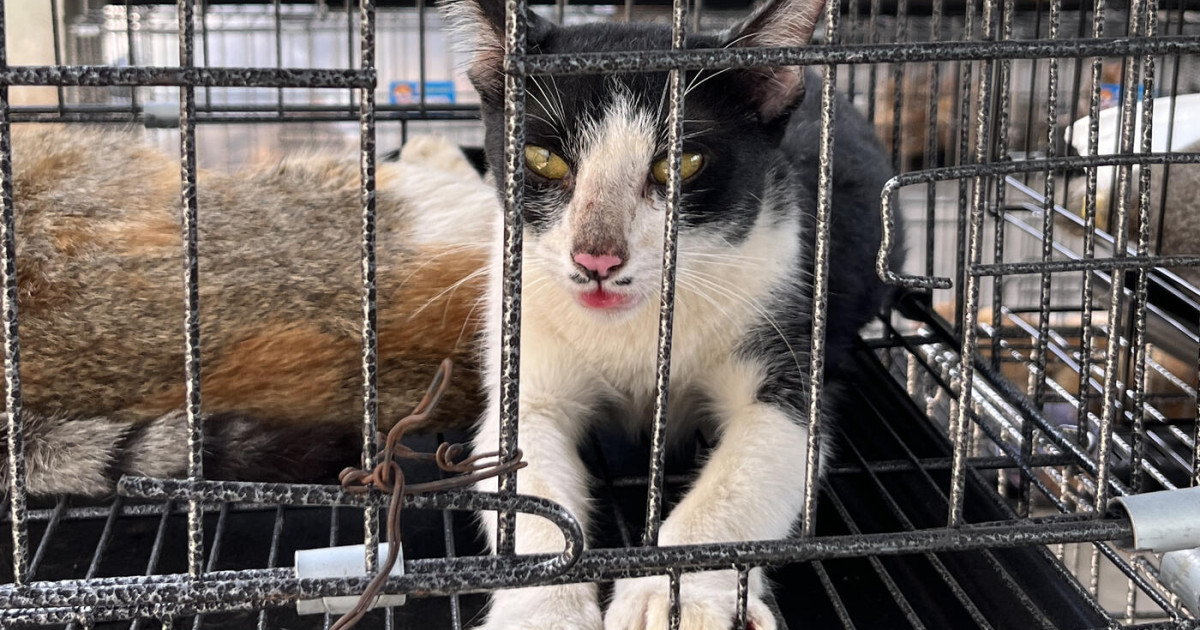
Vietnamese authorities have seized 400 cats involved in the country's illegal cat meat trade, shedding light on a troubling profit-driven network. This trade sees cats stolen from homes and streets, transported in overcrowded conditions without food or water, ultimately ending up at slaughterhouses and restaurants. Many cats die during transportation, while those that survive are subjected to brutal slaughter. Investigations have shown that some cats arrive at slaughterhouses still wearing collars, highlighting that many are beloved pets. It is estimated that over two million cats are taken or stolen for this trade each year, which receives significantly less attention than the dog meat trade.
Read More
Historically, the cat meat trade has been centered in northern provinces such as Thai Binh and Hanoi, but it has increasingly spread to the south, with restaurants in Ho Chi Minh City being implicated in openly selling and slaughtering cats. This recent seizure is thus especially significant.
The cat meat trade also poses considerable public health risks. The movement of unvaccinated animals across provinces can exacerbate the spread of rabies, with infected cats potentially exposing other animals and people to the disease.
Local organizations HavePaws and Vietnam Cat Welfare have been crucial in the response to the seized cats, providing round-the-clock care and addressing their welfare needs alongside volunteer veterinarians. Humane World for Animals Vietnam has also offered emergency support and is collaborating with local groups to determine the long-term care needs of the cats as legal proceedings unfold.
The community's response, including volunteers, businesses, and authorities, reflects a growing concern for animal welfare in Vietnam and a recognition that the cat meat trade does not fit within modern societal values. The number of cats reunited with their owners and the turnout of people searching for lost pets demonstrate the deep emotional connection many Vietnamese have with their cats and their opposition to the trade.
Moving forward, the priority is to secure a lasting solution for the cats still held as evidence while legal processes continue. There is hope that these cats can soon receive care in veterinary clinics. This case highlights the potential impact of decisive action from authorities and underscores the necessity for stronger legal protections. Vietnam had prohibited the capture, slaughter, and consumption of cats for over two decades before the ban was lifted in 2020. Reinstating such protections could be a significant step toward ending this trade and mitigating future suffering.