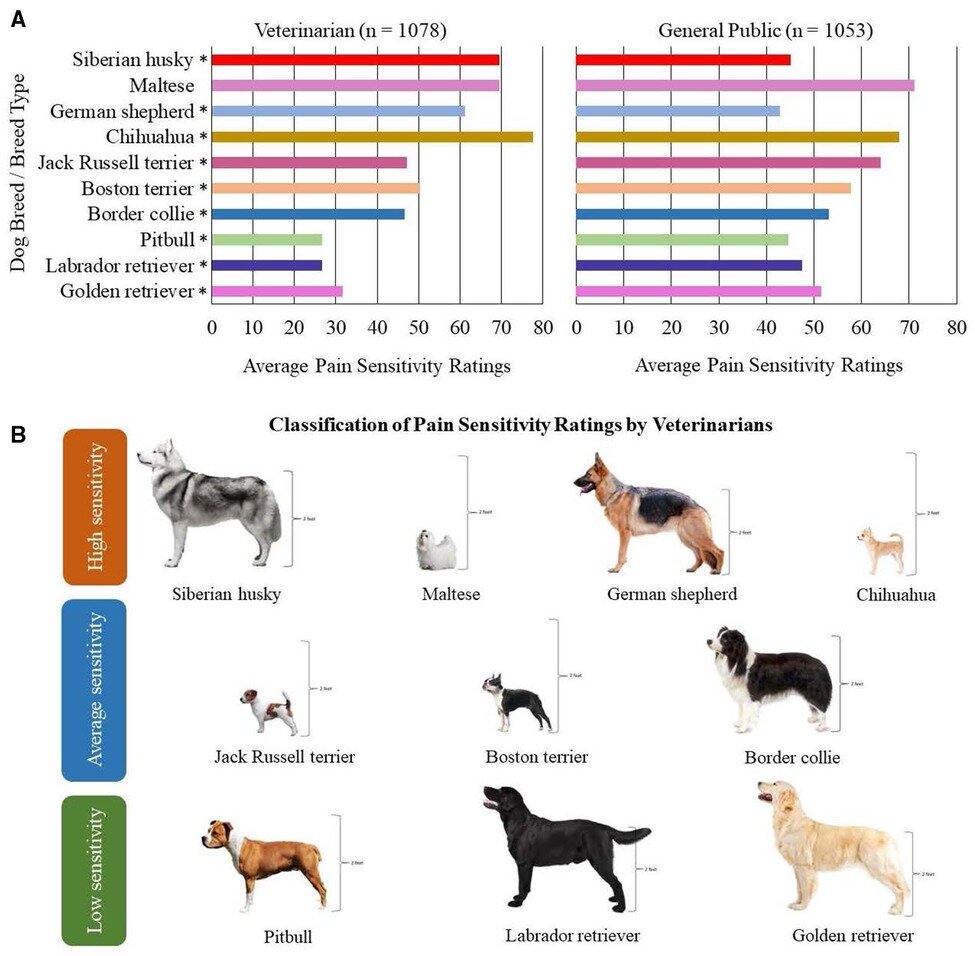
A recent study from North Carolina State University, published in *Frontiers in Pain Research*, has found that while dog breeds exhibit varying levels of pain sensitivity, these differences do not always align with the perceptions held by veterinarians and the public. Led by Margaret Gruen, an associate professor of behavioral medicine at NC State, the research examined the discrepancy in pain sensitivity ratings given by veterinarians compared to those of the general public.
Read More
The study involved 149 healthy adult dogs from ten breeds identified by veterinarians as high (Chihuahua, German Shepherd, Maltese, Siberian Husky), medium (Border Collie, Boston Terrier, Jack Russell Terrier), or low (Golden Retriever, Pit Bull, Labrador Retriever) sensitivity. To assess the dogs' pain sensitivity, researchers adapted methods typically used in human pain clinics, measuring reactivity to pressure and temperature through various tests.
Each dog's response was tested by applying a pressure tool and a thermal probe to the top of its back paw. If the dog moved its paw, the stimulus was removed immediately. The study also included tests to observe the dogs' emotional reactivity to unfamiliar stimuli, replicating aspects of a veterinary visit, such as the 'novel object test' and the 'disgruntled stranger' test.
Results indicated clear breed differences in pain sensitivity; however, these often contradicted veterinarians' assessments. For instance, Maltese dogs displayed a high sensitivity threshold—consistent with the veterinarians' ratings—but Siberian Huskies, which were also rated as highly sensitive, tested in the mid-range for pain tolerance. Additionally, larger breeds perceived as sensitive by veterinarians also showed average to high pain tolerance.
The researchers noted that dogs exhibiting less engagement in stressful scenarios tended to be rated with lower pain tolerance. This observation suggests that a dog's stress level and behavioral reactions during a veterinary visit may influence veterinarians' assessments of pain sensitivity.
The findings highlight both biological differences in pain sensitivity among breeds and the importance of considering a dog's emotional state in veterinary settings. This research may lead to improved treatment approaches tailored to individual breeds based on these insights.