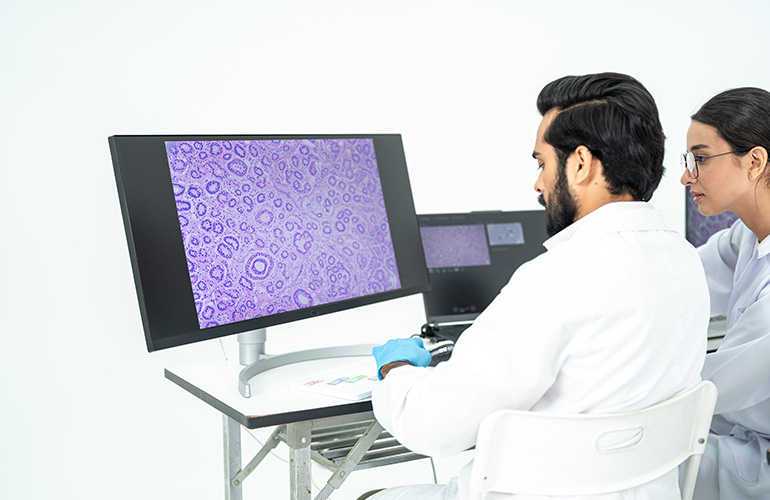
The pandemic accelerated the shift to digital pathology, enabling pathologists to analyze slides remotely as traditional microscopy became impractical. Researchers have since innovated methods to derive additional insights from these digitized images, correlating them with molecular changes in tissues.
Read More
Previously, pathology involved reviewing slides and creating reports, with the slides often relegated to storage afterward. Aleksandra Zuraw, DVM, PhD, a veterinary pathologist at Charles River Laboratories, noted that digitized slides, composed of pixels, can now yield more data than originally assessed.
By linking these images with pathology reports and molecular analyses, researchers can train models to identify patterns related to biological changes. This allows for re-examining archived tissues from earlier studies to uncover insights about drug effects that were not explored during the initial research.
Charles River, a major player in preclinical animal research, launched the Alternative Methods Advancement Project in April 2024. This initiative aims to maximize the data obtained from animals already used in studies. One strategy involves using virtual control groups, which leverage historical data to reduce the number of live control animals needed in toxicology studies.
Zuraw emphasized that this approach requires ensuring comparability between historical and current control groups to avoid misinterpreting data. The company's virtual control group team is focused on generating reliable historical data for this purpose.
In toxicology, tissues are typically fixed in formalin and embedded in paraffin wax, with the remaining blocks stored for later study. These archival blocks retain molecular data that researchers can analyze post-study, thus providing insights without necessitating new animal experiments.
The Organisation for Economic Co-operation and Development’s forthcoming 2025 guidelines highlight how archived tissue can enhance molecular investigations, including gene expression studies. Zuraw stated that using existing formalin-fixed, paraffin-embedded samples allows researchers to analyze additional information while maintaining the study's context.
Recent regulatory changes, including the FDA Modernization Act 2.0 enacted in 2022, advocate for reducing animal testing, supporting non-animal methods for drug trial applications, and promoting new approach methodologies (NAMs) as the standard in preclinical safety assessments.
Furthermore, advancements such as molecular predictions from H&E-stained slides are gaining traction. Virtual staining techniques are also emerging rapidly, which could eliminate the need for traditional staining processes. These innovations signal that existing data sources can be accessed in new ways, fostering a cycle of investment in digital pathology systems.
However, integrating new methodologies into routine practice requires collaboration and demonstrated success in early adopters' studies. This initial work will guide others in the field, ensuring that advancements in digital pathology are efficient and beneficial.