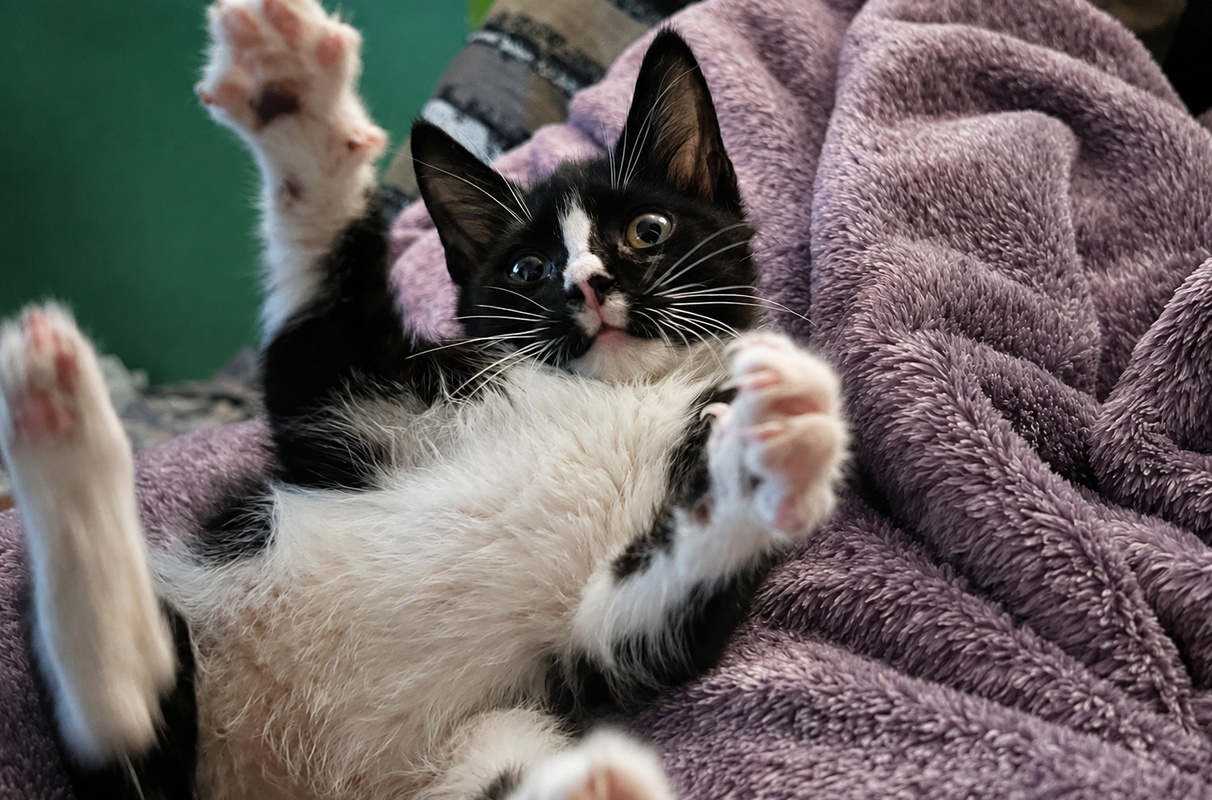
Darren Bass of Spokane spent over a year seeking answers for his stray kitten, Spot, who displayed perplexing symptoms. Spot was ultimately diagnosed with a rare congenital liver defect known as a portosystemic shunt, which causes blood to bypass the liver. Bass was referred to the Washington State University (WSU) Veterinary Teaching Hospital, where Spot underwent complex surgery with financial support from the hospital's Good Samaritan Fund.
Read More
Bass shared his relief, stating, "It’s just been a wonderful experience for me at WSU because I was so frustrated not being able to figure out what was going on with Spot. Without surgery, they said she probably would have lived only a few more years. But now she’s doing great, and I’m excited to see how much she continues to improve."
Spot found her way into Bass's life on a cold October night in 2024. Concerned for the kitten's survival outdoors, he brought her in with the intention of finding her a home but ended up adopting her instead.
During a challenging time in his life, as he was facing unemployment, Bass viewed Spot's arrival as a form of divine intervention. He stated, "When I was down, here was this little kitten that needed someone to take care of, and in a lot of ways she ended up helping me too. I feel like it was part of God’s plan."
After initial care for what seemed to be an upper respiratory infection, Spot's symptoms persisted and worsened over time, leading to multiple vet visits with no definitive answers. This changed when Dr. Whitney Nelson, an internal medicine specialist at the Pet Emergency Clinic and Referral Center in Spokane, suspected a portosystemic shunt after reviewing Spot's medical history and distinctive copper-colored eyes.
This rare condition leads to toxin buildup in the bloodstream, causing issues like poor growth and neurological problems in pets. An ultrasound confirmed the diagnosis, prompting a referral to WSU for surgical intervention from Dr. Boel Fransson, a board-certified surgeon.
Fransson noted that portosystemic shunts are rare in cats and can complicate diagnosis due to various symptoms. While some cases can be managed with diet and medication, surgery is often necessary for a normal life. The surgery involves placing a cellophane band around the abnormal blood vessel to help the liver adjust to increased blood flow over time.
"If the vessel fully attenuates, the goal is for them to live a normal lifespan with good quality of life," Fransson explained. "Young and otherwise healthy cats can do quite well with surgery."
Fortunately, Spot's surgery was successful, and she is now gaining weight and growing stronger. Bass expressed his gratitude for the veterinarians at WSU and the financial assistance from the Good Samaritan Fund, hoping to one day repay the kindness he and Spot received.