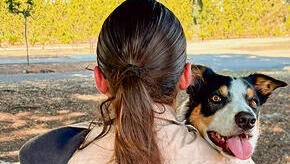
Pvt. A., an 18-year-old Israeli soldier, credits her service dog Vali with changing her life since they began training together at age 16. Vali is known throughout the Israeli Air Force’s Special Air Forces Wing, Wing 7, as one of the few service dogs to complete basic training at Mahane Alon base in the Galilee.
Read More
From the beginning of basic training, commanders informed the unit that Vali had a specific role and should not be disturbed. The dog remained calm during formations and participated in all activities, including marches and field exercises. According to A., the other soldiers welcomed Vali with respect.
Maj. H. noted that the IDF's approach to service dogs has progressed, particularly in recognizing their importance for soldiers with disabilities. Under Israel’s Equal Rights for Persons with Disabilities Law, service dogs are allowed in public spaces, including military installations. This policy has been extended to support those with PTSD and autism, with increased acceptance following the events of October 7.
While Vali wasn’t permitted in the dining hall during basic training, she adapted well to A.’s permanent base, becoming an integral part of the unit's daily life. A. recounted her experience at the recruitment office, where she insisted on enlisting despite initial resistance to service dogs in the military. After a supportive intervention from a mental health officer, she was granted an exemption and joined the 'Titkadmu' track.
Maj. H. provided his backing for her enlistment, recognizing the potential benefits of service dogs for soldiers. A. and Vali completed induction and basic training together, with a memorable photo of Vali wearing an Air Force beret taken at the induction center.
At her permanent base, Vali sleeps beside A. in her crate, and their presence is well acknowledged by fellow soldiers, contributing positively to overall morale. A. stated, “The whole base knows Vali and says hello to her. She contributes to the atmosphere and helps reduce tension.”
Vali's training began when A. was 16 under Dana Wilker, who runs a training center for assistance dogs. Wilker emphasized that service dogs typically work alongside their handlers for eight to ten years, which is significant during a formative period in a young person's life. She noted A.'s growth and development throughout the process and praised Vali's adaptability to diverse situations. A. and Vali have showcased to the military that the integration of service dogs within the armed forces is feasible and beneficial.