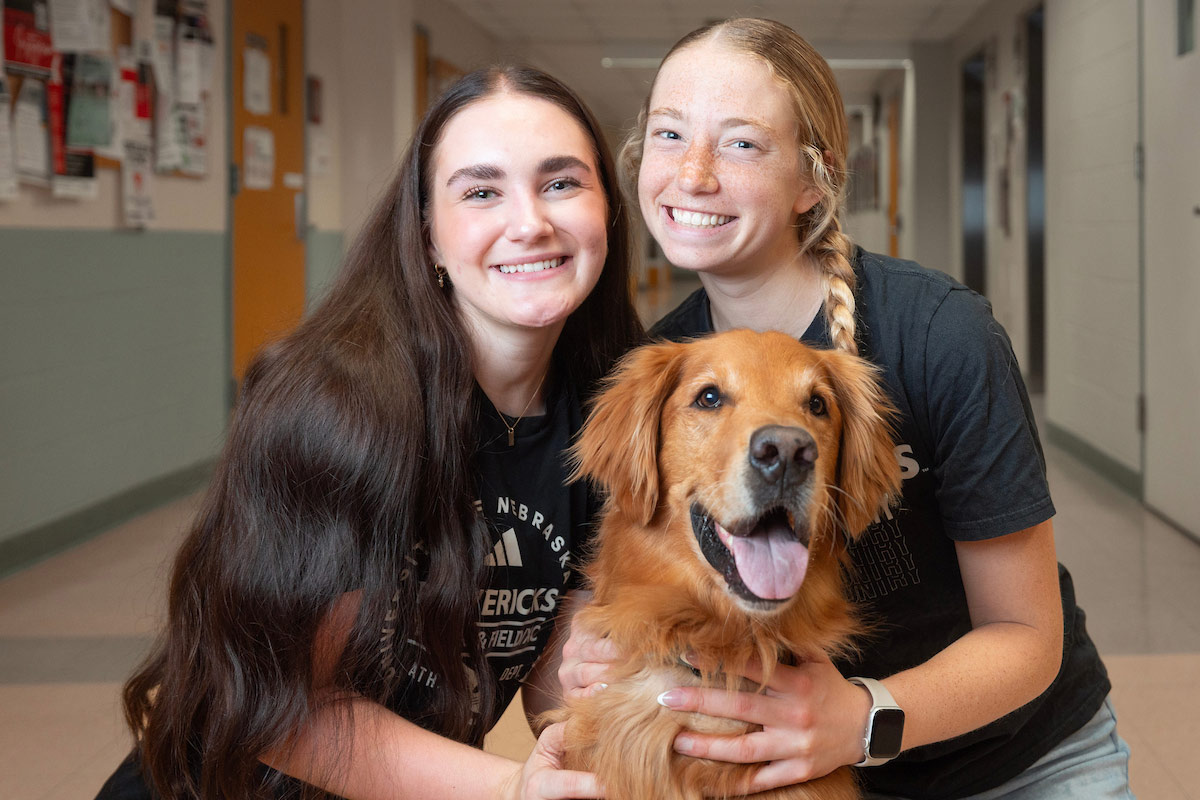
At the University of Nebraska at Omaha (UNO), students Maya Bergstrom and Izzy Apel are engaged in significant hands-on research in Associate Professor Rose Strasser’s animal behavior lab. Their work explores the connections between dog parenting and training styles, specifically looking at how these factors influence cortisol levels in dogs.
Read More
Strasser, whose research focuses on dog behavior and owner relationships, has been studying the impact of early life experiences on dogs, including those from adverse conditions such as neglect or hoarding. She aims to understand how these experiences affect behavior and health outcomes in dogs.
Bergstrom, a sophomore in biology and chemistry, and Apel, a junior studying neuroscience and chemistry, released a survey to pet owners to gather information on their training and parenting styles, as well as their pets' behavior and levels of stress. They will analyze the cortisol levels from hair samples collected from participating dogs, sending 100 strands to the university's bioanalytics lab for examination.
Apel expressed her interest in the potential for these findings to offer insights into human behavior, mentioning its relevance to relationships, including parent-child dynamics. Bergstrom shared her excitement about contributing to this research, highlighting the educational benefits of the experience.
Strasser emphasizes the educational value of engaging in research, noting that practical experience fosters critical thinking and problem-solving skills that are essential across various fields. Both students feel that this opportunity is enhancing their confidence and ability to communicate their research, preparing them for future careers in medicine and other fields.
Bergstrom aspires to be a physician’s assistant, motivated by her brother's experience with autism and the support her family received. She noted the fulfilling nature of contributing to scientific knowledge, regardless of the study's outcomes. Apel, who plans to enter the medical field, appreciates the foundational experience being vital for future research endeavors.
Both students credit their mentorship from Dr. Strasser as instrumental to their growth and success in research.